- Tuesday, 2 June 2026

Thousands of Sudanese fleeing war trapped on the border with Egypt
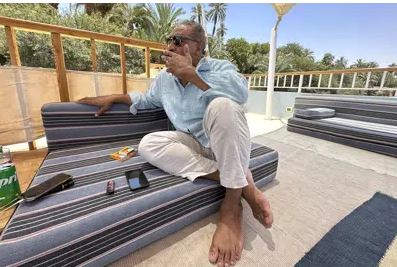

Aswan, Egypt, June 17: When fighting in Sudan erupted in mid-April, Abdel-Rahman Sayyed and his family tried to hold out hiding in their home in the capital, Khartoum, as the sounds of explosions, gunfights and the roar of warplanes echoed across the city of 6 million people.
They lived right by one of the fiercest front lines, near the military's headquarters in central Khartoum, where the army and a rival paramilitary, the Rapid Support Forces, battled for control. Three days into the conflict, a shell hit their two-story home, reducing much of it to rubble.
Luckily, Sayyed, his wife and three children survived, and they immediately fled the war-torn city. The problem was, their passports were buried under the wreckage of their home.
Now they are among tens of thousands of people without travel documents trapped at the border with Egypt, unable to cross into Sudan's northern neighbor.
"We narrowly escaped with our lives," the 38-year-old Sayyed said in a recent phone interview from Wadi Halfa, the closest Sudanese city to the border. He said he was stunned that Egyptian authorities wouldn't let his family in. "I thought we would be allowed in as refugees," he said.
Two months in, clashes continue to rage between the two rival forces in Khartoum and around Sudan, with hundreds dead and no sign of stopping after talks on a resolution collapsed. People continue to flee their homes in droves: This week the total number of people displaced since fighting began April 15 rose to around 2.2 million, up from 1.9 million just a week earlier, according to U.N. figures. Of the total displaced, more than 500,000 have crossed into neighboring countries, while the rest took refuge in quieter parts of Sudan, according to the U.N.
More than 120,000 Sudanese without travel documents are trapped in Wadi Halfa and surrounding areas, according to a Sudanese migration official, speaking on condition of anonymity because he wasn't authorized to brief media. Among them are thoswe who never had a passport or whose passport expired or was lost during the rush to escape.
Wadi Halfa, which normally has a population of few tens of thousands, is also flooded by huge crowds of Sudanese men, women and children who do have their passports but must apply for visas at the Egyptian Consulate in the town to cross the border. Getting a visa can take days or even longer, leaving families scrambling for accommodation and food, with many sleeping in the streets.