- Thursday, 28 May 2026

National dialogue on rights of persons with disabilities held
By
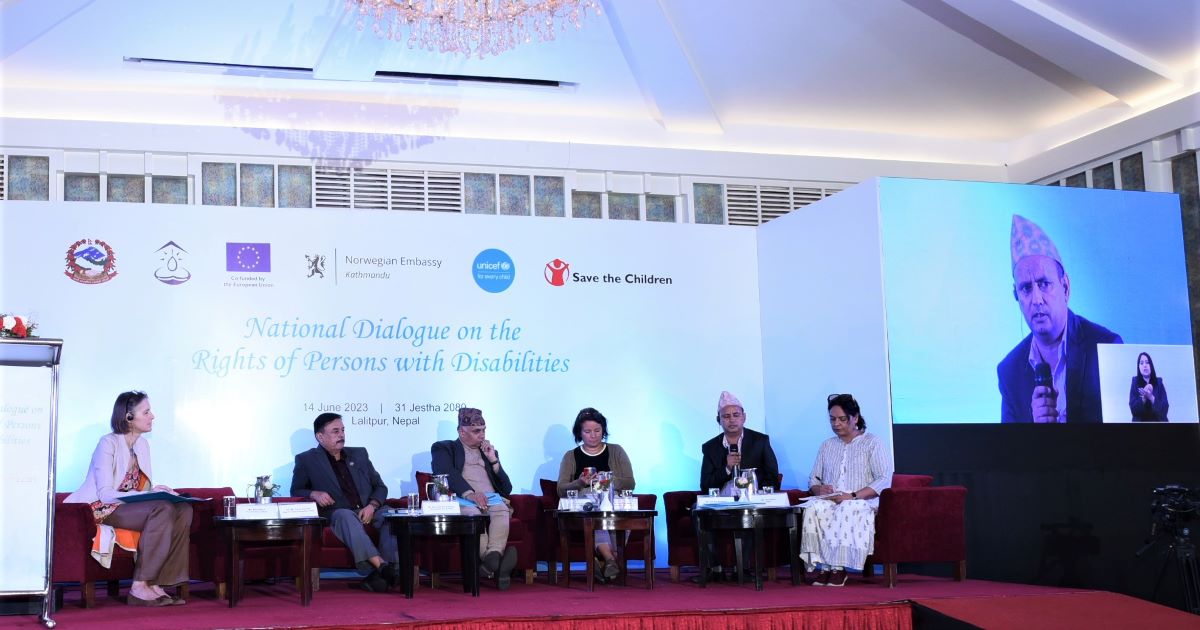
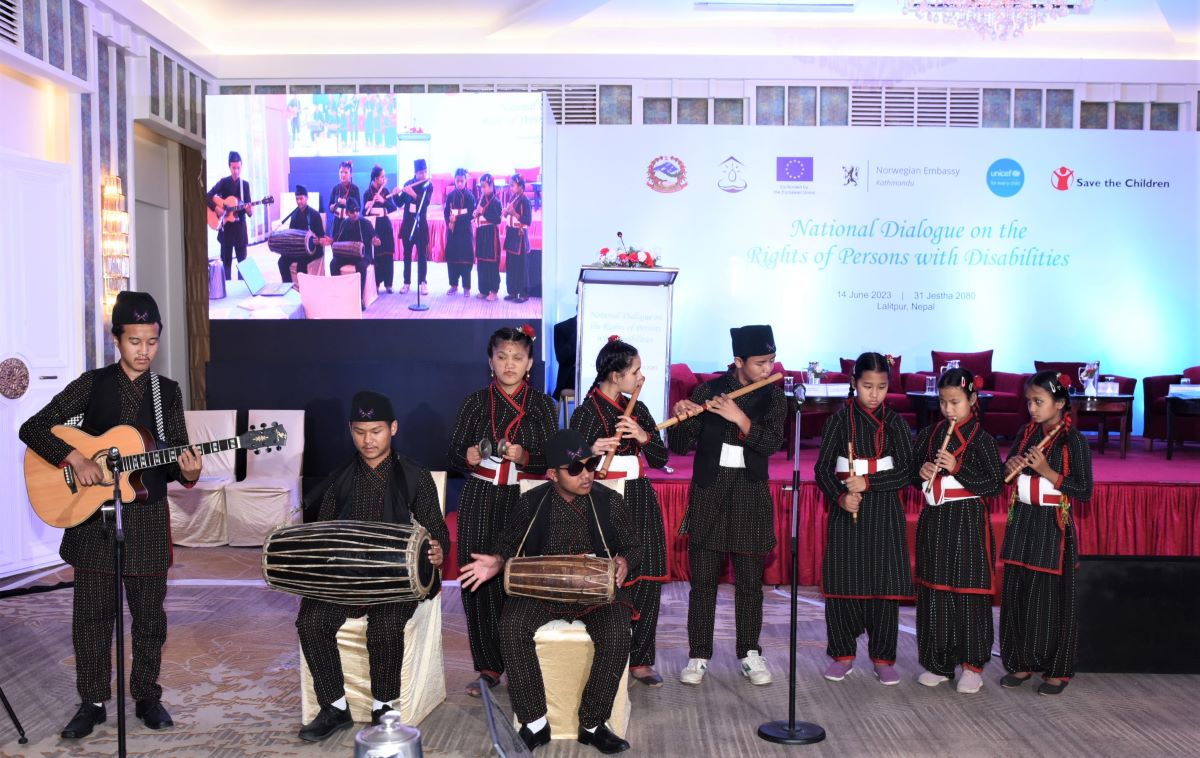
TRN Online, Lalitpur, June 15: The National Dialogue
on the Rights of Persons with Disabilities has been held.
The
dialogue was organized by UNICEF in collaboration with the Government of Nepal,
the National Disabled Fund, the Delegation of European Union to Nepal, the
Royal Norwegian Embassy to Nepal, Save the Children, and various stakeholders.
The
Dialogue held on Wednesday aimed to shed light on the situation of Persons with
Disabilities (PwDs) and the challenges faced by them, particularly children. The
dialogue also brought together relevant stakeholders to review and reflect on innovative
programmes and practices and learn from each other, according to the press
release issued by UNICEF.
Nepal, as a signatory to the International Convention on the Rights of Persons with Disabilities (CRPD) and the Convention on the Rights of the Child (CRC), is committed to upholding the rights of persons with disabilities. Despite Nepal’s commitment to bringing CRPD into practice, the perpetuation of discrimination against persons with disabilities is a reality in Nepal. In fact, PwDs are going through various kinds of abuse, exploitation, neglect, and economic hardships. UNICEF recognizes the intersectionality of disabilities with gender, sexual orientation, ethnicity, socio-economic background, and geographical location, and advocates for their equal treatment as other citizens.
In
2019, UNICEF conducted the Multiple Indicator Cluster Survey (MICS) in
collaboration with the Government of Nepal and the Norwegian Embassy to assess
the prevalence of disability. The survey revealed that 13 per cent of children
aged 5 to 17 years in Nepal experience functional limitations, including
depression and anxiety, read the press release.
The
conference included a panel discussion on the overall situation of persons,
particularly children, with disabilities. This was followed by focused
discussions on neurodevelopmental disabilities, including autism. The
discussion on neurodevelopmental disabilities, including autism, focused on
early detection, early intervention, alternative learning pathways, vocational
support, and life planning. The discussion calls for collaboration between
government institutions, healthcare professionals, and parent organizations to
support families for sustainable solutions.
Finally,
the event showcased innovation and best practices in the field. Among the
innovative approaches highlighted during the dialogue included inclusive
education initiatives, such as the development of an online platform for
teachers with self-paced modules and Universal Design for Learning (UDL)
activity banks. Additionally, the introduction of a free open digital library
(E-Pustakalaya) supports the inclusion of children with low vision and
blindness, while the integration of sign language videos and the development of
Nepali braille software enhance accessibility within existing online resources,
according to the press release.
Another
significant initiative discussed at the conference was the innovative model for
disability screening and identification card issuance. This model incorporates
enhanced indicators and checklists to assess the severity and barriers
associated with disabilities and utilizes the Disability Management Information
System (DMIS), a web-based application accessible on Android and iOS platforms,
to streamline the disability identification process and maintain a
comprehensive database.
Furthermore,
the conference emphasized the importance of accessible WASH (Water, Sanitation,
and Hygiene) facilities in schools. UNICEF, in partnership with CBM Global and
other stakeholders, has successfully improved the accessibility status of WASH facilities
in approximately 100 schools. The integration of accessibility features not
only ensures equal opportunities for all children but also contributes to
poverty reduction and community development.
The
dialogue concluded with a call for mainstreaming persons with disabilities
agenda in the development programmes and policies, and for collaboration,
synergy, and innovation for the advancement of the situation of persons with
disabilities, read the press release.


-original-thumb.jpg)