- Tuesday, 2 June 2026

South Sudan’s sluggish peace deal and unsteady road to elections
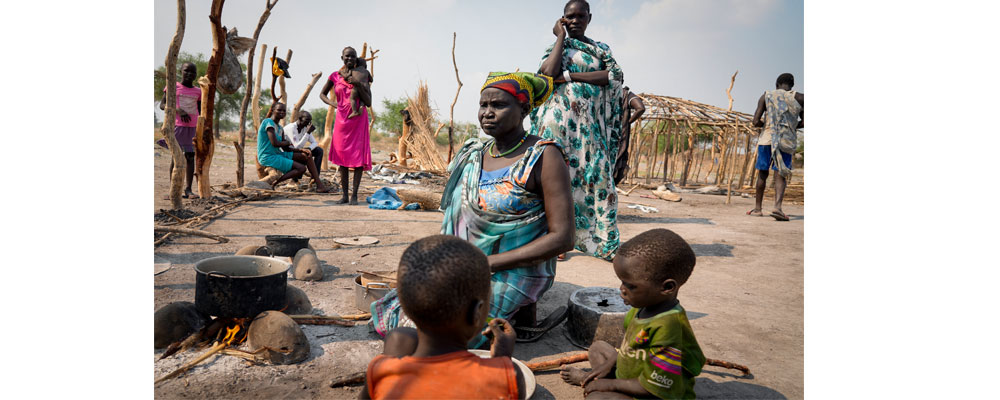

Kowach, South Sudan, June 14:Martha Nyanguour didn't have time to bury her husband, son or granddaughter when they were killed by gunfire in September. Instead, the 50-year-old paid her respects by throwing bits of grass over their bodies, grabbed her remaining children and fled.
It had taken years for the mother of seven to muster the courage to return to South Sudan and trust its fragile peace deal ending a civil war. But weeks after she arrived in Atar town in Upper Nile state, fighting erupted between militias aligned with government and opposition forces. “I thought if there was peace I was supposed to go back to my land,” said Nyanguour, seated under a tree in Kowach village in Canal Pigi county where she now lives with thousands of other displaced people, five days' walk through swamp water from her home village. “I thought maybe there would be peace in the future, but now, hearing gunshots daily, I think South Sudan will remain in war.”
In 18 months, South Sudan is supposed to hold its first presidential elections, the culmination of the peace agreement signed nearly five years ago to pull the young nation out of fighting that killed some 400,000 people. While large-scale clashes have subsided, violence in parts of the country persists, killing 2,240 people last year, according to the Armed Conflict Location & Event Data Project. Earlier this month at least 20 people were killed and more than 50 wounded during inter-communal clashes in a United Nations protection camp in the north of the country.
Implementation of the peace agreement has been sluggish. The elections, originally scheduled for this year, were postponed until December 2024. Other key elements of the deal have not been implemented, sparking concern that the country could see a return to war instead of a transfer of power.
“We are going to go for (the) electoral process without meeting the benchmarks that create a conducive environment for the conduct of elections," said Edmund Yakani, executive director for Community Empowerment for Progress Organization, a local advocacy group. “The return of the country to violence is more evident than the country staying in stability."
A permanent constitution still has not been drafted. A census has not been conducted. Security arrangements, considered the backbone of the agreement, are only partially complete. Some 83,000 soldiers from opposition and government forces are meant to unite in a national army, but so far 55,000 have graduated and are yet to be deployed.
Others languish in training centres with poor conditions and little food. Soldiers say many are rarely paid. Locals involved with the security arrangements say there's so little trust that the main parties have held back key fighters, sending less seasoned ones or new recruits.
In addition, Joshua Craze, a researcher on South Sudan, says, “The peace agreement signed in 2018 has enabled the government to fragment the opposition by encouraging defections and setting commanders against each other, intensifying violent conflict."
The opposition accuses the government of lacking political will to hold elections so it can keep plundering the nation's resources, which include oil. “They don’t have genuine political will to implement the peace agreement because they look at the agreement from the angle that it is crippling their powers,” said Puok Both Baluang, acting press secretary for the first vice president, head of the main opposition and former rebel leader Riek Machar. (AP)