- Tuesday, 2 June 2026

Does Power Really Corrupt?

Dixya Poudel
Presently, Nepali community is abuzz with the Bhutanese refugee scam in which public figures such as high profile officers and politicians were enmeshed. It is deplorable that such significant public figures were involved in extorting tens of millions of rupees illegally. This disclosure has shown how far the tentacles of corruption have seeped within the Nepali politics and bureaucracy. Ever since the news broke out, the subsequent days revealed forth new high-flying persons who could be possibly implicated.
Nepali citizens are quite disappointed in the involved leaders, the very ones who were entrusted with the confidence of votes and support.
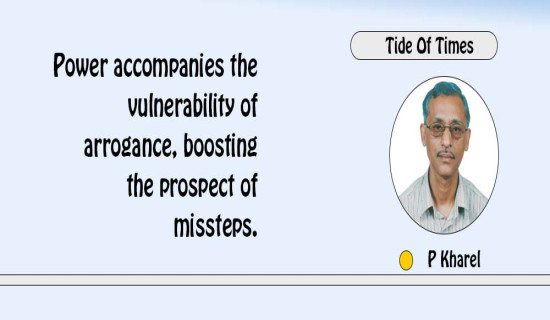
It has also shown how desperate people are to attain US citizenship. How could the morale of the associated parties be this low? It is equally frustrating to learn that the people who schemed the scam were really educated, well-respected and came from a position of power. It could bring the age-old question: does power really corrupt?
Then there is the matter of accountability. Time and again, in Nepal, one hears of powerful, well-connected and influential people being acquitted of wrongdoing such as scams they indeed committed. It really calls to question the justice system and the fact that one can actually get away with the wrongdoing.
One could also ask why it occurs and keeps occurring. Given the intensive media coverage that the current corruption scam is getting, is it likely that those in question will get away? Should people just wring their hands and say that this is how it is here?
Now that the scam has come to the broad light, Nepal is under the scrutiny of the world. One only has to turn the pages of history to learn about the deep reaches of corruption and how it has often brought the image of the nation to shreds. Why cannot the Nepali politicians learn from their predecessors?
Could the reason at core only be avarice? Could the matter of money, capital and funds make people override their sense of morale and surreptitiously accept bribes? It is certainly human nature to aspire to monetary gain as it symbolises security, position and influence.
And corruptions tend to take place if the illegal gains are too great and the chances of being indicted too little. But this shouldn’t be the case. Impunity to corruption mustn’t be the norm. As such, leadership is a position many vie for since it means one is given an opportunity to not just earn but also make an impact. It further signifies a responsibility to uphold integrity to one’s community, society and nation within the designated official or political positions.
However, there is always a chance of a rotten apple, slowly seeping through and corrupting the rest. This is where accountability matters greatly. It nips the bud of the growing corruption and sends a ripple of warnings. Therefore, there has to be counteractions in place against corruption.
And the law can be a powerful tool to bring a sense of morale in a person. The fear of indictment can be enough to stop even the thought of a bribe. But clearly that didn’t happen in the disclosed corruption scam. It thus calls for a change in government policies and stricter laws. It also means a deep soul-searching in the Nepali politics.