- Tuesday, 2 June 2026

Off-grid solar brings light, time and income to remotest villages
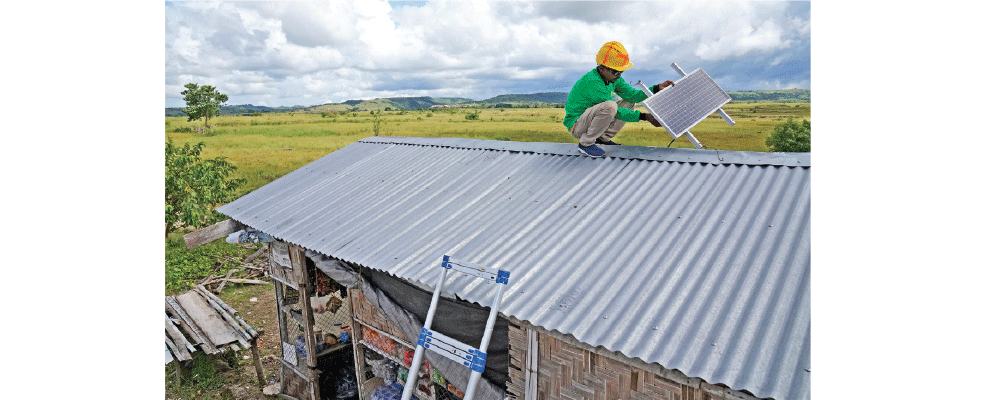

Laindeha, Indonesia, May 15: As Tamar Ana Jawa wove a red sarong in the fading sunlight, her neighbour switched on a light bulb dangling from the sloping tin roof. It was just one bulb powered by a small solar panel, but in this remote village that means a lot. In some of the world's most remote places, off-grid solar systems are bringing villagers like Jawa more hours in the day, more money and more social gatherings.
Before electricity came to the village a bit less than two years ago, the day ended when the sun went down. Villagers in Laindeha, on the island of Sumba in eastern Indonesia, would set aside the mats they were weaving or coffee they were sorting to sell at the market as the light faded.
A few families who could afford them would start noisy generators that rumbled into the night, emitting plumes of smoke. Some people wired lightbulbs to old car batteries, which would quickly die or burn out appliances, as they had no regulator. Children sometimes studied by makeshift oil lamps, but these occasionally burned down homes when knocked over by the wind.
That's changed since grassroots social enterprise projects have brought small, individual solar panel systems to Laindeha and villages like it across the island. For Jawa, it means much-needed extra income. When her husband died of a stroke in December 2022, Jawa wasn’t sure how she would pay for her children’s schooling. But when a neighbour got electric lighting shortly after, she realized she could continue weaving clothes for the market late into the evening.
“It used to be dark at night, now it’s bright until morning,” the 30-year old mother of two said, carefully arranging and pushing red threads at the loom. “So tonight I work ... to pay for the children.”
Around the world, hundreds of millions of people live in communities without regular access to power, and off-grid solar systems like these are bringing limited access to electricity to places like these years before power grids reach them.
Some 775 million people globally lacked access to electricity in 2022, according to the International Energy Agency. Sub-Saharan Africa and South Asia are home to some of the largest populations without access to electricity. Not having electricity at home keeps people in poverty, the U.N. and World Bank wrote in a 2021 report. It’s hard for very poor people to get electricity, according to the report, and it’s hard for people who don’t have it to participate in the modern economy.
Indonesia has brought electricity to millions of people in recent years, going from 85% to nearly 97% coverage between 2005 and 2020, according to World Bank data. But there are still more than half a million people in Indonesia living in places the grid doesn’t reach.
While barriers still remain, experts say off-grid solar programs on the island could be replicated across the vast archipelago nation, bringing renewable energy to remote communities.
“Off-grid solar there plays an important role in that it will deliver clean electricity directly to those who are unelectrified,” said Daniel Kurniawan, a solar policy analyst at the Institute for Essential Services Reform. (AP)
-original-thumb.jpg)
-square-thumb.jpg)