- Tuesday, 2 June 2026

New Hope For Brain Cancer Patients


Lizzy Lawrence
Brain cancer patients are left with few options when tumour cells spread, as most potent chemotherapies are unable to cross the blood-brain barrier. But a study published last week in the Lancet offers some hope: an ultrasound device implanted in 17 patients’ skulls successfully increased the concentration of drugs in their brains.
It’s the first, in-human trial of the novel device, which is manufactured by French device maker Carthera. The study, led by Northwestern University researchers, also reported no treatment-related deaths or worsening of neurological symptoms. Drug levels increased almost six-fold in the part of the brain activated by the device.
While promising, the study results are not definitive. Carthera will need to prove that its device helps people live longer before it’s available to the masses. And it will need to work with other cancer researchers to decide which drugs work best for brain cancer patients. Many of these more powerful chemotherapies have never made it into the brain before, so it’s unclear how severely they’ll damage healthy brain tissue.
“We’re trying to see what is the best drug to use, where do we see the most efficacy, and also the safety profile,” said Michael Canney, head of research and development at Carthera.
The study focused on patients with glioblastoma, a deadly form of cancer that infiltrates brain tissue nearby the original tumour site. Adam Sonabend, a neurosurgeon and lead researcher on the study, said doctors typically don’t have many treatment tools after they have surgically removed the original tumour. Radiation is an option, but doesn’t always work. The next step would be chemotherapy, but drugmakers haven’t made much progress in developing therapies that are able to cross the blood-brain barrier, a structure that protects the brain from unsavory particles floating around the bloodstream. There are some drugs that do cross the barrier, but they’re often ineffective.
“The drugs that we are left with that do cross the blood-brain barrier are not necessarily sufficient or the most powerful,” Sonabend said. “This is part of the reason why these tumours always come back.”
The next best solution, then, is to build a device that would open the barrier and allow drugs to pass through. First, you inject microscopic bubbles into the bloodstream that make their way to blood vessels in the brain. Then, the ultrasound device agitates the bubbles with sound waves, creating gaps in the blood-brain barrier.
“At least for a beginning first step, this study is extremely elegant, and it’s very exciting,” said Cheng-Chia Wu, a radiation oncologist who works on focused ultrasound at Columbia and was not involved in the study.
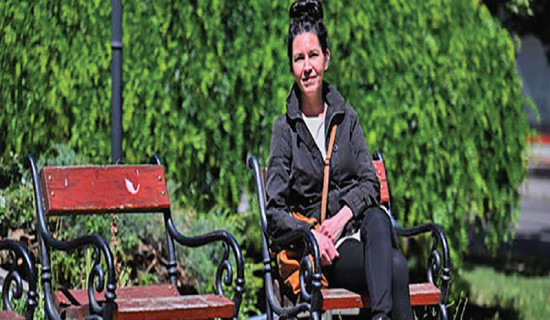
Brian Carro, a middle school math teacher in Palatine, Ill., suddenly started losing speech and vision on Christmas Eve in 2019. He and his wife rushed to the hospital, where doctors pinpointed the source of his brain bleed: a glioblastoma tumour. Surgeons removed the tumour. In the following weeks, some of his vision and speech returned, though both continue to be challenging.
“That’s probably one of the hardest things,” Carro said. “You know what you want to say, and the more frustrated you get, the longer it’s going to take.”
After surgery, Carro went through radiation therapy to try and kill the rest of the cancer. The surgery was painful, as he had to stay awake throughout. His doctors have put him through several different chemotherapy treatments in the past couple of years. It’s been a process of trial and error, with early treatments flat-out not working or even causing seizures. But later treatments enabled him to go back to work teaching eighth graders.
- statnews.com