- Tuesday, 2 June 2026

Women In Journalism

Our constitution, law and policy have prioritised the principle and practice of gender inclusion and participation. Moreover, women's meaningful inclusion in every sector upholds the democratic norms and values in the true sense. The constitution has, in its very preamble, adopted the concept of inclusion. It has also been adopted in our electoral system and different areas of government services. Women's participation in politics and bureaucracy is high on priority though the actual situation of inclusion is far from satisfactory.
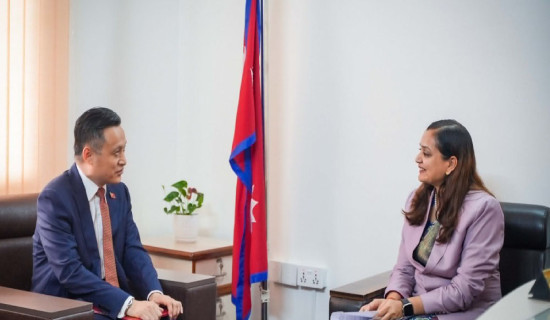
Speaking at a programme the other day, Minister for Communication and Information Technology Rekha Sharma has rightly noted that there should be more inclusion and participation of women in the field government and the media sector. It is necessary to increase the number of women in the field of journalism, she said. For this to happen, the social stereotypes have to be shattered and the evil practice of discrimination put to an end.
In order to encourage women's participation in the media sector, it is imperative to promote women's empowerment in the spirit of inclusion, making them responsible leaders in the area of information and communication, which is mostly occupied by males so far. It seems that journalism is largely a male’s sphere in many countries around that world and Nepal is not an exception. The nature of job, making it obligatory to work during odd hours and lack of job security are some of the professional challenges faced by women aspiring to work in the media sector. But some courageous and motivated women have ventured into the field and made their mark. More aspirants can join the profession if there is a conducive atmosphere.
The government and its concerned institutions should think of creating congenial environment to attract more women into of journalism. Minister Sharma has expressed her concern that the number of women active in the field of journalism is very low although the issue of inclusion in Nepal has progressed significantly over the years. She noted that the entry of women into journalism should be prioritised and the mass media sector should be serious so that they remain in the profession in a dignified manner. According to a recent data, there are about 2,400 women journalists out of about 13,500 members of the Federation of Nepali Journalists. This shows that the lion's share of the job is taken by males. Women who start working as journalists cannot continue in the field for different reasons. There may be family pressure and the need to take care of children. So joining this profession by women is not enough. They need to be retained in the job permanently.
Concerned institutions need to pay attention to develop their professional skills, create women-friendly working environment, giving a sense of job security and providing exposure and career opportunities. Giving important responsibilities to women, enhancing the capacity of female journalists and creating a gender-responsive media policy are other key suggestions to increase women's participation in the field of journalism. There is good news that the government is positive about establishing the mass media training institutes for those who want to enter the journalism sector and those who have already entered in the field. This is a good plan of the government for the promotion of journalism in general and women's meaningful participation in particular.