- Tuesday, 2 June 2026

10 solar-powered boring wells built for wild animals
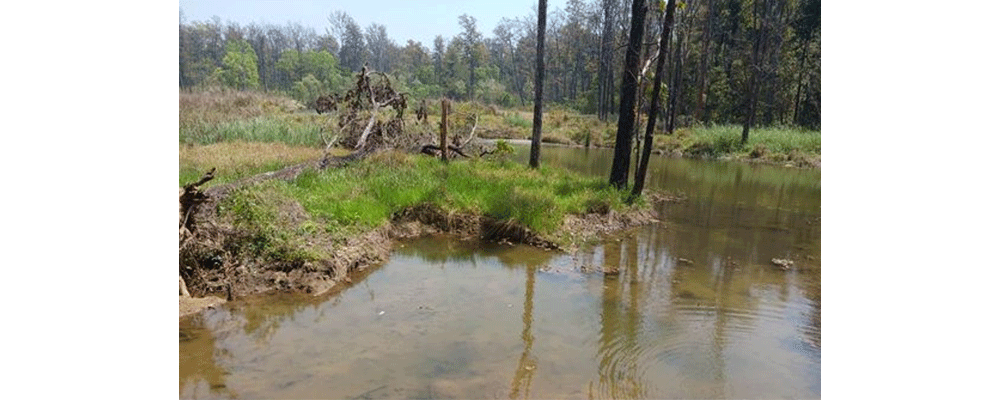

By Siraj Khan,Nepalgunj, Apr. 27: Every summer, the streams flowing through the Banke National Park dry up leading to a scarcity of water for wildlife in the park.
According to Shyam Kumar Shah, chief conservation officer at the BNP, 45 streams of the park dry up in summer every year.
In a bid to solve the recurring problem of water shortage, authorities have constructed boring wells powered by solar energy inside the national park.
"We could see animals struggling to find water throughout the hot summer. We have constructed 10 boring wells powered by solar energy to solve the problem of water shortage in the dry season," said Shah.
According to Shah, water gets pumped into the wells throughout the day due to solar energy allowing wildlife to quench their thirst anytime. Meanwhile, officials informed that they were also creating grasslands for wildlife alongside the wells.
A preliminary study of the park had suggested the need for 450 boring wells and grasslands; however, there are only 20 grasslands and 10 newly constructed boring wells. It costs Rs. 1 million for each boring well powered by solar energy.
Nevertheless, the park officials stressed that the lack of proper management of natural resources along the buffer zone and Chure region had led to a shortage of food and water for animals.
Other problems faced by the park include poaching, human-animal conflict, climate change and a decrease in tourist arrivals.
There are 34 species of mammals including pangolin, tiger and elephant; 300 birds, such as black eagle and Raj Dhanesh; 24 reptiles, including python and yellow monitor; nine amphibians and more than 55 fishes in the BNP. There are a total of 25 tigers in the BNP. The park spreads over an area of 550-kilometre square of which the 343-kilometre square lies in the buffer zone.



-square-thumb.jpg)