- Tuesday, 2 June 2026

Peace For Sudan

Bini Dahal
The holy month of Ramadan is about to end in Muslim countries around the globe. Amidst such festivity, Sudan, an African nation, is suffering from a major conflict within its territory. Historically speaking, the country has never really enjoyed stability. So, conflicts and upheavals have continued to cause instability to the country for years now.
On April 15, 2023, a conflict broke out between the Sudanese army and a paramilitary group known as the Rapid Support Force (RSF). To give a background to this incident, till 2021, Sudan was run under the presidency of Omar Al-Bashir for 30 long years. However, that year a military coup was carried out, stripping Bashir of power. Then Sudan’s military began imposing its rule.
While all this happened, the RSF had been a major supporter of the army and helped to ensure a stronghold over the country. The plan was to establish a civilian rule in Sudan. But this never happened and there was a big question on how the paramilitary should be included in the army. The power struggle between Sudan’s military leader Abdel Al-Burhan and commander of the paramilitary force Mohamed Hamdan Dagalo became the focal reason of the ongoing conflict.
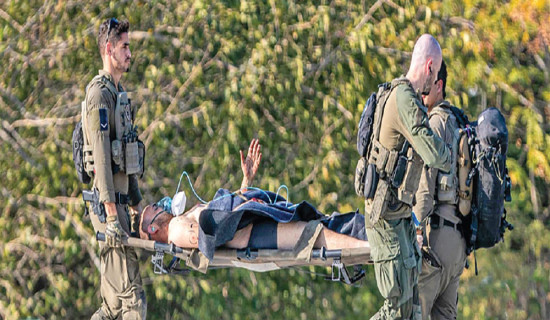
Airstrikes and gunfights have been taking place in and around the capital city, Khartoum. With many dead and numerous others injured, the number of casualties has gone all up. Media reports have portrayed a horrible scene with streets littered with dead bodies and that the air has been filled with the smell of blood. Owing to this conflict, it has been really difficult to provide proper emergency healthcare services to the needy.
The problem that a conflict brings about is multi-fold in nature. People are running out of food, drinking water and other necessary supplies, including medicines. Amidst the conflict, there have been reports about individuals belonging to the United Nations (UN) and other international organisations getting attacked. Embassies of different countries are making their all-out efforts to evacuate their citizens to safe places. Not just this, there have been power cuts and growing incidences of looting.
When it comes to migration, internal displacement has become a common phenomenon. People have begun leaving Khartoum as the situation has been worsening. And this tendency will continue as people will be forced to migrate to safer areas just to protect their lives. As of now, there is no any sign of the conflict coming to an end. While a 24-hour ceasefire was declared, it was not followed properly as the firing continued during the period. Unrelenting conflict cannot just cause problematic situation to the country but also the whole region.
Conflicts have a long-term impact. This is evident in other countries, including Nepal, too. Once a conflict takes place, the path to recovery is not an easy one. It requires much effort, energy and resource to go back to normalcy. The trauma that people go through including the effect that is seen inter-generationally cannot be ignored.
The international community should immediately help the two conflicting parties let go of their selfishness, come together and work towards searching for a common ground–that is based on greater good for the people and the country. Negotiation and mediation with the help of third neutral party are urgently essential.
With passing days, the number of casualties is growing. Hopefully, the situation will come under control before a bigger disaster strikes the nation.