- Tuesday, 2 June 2026

Sound Cyber Security


With a rapid transfer of information technology (IT) from many developed nations, Nepal has also made strides in this sector over the years. The traditional economy is being gradually shifted to the one based on modern technology. The inception of the age of information has had considerable implications for the way information is processed and spread. Any information can now be transmitted so swiftly that it reaches out to the target group in no time. Thus, the modern information systems and internet communication have become the driving force of sweeping social changes. With the advancement of modern technology, it has become easier for delivering services to people in a more effective manner. This has also made life more comfortable than ever before. Nepal has lately accorded priority to electronic transactions. Without a robust cyber security in place, such transactions may be at high risk.
With the demand of IT manpower on the rise in Nepal, many public and private colleges have now been established across the country to produce such hands. However, the nation does not possess adequate IT professionals to meet the demand. Even the government offices are found to be short of capable human resources to carry out day-to-day activities. This has hindered the process of delivering services to people in an efficient manner. It is necessary to pay much attention on how competent human resources could be ensured in public offices. Putting a fool proof cyber security in place has also become quite challenging owing to a shortage of competent IT experts. Offenders are usually seen involved in cybercrimes, posing an increased cyber security threat. The government seems to have taken such threats seriously. It had formed a high-level taskforce on cybersecurity a couple of weeks back.
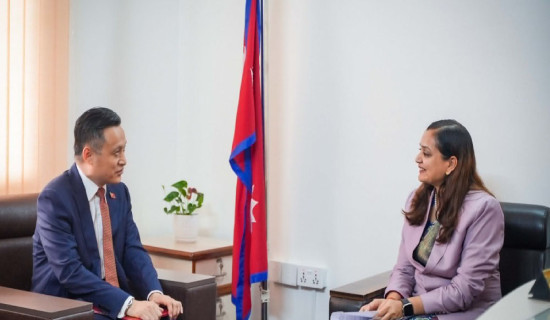
Having received an inclusive report from taskforce on Sunday, Minister for Communication and Information Technology Rekha Sharma conceded the fact that the government did not have enough IT professionals to operate the sector proficiently. She also felt a need for the government to do necessary homework with top priority to deal with issues associated with modern IT equipment and human resources. Creating competitive manpower for government institutions and managing the existing skilled IT hands is a difficult task. As IT is an ever evolving sector, it requires uninterrupted training and updates on the changing technology. It is equally notable that cyber security is as vital as physical security. In view of this, the government has come up with the policy of guaranteeing cyber security from the centre to the local level. Minister Sharma promised to include the suggestions and recommendations made by the taskforce in the government's upcoming policies, programmes and budget. She added: "Since IT is indispensable from collection of revenue to protection of nationality, its security is the government's prime agenda."
Similarly, Secretary at the Ministry of Communication and Information Technology Krishna Bahadur Raut underlined the need to make structural changes to ensure cyber security and service delivery. Because the medium of service delivery is electronic, it is essential to focus on cyber security. The taskforce was authorised to study policies, laws, structures and processes on cyber security and prepare a comprehensive report together with recommendations. For cyber security to be strengthened, the government needs to work on recruiting skilled IT technicians. Since IT-related human resources are in high demand internationally, it has also triggered brain drain. So, the government must adopt a proper policy to retain the skilled IT manpower within the country.