- Tuesday, 2 June 2026

Inadequate manpower ailing health service in Karnali
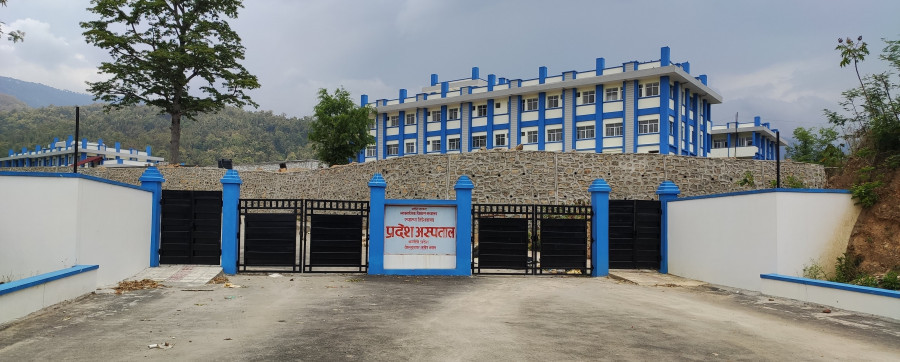

BY RAJANI YOGI,Surkhet, Apr. 9: Health services in Karnali Province have not been effective due to inadequate health manpower. Since more than 50 per cent of the permanent health posts are still vacant, responsibility of 12,592 patients fall under one doctor in the province.
There are a total of 909 permanent health posts in the province. Of which, only 327 have been filled and 582 still remains vacant.
Since, there are only 135 permanent doctors, most of the health services are dependent on temporary staffs. Some 800 heath workers are providing services through a temporary post.
In the province, eight out of 10 districts have district hospitals. Apart from that, there is a Provincial hospital and Mahelkuna hospital in Surkhet and Karnali Institute of Health Sciences in Jumla. According to the director of Provincial Health Services Directorate Dr. Rabin Khadka, the province lacks specialist doctors.
He informed that most of the posts were vacant and that even many of the appointed heath workers were loathed to work in remote areas. Due to the lack of specialist doctor, treatments which could be done in the district hospitals were being referred outside, he added.
Increasing prevalence of non-communicable diseases
Dr. Khadka said that along with the lack of health personnel, the province is also facing a challenge to control the outbreak of non-communicable disease. Due to lack of proper management for the prevention and control and adequate treatment, there has been a problem in the treatment of non-communicable diseases, he added.
"If we consider the time period of the last two to four years, the province has not shown interest in disease control. If it goes like this, it can be worse," he said.
According to him, instead of spending a large amount in the treatment, we should raise public awareness in time to prevent and control the disease.
Problems in taking patients to the hospital
The people of the province injured in natural calamities and road accidents are not getting timely treatment due to the difficult geographical conditions of the province and unavailability of the health workers on time.
Since most of the district hospitals lack specialist doctors, the patients who could get treatment at the district hospital at the minimum cost had to travel to Nepalgunj or Surkhet for the treatment, costing common people a lot of money.
According to Dr. Khadka, it would cost more than Rs. 100,000 for people to travel to Nepalgunj or Surkhet for treatment.
Ineffective implementation of health insurance
Dr. Khadka informed that there was a risk of the health insurance programme to be stalled due to poor quality and complicated procedures. He said that the insurance programme had not become effective recently and that there were many complaints that the beneficiaries had not been able to get the insurance benefits easily.
Most of the people complained that it was difficult to get free medicine at the hospital mentioned in the scheme of the insurance.
Even the insurance company has scant manpower. Currently, each person in every district and three at the province level are working from the insurance company, rendering insurance programme ineffective.