- Tuesday, 2 June 2026

In Zimbabwe's rainy season, women forage for wild mushrooms
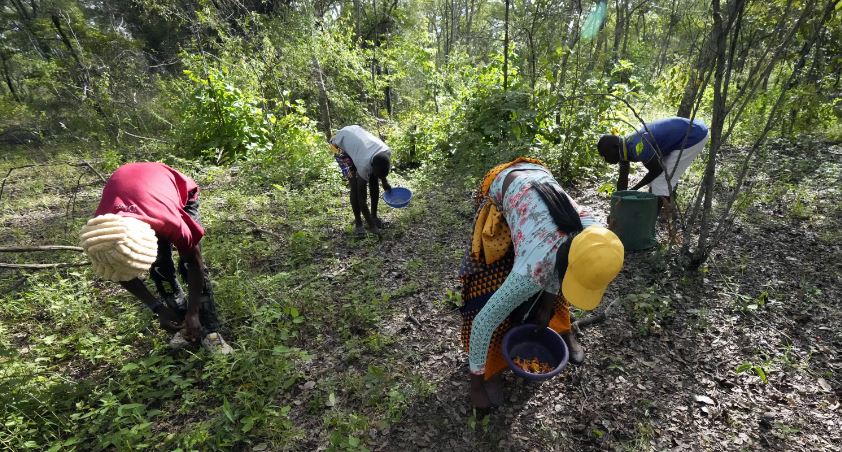

Harare, Zimbabwe, Mar. 20: Zimbabwe's rainy season brings a bonanza of wild mushrooms, which many rural families feast upon and sell to boost their incomes.
But the bounty also comes with danger as each year there are reports of people dying after eating poisonous fungi. Discerning between safe and toxic mushrooms has evolved into an inter-generational transfer of indigenous knowledge from mothers to daughters. Rich in protein, antioxidants and fiber, wild mushrooms are a revered delicacy and income earner in Zimbabwe, where food and formal jobs are scarce for many.
Beauty Waisoni, 46, who lives on the outskirts of the capital, Harare, typically wakes up at dawn, packs plastic buckets, a basket, plates and a knife before trekking to a forest 15 kilometers (9 miles) away.
Her 13-year-old daughter Beverly is in tow, as an apprentice. In the forest, the two join other pickers, mainly women working side by side with their children, combing through the morning dew for shoot-ups under trees and dried leaves.
Police routinely warn people of the hazards of consuming wild mushrooms. In January, three girls in one family died after eating poisonous wild mushrooms. Such reports filter through each season. A few years ago 10 family members died after consuming poisonous mushrooms.
To avoid such a deadly outcome, Waisoni teaches her daughter how to identify safe mushrooms.
"She will kill people, and the business, if she gets it wrong," said Waisoni, who says she started picking wild mushrooms as a young girl. Within hours, her baskets and buckets become filled up with small red and brown buttons covered in dirt.
Women such as Waisoni are dominant players in Zimbabwe's mushroom trade, said Wonder Ngezimana, an associate professor of horticulture at the Marondera University of Agricultural Science and Technology.
"Predominantly women have been gatherers and they normally go with their daughters. They transfer the indigenous knowledge from one generation to the other," Ngezimana told The Associated Press.
They distinguish edible mushrooms from poisonous ones by breaking and detecting "milk-like liquid oozing out," and by scrutinizing the color beneath and the top of the mushrooms, he said. They also look for good collection points such as anthills, the areas near certain types of indigenous trees and decomposing baobab trees, he said.
About one in four women who forage for wild mushrooms are often accompanied by their daughters, according to research carried out by Ngezimana and colleagues at the university in 2021. In "just few cases" — 1.4% — mothers were accompanied by a boy child.
"Mothers were better knowledgeable of wild edible mushrooms compared to their counterparts — fathers," noted the researchers. The researchers interviewed close to 100 people and observed mushroom collection in Binga, a district in western Zimbabwe where growing Zimbabwe's staple food, maize, is largely unviable due to droughts and poor land quality. Many families in the Binga are too poor to afford basic food and other items.
So mushroom season is important for the families. On average, each family made just over $100 a month from selling wild mushrooms, in addition to relying on the fungi for their own household food consumption, according to the research.
In large part due to harsh weather conditions, about a quarter of Zimbabwe's 15 million people are food insecure, meaning that they're not sure where their next meal will come from, according to aid agencies. Zimbabwe has one of the world's highest rates of food inflation at 264%, according to the International Monetary Fund. (AP)