- Thursday, 28 May 2026

Nepalis continue to fall prey to traffickers for a dream life abroad
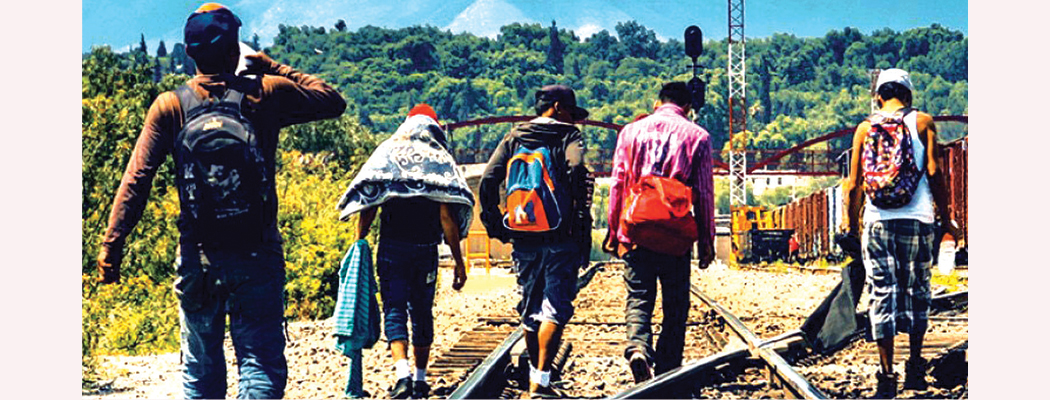

By Purushotttam P. Khatri/Nayak Paudel,Kathmandu, Jan. 15: If there were accurate data of Nepalis living illegally in different countries abroad, alongside the number of casualties, fatalities and missing individuals due to trafficking, it would be horrifying, accept government and law enforcement agency officials.
Every year, the government rescues a number of Nepalis suffering in different countries after learning about their whereabouts and predicaments.
“The government mostly needs to rescue those who had entered the country illegally. It is because the ones who went legally can exercise the rights in the respective country without any hindrance,” said Superintendent of Police (SP) Dan Bahadur Malla, spokesperson at the Anti-Human Trafficking Bureau (ATHB) of Nepal Police.
While many Nepalis accept the risks to reach their respective destinations by paying millions, many are duped. “Those who paid money to reach a foreign land anyhow are ready for the dangers or have some other plans. However, many people are also cheated because of a lack of awareness,” SP Malla added.
The awry American dream
In June, 2021 seven Nepalis who were trying to enter America illegally drowned when their boat sank in the Caribbean Sea. There were 10 Nepalis on the boat who were travelling via dangerous routes that passed through several countries.
The information about the disappearance of seven Nepali youths was sent by the Caribbean Police to the Nepal Embassy in Egypt.
It is believed that the Nepalis who were caught in the boat accident had paid up to Rs. 3 million each to go to America for employment.
Similarly, according to a record of such incidents provided by Nepal Police, on September 14, 2021, 18 Nepalis who went to America for employment were arrested at the Frankfurt Airport in Germany. According to the Nepali Embassy in Germany, they were arrested while going to America via Russia for employment.
According to the Embassy, all the people were taken into custody by the security agencies of Germany as their visas were fake. They had reached Russia from the UAE with the help of Pakistani agents.
Two Nepalis were also rescued from Nigeria when it was found that they had been held hostage there for 22 months. The duo, who had paid to reach the USA, had been diverted to Nigeria by their agents.
Six Nepalis who were trying to enter America through the network of human traffickers were stranded in Republic of Togo, a West African country.
These are only representative characters showing Nepalis’ American dream gone awry.
“When many Nepalis reach European countries under a legal visa, they still misuse it to reach the USA by any means,” said SP Malla.
Around 19 months ago, 12 Nepalis who planned to enter America via Europe for employment were stranded in the war-torn country of Libya. They were rescued by the Ministry of Foreign Affairs with the help of the UN Mission and Nepali Embassy in Egypt.
Five Nepalis who flew to Georgia on February 1, 2022, to enter America via New Delhi, were arrested at the Georgia Airport.“Who wouldn’t like to get an employment in the USA. However, it is the most difficult one to enter illegally. Thus, many Nepalis opt for other Western and European countries; the risks, however, remain the same,” said SP Malla.
A job anyhow
While those who have proper skills, even those with medical and IT skills, try reaching a country in the West, unskilled manpower, women included, illegally enter countries in the Gulf.
“Among the Gulf countries, only Jordan has an agreement with the Nepal government regarding acceptance of women as household labour. Other Gulf nations don’t recognise Nepali women as legal household workers,” said SP Malla.
However, still many women are working as household workers in several Gulf countries, including Syria.
A senior officer at the ATHB, who has investigated human-trafficking cases for more than two decades, said that at least 300,000 Nepalis can be found living illegally in each and every Gulf state.
Speaking to The Rising Nepal, SP Malla said that visit visa to the UAE is the most exploited loophole to get trafficked to different Gulf countries. “Moreover, mostly it is the UAE where Nepalis reach as the first destination before getting trafficked to different parts of the world, including the USA,” he added.
“The ones who reach the Gulf countries through illegal routes are mostly unskilled. The only thing they can do is clean houses. They can neither speak in English nor Arabic. However, they still pay hundreds of thousands to reach a foreign land. All of it for a dream of a decent job than he/she can find in Nepal,” SP Malla noted.
According to the AHTB officials, Nepalis are not paid properly, tortured, and subjected to physical and sexual violence by people in the Gulf countries.
“It is because agents would have sold Nepalis to people in Gulf countries for a certain sum of money as slaves. It is what we call modern slavery,” said SP Malla. Nepali authorities or the families of such victims should pay the sum which the owner paid to the agent before repatriating him/her to Nepal. “If not, the consequences are dreadful,” said SP Malla.
An overall scenario
According to various studies of the Central Investigation Bureau (CIB) under the Nepal Police, every year 4,000 to 5,000 Nepalis like them get into trouble when they try to go abroad illegally and via covert land routes.
SP Kamal Thapa, who is also the spokesperson for the CIB, said that luring people with the American dream, human traffickers have taken thousands of Nepalis first to India, Sri Lanka, the Gulf countries, Turkey, Europe and Africa.
Talking to The Rising Nepal, Tej Bahadur Chhetri, Joint Secretary at the Ministry of Foreign Affairs for Middle East Affairs, said that the problem starts when Nepalis people fall prey to the fake assurances of traffickers regarding better opportunities and jobs in developed countries.
“In recent times, many young people have been stranded and many of them died on the way to America, Canada, and other European nations in pursuit of better life,” said Chhetri, who added, “This has been a growing problem.” SP Malla informed that despite reports of many cases of human-trafficking and rescues, the rate of complaints against traffickers is low.
“Agents are deployed in an organised manner. They identify vulnerable families, build connection with a relative and then lure the victim. Many don’t file a complaint fearing their relatives could be jailed, and others get back to the agent rather than filing a complaint,” said SP Malla.
Gangs of human traffickers have been risking the lives of thousands of Nepali youths abroad by setting up arrangements with immigration officials of various countries.
The study of CIB has also pointed out that human traffickers are working from Nepal to send aspiring youths to such countries in the name of good opportunities and better jobs.
CIB Spokesperson Thapa said that the rescued persons feign ignorance about the smugglers and do not reveal their true identity.SP Thapa said that the victims who returned after months of extreme crisis, deprivation, despair and suffering do not give information about the culprits.
Similarly, even if Nepalis find a proper job after entering a country illegally, they cannot send money back home and should use illegal channels like “hundi”, thus illegal human trafficking has a major economic drawback as well.
While many Nepalis are getting trafficked to several foreign countries, stakeholders suggested that authorities shouldn’t turn a blind eye towards mitigating trafficking to India.
Way forward
Joint Secretary Chhetri said that if people followed legal formalities before flying abroad, they would not be cheated and could lead a secure life in the foreign land.
“We recently found several individuals with fake work permits at the Tribhuvan International Airport (TIA). They were unaware about it and would have been trafficked to a different country if we hadn’t stopped them,” said SP Malla.
Officials argue that traffickers prepare fake visa, ticket and work permit to gain the trust of people so that they can be trafficked without difficulty. “However, those documents can be verified online. If people don’t know how to verify the documents themselves, they can contact at our hotline number “1177”. We will do that for them,” said SP Malla.
The AHTB has also stopped around 1,000 Nepalis from taking a flight to the UAE under visit visa from the TIA in the past four-five months.
“They had fake documents. Many were even unaware of the place they were going to. Most of them were from poor families. They only looked forward to finding a job in any foreign country whatsoever,” said SP Malla.
Thus, officials and stakeholders argued that some of the most important steps required to mitigate the increasing trend of human trafficking in a modern and digital world included a mandatory awareness class for any Nepali visiting abroad, easy access to document verification, and an upgrade in plans, policies and laws related to migration.
“Nepal is young in terms of preparations to tackle human trafficking. Even a specialised bureau was established only four years ago. As the world is facing a modern form of slavery and trafficking, we should upgrade parallelly with the trend of wrongdoings,” said SP Malla.

-square-thumb.jpg)
-square-thumb.jpg)