- Tuesday, 26 May 2026

Tourism Can Promote Inclusive Growth
Hikmat Singh Ayer
The United Nations General Assembly approved a proposal to upgrade Nepal from an underdeveloped country to a middle-income developing country by 2026 on November 24, 2021. The Government of Nepal has also formulated a strategy for upgrading the nation in this line through the current fifteenth five-year plan, 2019–20 to 2023–24.
Despite all the progress shown in the Human Development Index of the last few years, major socio-economic statistics do not seem appropriate in the country as the common people's basic demands are not fulfilled and society has a very unequal distribution of income among the different strata of the population.
Nepal has a rural economy, and about 66 percent of households in the country depend on agriculture, but the contribution of agriculture to the economy is gradually coming down, and it is only 24.5 percent now, as per Statista.com.
This shows that the economy is transitioning from agrarian to non-agrarian service, and income distribution is highly skewed towards the rich.
Besides, the income of people is increasing, the share of farm income in total income has gone down sharply, and the contribution of non-farm income and remittances to total income is increasing. People living in multidimensional poverty account for 28.6% of the total population in fiscal year 2018-2019, while those living in absolute poverty account for 18.7%.
Attention
Despite some economic and social progress, a serious concern about inclusive growth is drawing the attention of policymakers. It has been more than 65 years since the Nepalese government began implementing five-year and sometimes three-year development plans in the country.
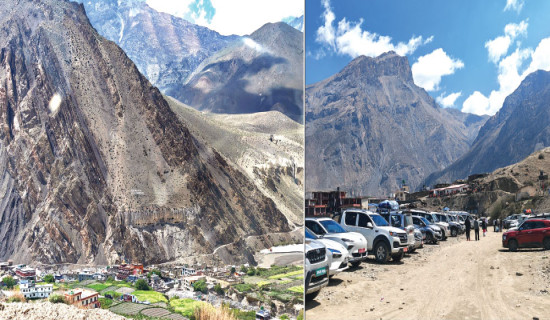
A national planning process has been implemented in the country, but in spite of that, some districts, peoples, and regions are completely devoid of basic necessities of life like food, water, sanitation, and so many other things. One of the foremost affected areas in the country is Karnali Province, which is still not completely linked with motorable roads, as is the case in the education and medical sectors.
Women, ethnic groups, and so-called scheduled class people are almost in the same place where they stood many years ago.
Though it has long been advocated for a bottom-up approach to development activities and the inclusion of all categories of people in the structure of a nation state, the reality is diametrically opposed, with certain castes, regions, and languages dominating.
The present population distribution in the seven provinces as per the National Population Census of 2078 is as follows: Province 1 has a population of 49,72021 people; Mahesh Provence has a population of 61,26888 people; Bagamati Province has a population of 60,84042 people; Gangdaki Provence has a population of 24,79,745 people; Lumbini Province has a population of 5124225 people; Karnali has a population of 16,94889 people; and Sudur Paschhim has a population of 16,94889 people. Similarly, the percentage of total population settled in each of the seven provinces is as follows: Chetri (Khas) (16.59%), Brahmins (Hill) (12.17%), Magar (7.12%), Tharus (6.56%), Tamang (5.81%), Newar (4.99%), Kami (4.75%), and Nepalese Muslims (4.39%).
What does inclusive growth mean? Growth can be considered as economic and social growth (with better indices of different categories of human development like the poverty index, the education index, etc.). Inclusion entails giving a place in the discussion to all groups of people.
It should address various elements on the basis of geography or ecological region, caste, ethnic group, political allegiance or belief, gender, backwardness of people, physical ability, etc.
Inclusion in the growth of a country necessarily demands a democratic environment where hegemony or dominance of caste, religion, sex, language, class, etc. ceases and respect for plurality, diversity, and decentralisation is made a sine qua non in the governance of a country.
The Constitution of Nepal 2072 has addressed the need for inclusiveness in the Preamble itself and clearly mentioned the responsibilities of the state as stated in the constitution, which are:defending and promoting social and cultural solidarity, tolerance and harmony, and unity in diversity by recognising multi-ethnic, multi-lingual, multi-religious, multi-cultural, and diverse regional characteristics and resolving to build an egalitarian society based on proportional, inclusive, and participatory principles to ensure economic equality, prosperity, and social justiceBy eliminating discrimination based on class, caste, region, language, religion, and gender and all forms of caste-based untouchability,
In this context, inclusive growth should address the following elements in the process of economic and social growth:
Indigenous nationalities, economic activities should target the country's indigenous ethnic minorities. There are about 125 ethnic groups in the country, and the economic opportunities they are getting or the environment in which they can get economic opportunities like education, skill, the right to economic resources, etc., is completely different among different indigenous groups.
Dalits, economic activities should not be restricted in the name of untouchability, and this can imply that economic opportunities should be awarded or an environment created in which a so-called dalit can be granted access without hesitation.
Medheshi and Tharu: The indigenous people of Madhesh and Tharu communities should be proportionately represented in the economic activities of the country and the nation-building process.
Women should not face gender discrimination, and they should be given preferential treatment for a certain period to upgrade their status.
Visitors’ Interests
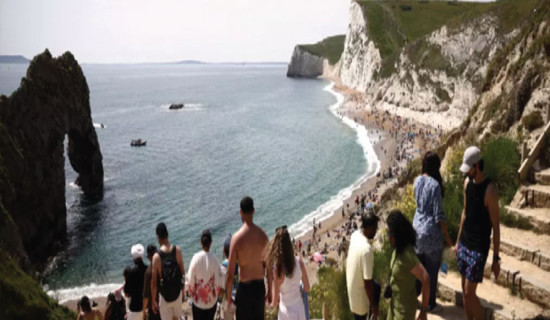
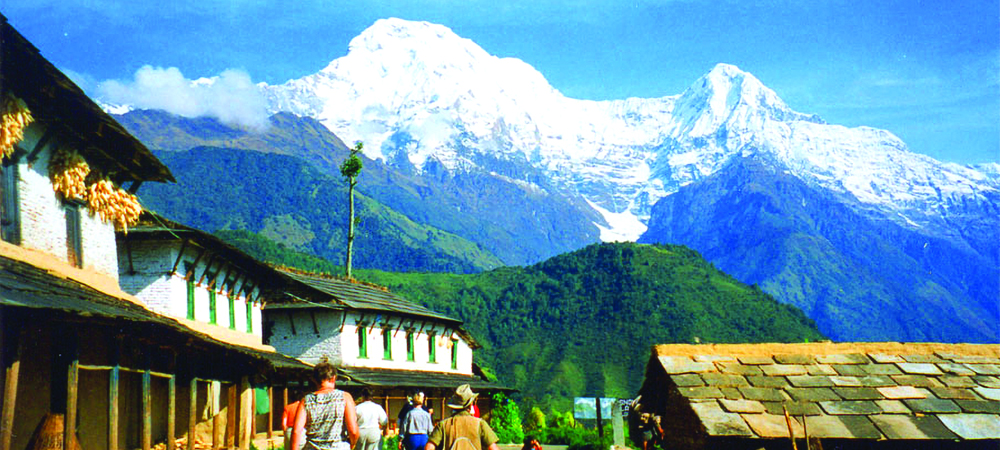
Tourism necessitates a collection of attractions where visitors can find something of interest. Other necessary factors help the attraction meet the real demand of a tourist, and tourists can visit the attractions. In our case, the diversity of the culture, the natural attractions, and the geomorphology are in themselves the fundamentals of tourism.
If tourism is developed with a proper plan and understanding, it reinforces and strengthens the fundamental elements of tourism, and the strengthened elements further help to develop tourism.
For example, keeping the identity and culture of different ethnic groups intact can help attract many culture-loving tourists to the country; their visit, if the distribution of income is properly set, can help all players in the tourism industry get economic benefits from the activities.
Thus, the preservation of cultural elements can ultimately become an asset that continuously generates income over time.
Tourism is more inclusive than many other economic sectors in the country.It has developed in different ecological regions of the country and encompassed many ethnic communities.
If you look at the economic activities of the region's predominant ethnic communities, you will notice that the Sherpa community is dominant in the tourism business of Solu Khumbu, Makalu Barun, Kirati Rai Limbu Community in Mundum Trail in Bhojpur, Tapalejung, Madheshi Community in Mithila Art Janakpur, Sherpa Community in Helambu Langtang, Gurungs Community in Lower Manaslu, Sherpa Community in Upper ManBesides, it has given the local people access to education and local resources, and they feel more empowered than other people living in the same remoteness, difficulties, and destitution.
Many tea shops and lodges/hotels have sprouted up in various tourist destinations, and they are mostly run by female members of the family.Tourism has greatly helped to create employment and has given opportunities to women to generate income, be better informed, and make interactions with tourists so that they can have a better perception of life and be able to make decisions on what they have to do.
Though special interest tourist markets are not as large as general tourist markets, they can have a significant impact on the people associated with the market.For example, in Nepal, we can develop religiously and anthropologically interested tourists who are interested in studying and comprehending the elements of various religions.Buddhism is widely practised throughout the world, and it is practised by 11 ethnic communities, each with their own distinct practices.Likewise, Kirati is practised by four different ethnic groups, and each of them deserves some uniqueness in their practices. Thus, tourism can have a deeper impact on addressing the economic and social dimensions of various ethnic groups in the country.
Thus, tourism seems to effectively address the ethnic groups, indigenous people, women, and Madhesi people, and its development can bring very effective inclusive growth in the country.
Constraints/Challenges
All ecological regions, particularly in the Greater Himalayan Upper and Lower Trail routes, Num Valley in Makalu Barum, Upper Mundum Tail, Upper Mustang, Tsum Valley in Manaslu, Limi Valley, Humla, and many other areas, are not equally developed in terms of infrastructure and tourism attractions, and are not distributed in proportion to the ethnic group distribution in the country.
Therefore, it may not instantly open equal opportunities to all ethnic groups. Besides, the culture and traditions of all indigenous people may not be equally interesting to a tourist. So, accessibility, environment, skill development among people through trainings and orientations, education level, etc. can make a difference in utilising the opportunities created by the tourism sector.
All in all, there may be numerous opportunities to directly and indirectly involve the previously excluded group in the process of tourism development.It is not necessary that each individual group get directly involved in tourism activities to get its benefits; some of them could be involved in the supply side of organic agriculture products, local souvenirs, local guides, and transportation activities. Tourism can create demand for various goods and services.
Marginalized people, backward people, and people from ethnic minorities can be given various skill development trainings so that they will be able to stand equally and furnish their socio-economic activities in a dignified way in a homestay service, a tea shop, a souvenir shop, and many more economic activities.
(Ayer is Senior Director, Tourism Product and Resource Development, at Nepal Tourism Board)
How did you feel after reading this news?