- Sunday, 12 April 2026

Managing Kathmandu Valley's waste becoming challenging
By Narayan Dhungana/Sharmila Pathak, Kathmandu, July 19: Solid waste management in the Kathmandu Valley has been a perennial and pressing problem without a sustainable solution yet.
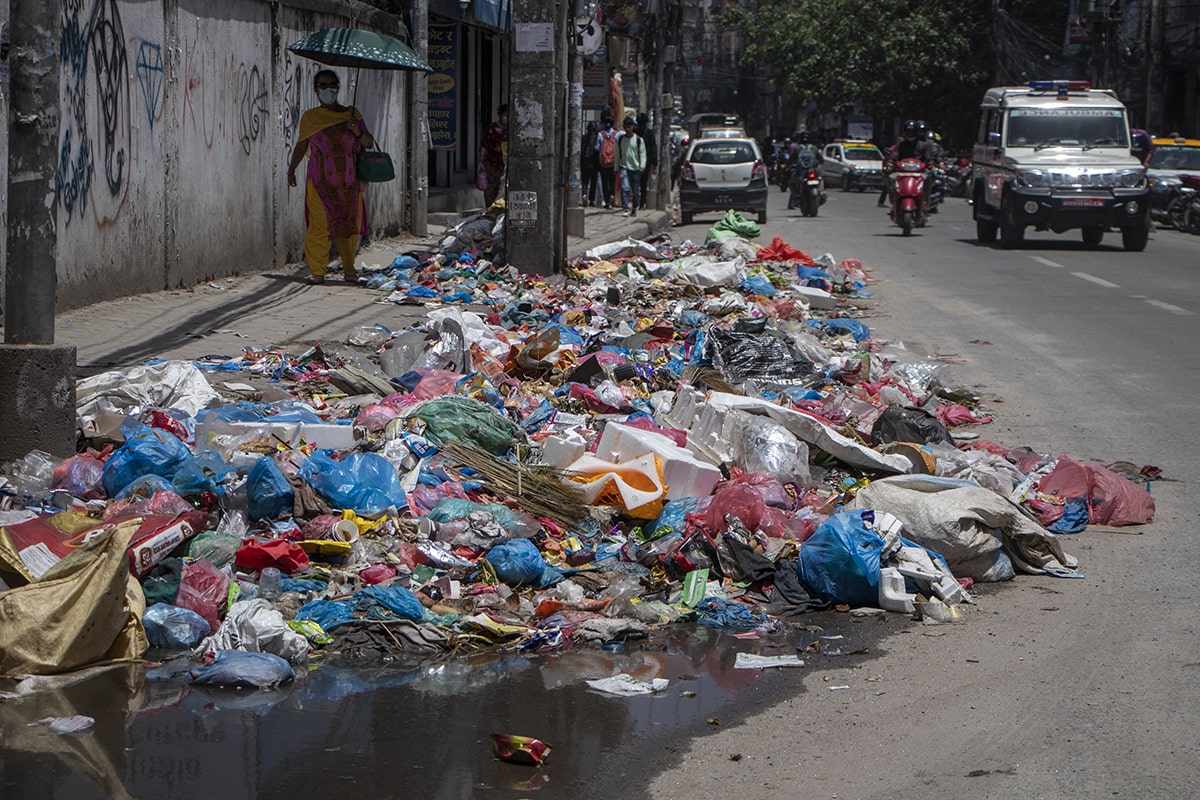
It seems living with waste piled
everywhere in the streets has been a routine life for the residents of the
Valley with garbage often waiting for its collection and disposal for days.
Health risks posed by unmanaged waste have been a major concern while people passing by heaps of waste in the Valley's streets have been affected. Furthermore, unmanaged solid waste has degraded the beauty of the Valley.
However, the election of Balendra Shah
to the mayoral post in the Kathmandu Metropolitan City (KMC) through the
recently held local election has instilled hopes. The main election agenda of Shah,
who won as an independent candidate, was to find a sustainable solution to waste
management in the Valley.
People pin their hopes on him is he who has won independently driven by his passion and energetic character. Time will tell how far he will be able to deliver.
But, Shah's efforts are ongoing.
Following his election as KMC mayor, he reached out to the residents of Sisdole
and Bancharedanda where Valley's waste was being dumped for years, and inquired
about their problems caused by the dumped waste. He is also figuring out what
possible alternatives are out there to the problem.
As part of his plan to manage
waste, he has come up with the slogan 'rupee from rubbish' by classifying
biodegradable and non-biodegradable waste produced from the Valley. The KMC has
already asked residents of the Valley to segregate waste at the source of its
origin as biodegradable and non-biodegradable.
Waste segregation has come into effect from July 17 and at all 32 wards of the KMC. Efforts are on for the same in other local levels (Lalitpur and Bhaktapur) of the Valley, it has been said. The KMC has led the collection and disposal of waste produced from the Valley.
As per the schedule, biodegradable
waste is picked up at the source of its origin on Sunday and Wednesday and
non-biodegradable on Monday and Friday. A person defying the waste segregation
is fined Rs 500.
However, challenges remain ahead,
especially in the management of segregated waste.
Preparations are underway to dump
the segregated waste collected from the Valley separately at a landfill site,
Bancharedanda, for some time, says waste expert and engineer Sunil Lamsal.
Problems remain the same by dumping
separated waste in the same place at a time when residents of the dumping site,
Bancharedanda are seeking alternatives and there is a demand to reuse it at the
source of its origin, according to the local people.
The KMC has identified five places
in Kathmandu to dispose of waste. After three months, hazardous garbage will not
be dumped at Bancharedanda, says the KMC.
The metropolis has come up with a
plan to reuse biodegradable waste produced from the Valley as organic
fertilizers.
Waste segregation and reuse
Experts have suggested some
solutions like reducing the volume of waste at the sources of its origin along
with its segregation, adopting the zero waste concept, and the use of
modern technology to manage garbage.
Residents of Sisdol and
Bancharedanda have been protesting, many times causing a halt in a garbage
dump, stating that they have been badly affected by dumped solid waste. Besides
being exposed to health issues, they have complained about issues like a drop
in the quality of their agricultural products and the disease to their
livestock caused by leachate from solid waste.
Recently, the KMC struck an
18-point agreement with the locals of Sisdole and Bancharedanda following their
protest, thus allowing the disposal of garbage from the Valley.
The KMC has been in collaboration
with the private sector to pick up garbage from the Valley. However, the
private sector has been often accused of being irresponsible to citizens. They
have also been charged with charging the locals of money for collecting
waste.
The KMC has now warned of taking
action against the private sector for their irresponsibility.
The KMC has unofficially reached an
agreement with various 32 private companies to pick up garbage from the Valley.
Lack of an agreement in writing with them has created problems, it has been
said.
Experts however believe that waste
segregation is not a final solution. But it will help decrease the volume of
biodegradable waste, they view.
Environment expert Prakash Amatya
has suggested the disposal of segregated waste separately. A permanent way should
be sought to manage garbage collected from the Valley within, he is of the
view.
"For this, the local level should focus on reusing waste. 40 per cent of waste produced from the Valley can be managed." Arrangements should be made for each ward to purchase reusable garbage.
The Valley has produced 1,200
metric tonnes of garbage on a daily basis. Of it, the KMC accounts for 500
metric tonnes.
At least 200 trucks laden with
waste from the Valley have been dumped on a daily basis. But, during monsoon,
ferrying waste becomes troublesome due to broken roads leading to the dumping
sites.
As a result of the damaged roads, at
present, only 100 trucks laden with garbage have made it to Bancharedanda to
dispose of waste.
For managing waste, other local
levels of the Valley are required to provide land and the KMC will provide a budget to construct new landfill sites as an alternative, according to the
KMC's preliminary plan. Identifying the lands for the same is underway, said
the KMC.
General Secretary of the Solid
Waste Management Association of Nepal (SWMAN), Nepal Mitra Ghimire, and
Chairperson of the NGO Federation for Environmental Conservation, Nepal Tikaram
Dahal have pledged to cooperate with the KMC's plan, policies, and programs in
managing Valley's waste.
Of garbage produced from the
Valley, 55 to 60 per cent could be managed at home, according to a study. Such
waste can be decomposed in home gardens, experts suggest.
Mayor Shah is at work managing the solid waste of the Valley.
He has proposed cooperation with various sectors for the same. Experts have suggested turning biodegradable waste into organic fertilizer as the best option than reusing it to produce gas or electricity.
The KMC has been spending the budget on
waste management, but without desired results, this should be focused on, said the
metropolis deputy mayor Sunita Dangol.
The KMC has been dumping waste
produced from the Valley at Sisdol in Kakani Rural Municipality-2 in Nuwakot
since 2062 BS with the assistance of the Japan International Cooperation
Agency (JICA).
The areas spanning 432 ropanis lands at Sisdol have been used for
dumping waste from the Valley which has received around 200 metric tonnes of
waste on a daily basis.
Similarly, 1,792 ropani of land have
been managed at Bancharedanda to dump waste from the Valley.
However, these areas have not
served as a permanent solution as the local people have been protesting time
and again, putting forth various demands.(RSS)
-original-thumb.jpg)

-original-thumb.jpg)