- Sunday, 12 April 2026

Aggregate expenditure up by 10.20%, Capex down by 5.3%

By Ajay Chhetri,
Kathmandu, July 18: The aggregate expenditure of the federal government in the fiscal
year (FY) 2021/22 inched up by 10.20 per to Rs 1301.4 billion whereas the
capital expenditure (Capex) stayed back at Rs 216.2 billion lagging behind the
previous FY record of Rs 228.3 billion by 5.3 per cent.
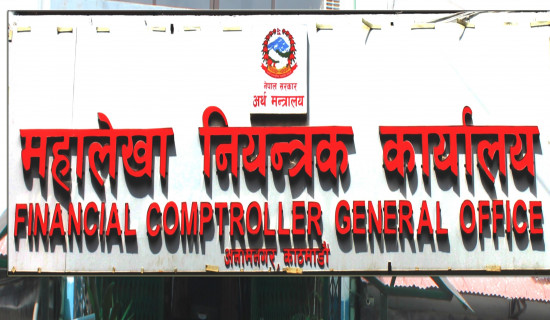
The data released by the Financial
Comptroller General Office (FCGO) revealed the satisfactory rise of the total
expenditure which could primarily be attributed to the moderate jump in recurrent and financial expenditure.
The data displayed that the
recurrent expenditure edged up by 13.5 per cent to Rs 966.8 billion and the
financial expenditure up by 17 per cent to 118.3 billion.
The spokesperson of the
Ministry of Finance Dhundi Prasad Niraula said that the financial mobilization of
the government in the public enterprises raised the amount of the financial
expenditure in the FY 2021/22.
Meanwhile, the
Information Officer of the Public Debt Management Office, Hira Nepupane, said
that the sharp hike in the interest rate and appreciation of the US dollar against the Nepali Rupee could be the reasons for the expanded figure in financial
expenditure. He viewed that the series of accumulation of the public debt over the
years could swell the burden of liability of repayment to the government.
At this juncture when the economy is marching through enormous external and domestic challenges in
the backdrop of the creepy growth, the reverse momentum of the Capex can further
up the ante. The data resurfaced the grim figure of falling Capex after 2017/18
for four straight years. It soared relentlessly to register the record of Rs
270.7 billion in 2017/18 but after this FY, the curve turned down acutely to hit
the three years low to Rs 216.2 billion in FY 2021/22.
The consequences of the contraction of Capex are getting reflected in the declining percentage of fixed capital formation over the years. The Nepal Rastra Bank (NRB) report on the Macroeconomic and Financial condition displayed that the gross fixed capital formation (GFCF) as per cent of gross domestic product (GDP) began to trend downward since 2017/18. The percentage of the GFCF to GDP recorded at 32.4 per cent in FY 2017/18 is now slumped for three straight years to 27.3 per cent in FY 2021/22.
-original-thumb.jpg)



-original-thumb.jpg)