- Thursday, 28 May 2026

Vaccination Keeps COVID-19 Away

The news on the COVID-19 pandemic, which was front page news of the mainstream newspapers before, is nowadays being reported in the inside pages since the infection and death rates started decreasing in Nepal. The preventive measures such as the use of masks, handwashing and sanitiser has become very rare if not totally absent even in public places. During the ongoing Hindu marriages, bratabandha (thread ceremony) and pasni (rice feeding) ceremonies and the Eid festival of the Muslim and in other public events people are feasting and celebrating as in the pre-pandemic days. Some people wear masks in streets and public vehicles but the people attending parties in hotels, restaurants, party palaces and participating in family events at home have now stopped using masks.
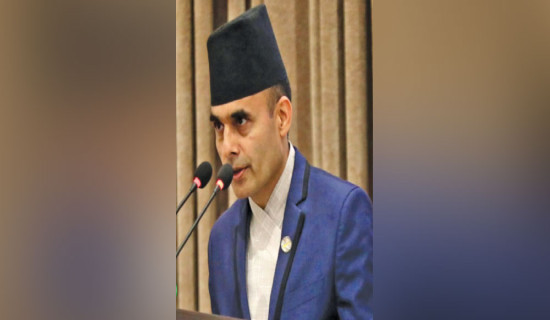
The use of sanitisers and the access of sanitisers for people to use as frequently as during the beginning of the pandemic are also decreasing rapidly. However, the COVID-19 pandemic is far from being over and Nepal needs to continue with the public health measures to avoid infections, says Dr Nastu Sharma, who is currently supporting Nepal government in Neglected Tropical Diseases and COVID-19 cases. Social distancing, avoiding crowded places, using masks and maintaining hand hygiene are the key to continue precautions to follow in one’s daily activities. “There is no need to wear a mask in the open space, but where there is a crowd, wearing a mask is a must,” says Dr Sharma.
Efficient vaccination drive
The COVID-19 vaccination campaign was conducted very efficiently in Nepal. It has played a significant role in preventing the infection from becoming severe in those who have been infected. It has been proven that vaccinated people can also get infected but will not be seriously suffering if full dose is taken and booster dose is also taken. Dr Sharma says that the new variants are still circulating but people do not need to worry too much provided they are fully vaccinated and are observing all public health measures in their day-to-day activities.
He continues to mention that this pandemic will continue with new variants for some years but it will gradually affect less and less people if we take the vaccine and follow public health measures in our new lifestyle.
Dr Kamal Thapa, the Head of Department of ENT at the Sumeru Hospital and an expert in COVID- 19 treatment, agrees that the distribution of vaccines in Nepal has been good but it is a fact that COVID-19 is still a pandemic, therefore all safety measures need to be observed. COVID-19 may be moving towards being an endemic, but this still has not been announced yet. According to WHO, the number of new weekly cases all over the world increased for the fourth consecutive week after a declining trend since the last peak in March 2022. During the week of 27 June to 3 July 2022, over 4.6 million cases were reported, a figure similar to that of the previous week.
The number of new weekly deaths declined by 12 per cent as compared to the previous week, with over 8100 fatalities reported. As of 3 July 2022, over 546 million confirmed cases and over 6.3 million deaths have been reported globally.
According to the Epidemiology and Disease Control Division of Nepal government, the active cases of COVID-19 stand at 768 as of 12th July 2022. Although this case may look small it does reinstate the fact that the cases are rising and as the experts say all safety heath measures need to be adopted.
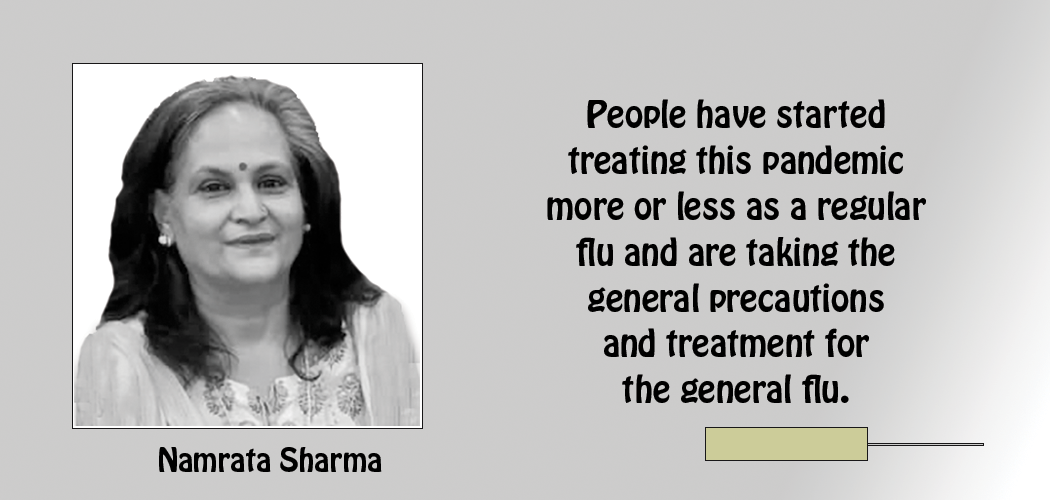
The WHO states that most people with mild or moderate COVID-19 can manage the infection at home with advice from a health care provider. The WHO site also gives tips on what to do if one has COVID-19 and when they need to go to the hospital. The site also informs what medicines to take and what to avoid. In general, people have started treating this pandemic more or less as a regular flu and are taking the general precautions and treatment for the general flu. However there are still people who are not vaccinated.
Positive step
The government has been vaccinating all adults in all seven provinces and has also started vaccinating children. This is a positive step and the public need to access it.
There are still people who choose not to take the vaccination for several reasons. Remembering the beginning of 2019 and the series of lockdowns that were imposed on the country as all over the world, a fear creeps in and an alarm bell rings that we need to take all the necessary precautions to avoid being infected.
Travel restrictions have been lifted and going to social celebrations with friends and family has uplifted the spirits of people. Meeting, sharing and caring has increased which definitely lead towards the people’s wellbeing. To continue this, we need to adhere to the suggestions of the experts and adopt all the precautions advised of wearing mask in public places, washing hands and sanitizing well. The most important above all is to take all doses of the COVID-19 vaccination together with booster doses.
(Namrata Sharma is a journalist and women rights advocate. namrata1964@yahoo.com Twitter handle: @NamrataSharmaP )