- Thursday, 28 May 2026

Farmers rue over shortage of chemical fertilisers
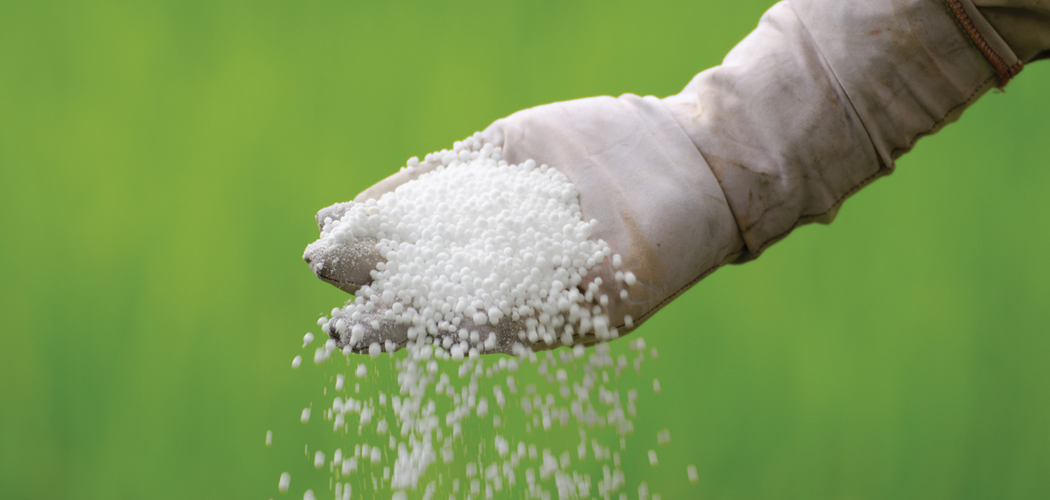

By Laxman Kafle Kathmandu, July 12: This year, monsoon is in favour of farmers, but they are not happy as they are unable to get the chemical fertilisers during the paddy plantation season as in the past years. Left without any alternative, most farmers are forced to plant paddy without fertilisers.
With the onset of rains, the farmers have started planting paddy but they are not able to find the required amount of urea, DAP and potash fertilisers.
Paddy plantation has been completed in around 50 per cent of the total paddy fields across the country so far.
Some have bought urea fertiliser at a rate higher than the subsidised rate fixed by the Agriculture Inputs Company Limited (AICL) and Salt Trading Corporation (STC).
Farmers have been forced to buy fertilisers at high prices as production would not be good without chemical fertilisers.
In some places, farmers have complained that even a small amount of fertiliser provided by the cooperatives is not enough.
Farmers discouraged to farm
Ramsharan Dahal of Panchkhal Municipality-3 said that farmers in his municipality have been compelled to plant paddy without fertilisers, especially urea, this year.
“Farmers, who have faced huge losses in maize crops and vegetables production in lack of fertilisers, are again compelled to plant paddy without fertilisers. In this situation, how to increase the production of paddy and other agricultural products and make the country self-reliant in agriculture,” he told The Rising Nepal.
According to him, some cooperatives and private distributors have brought fertilisers from the AICL and STC and distributed them at the rate of 5-10 kgs per farmer.
A farmer who required at least 2-3 sacks of urea for paddy and vegetable crops had to be satisfied with mere 5 kilos, he said.
Farmer Dahal said that not only the farmers but also the country has faced a huge loss in terms of agricultural production due to the government’s failure to provide fertilisers in time.
The country has been spending billions of rupees to import agricultural goods for daily consumption.
During the 11 months of the current fiscal year, the country has imported paddy and rice worth above Rs. 48 billion.
About 42,000 tonnes arrives
Spokesperson of the Ministry of Agriculture and Livestock Development, Prakash Kumar Sanjel, said that there was a shortage of chemical fertiliser in Nepal this year due to various reasons, including rising prices in the international market and low production.
However, he said that the ministry is taking initiatives to import fertilisers as soon as possible targeting the paddy cultivation season.
“We have arranged about 80,000 tonnes of fertiliser for the paddy season. Out of this, a total of 42,000 tonnes of fertiliser, including 22,000 tonnes of urea and 20,000 tonnes of DAP of STC has reached Nepal.
About 30,000 tonnes imported by AICL is on the way,” he said. Around 8,000 tonnes of fertiliser is in stock with STC and AICL. Around 120,000 tonnes of fertiliser, including 70,000 tonnes of urea and 50,000 tonnes of DAP is required for the paddy plantation season.
The process of importing fertiliser from India through government-to-government system is in the process of finalising, he said.
Efforts are being made to purchase 150,000 tonnes of chemical fertilisers from the government of India in G2G for this year to facilitate the supply of fertilisers during the paddy cultivation season, he said
Sanjel said that despite continuous efforts for easy supply of chemical fertilisers, fluctuations in the prices of fertilisers in the global market have caused inconvenience in the supply of fertilisers. Brajesh Jha, divisional manager of STC, said that around 42,000 tonnes of fertiliser was imported by STC within a month.
Out of 42,000 tonnes, 20,000 tonnes of DAP and 17,900 tonnes of urea had already entered the country, he said, adding that fertilisers are being distributed through various depots across the country. Similarly, 4,100 tonnes of urea left in Kolkata port are expected to enter Nepal within a week, he informed.
He said that the current arrival of fertiliser consignment in the country would be a huge relief to the scrambling farmers. Rajendra Bahadur Karki, acting managing director of Agriculture Inputs Company Limited (AICL), admitted that the AICL has been distributing a very low amount of fertilisers to the cooperatives using its buffer stock.
“We are distributing fertilisers using the buffer stock. Now, we have only 400 tonnes of urea and 3,500 tonnes of DAP in stock,” he said.
“It is better to use DAP during paddy plantation and urea in top dressing. But, due to lack of knowledge, farmers are using only urea instead of using DAP which leads to soaring demand for urea,” he said.
According to him, the AICL is distributing urea and DAP to cooperatives with the coordination of provincial government targeting to provide fertilisers to farmers even in low quantities.
He said that around 30,000 tonnes of urea being imported by AICL is expected to arrive in Nepal by the third week of July.