- Thursday, 28 May 2026

Inflation spirals up beyond 8.5 per cent
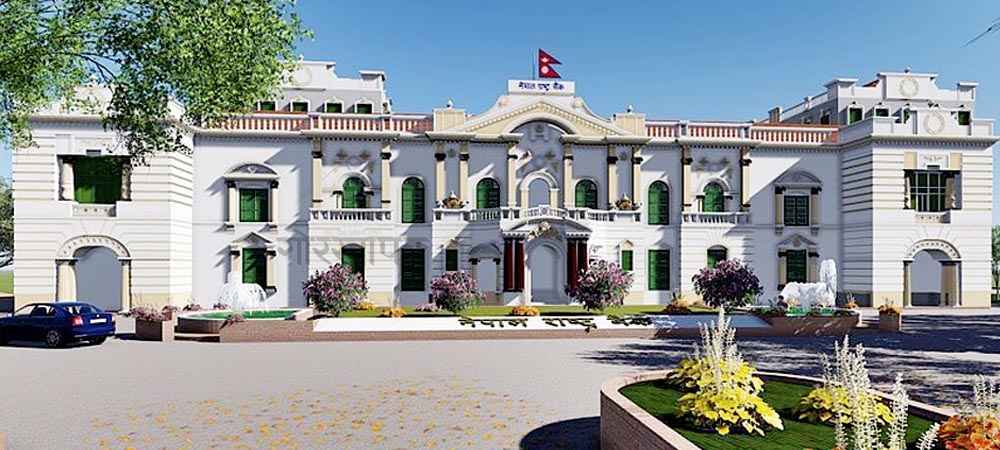

By A Staff Reporter Kathmandu, July 12: The consumer price inflation has doubled in the first 11 months of the current fiscal year as compared to the same period last fiscal year.
The y-o-y consumer price inflation stood at 8.56 per cent in the 11 months of the current fiscal year 2021/22 compared to 4.19 per cent a year ago, according to the current macroeconomic and financial report published by Nepal Rastra Bank (NRB) Monday.
Food and beverage inflation stood at 7.43 per cent whereas non-food and service sector inflation stood at 9.44 per cent in the review month. The average monthly y-o-y inflation for 11 months was 6.09 per cent.
Under the food and beverage category, the prices of ghee and oil, milk products and eggs, tobacco products, alcoholic drinks and pulses and legumes sub-categories rose by 22.60 per cent, 11.22 per cent, 9.70 per cent, 9.68 per cent and 9.13 per cent respectively on y-o-y basis.
Likewise, under the non-food and services category, the prices of transportation, education, furnishing and household equipment, recreation and culture and housing and utilities sub-categories increased by 25.79 per cent, 11.64 per cent, 8.30 per cent, 8.21 per cent and 7.84 per cent respectively on y-o-y basis.
In the review period, the Kathmandu Valley, Terai, Hill and Mountain witnessed 8.32 per cent, 8.29 per cent, 9.28 per cent and 8.92 per cent inflation respectively.
The y-o-y wholesale price inflation stood at 14.77 per cent in the review period compared to 9.00 per cent a year ago. The average monthly y-o-y wholesale price inflation for 11 months was 9.26 per cent.
The y-o-y wholesale price of consumption goods, intermediate goods and capital goods increased by 15.84 per cent, 15.34 per cent and 7.83 per cent respectively.
The y-o-y wholesale price of construction materials increased by 25.25 per cent in the review period.
The y-o-y salary and wage rate index increased by 8.50 per cent in the review period.
In the review period, salary index and wage rate index increased by 9.44 and 8.24 per cent, respectively. The average monthly y-o-y salary and wage rate index for 11 months was 6.42 per cent.
Growth rate of remittance inflow shrinks
The growth rate of remittance has declined during the first 11 months of the current fiscal year.
Remittance inflows increased by 3.8 per cent to Rs. 904.18 billion in the review period compared to 12.6 per cent in the same period of the previous year.
In the US dollar terms, remittance inflows increased by 1.5 per cent to 7.51 billion in the review period against an increase of 10.5 per cent in the same period of the previous year.
Number of Nepali workers (institutional and individual - new and legalised) taking approval for foreign employment increased significantly to 313,367 in the review period.
The number of Nepali workers (renew entry) taking approval for foreign employment increased by 208.3 per cent to 259,091 in the review period, the report said. It had decreased by 52.1 per cent in the same period of the previous year. Net transfer increased by 3.6 per cent to Rs. 1006.07 billion in the review period.
BoP deficit widens to Rs. 269 billion
Meanwhile, balance of payments (BoP) remained at a deficit of Rs. 269.81 billion in the review period against a deficit of Rs. 15.15 billion in the same period of the previous year.
In the US dollar terms, the BoP remained at a deficit of 2.26 billion in the review period against a deficit of 140.8 million in the same period of the previous year.
Likewise, the current account remained at a deficit of Rs. 595.73 billion in the review period compared to a deficit of Rs. 298.11 billion in the same period of the previous year.
In the US dollar terms, the current account registered a deficit of 4.96 billion in the review period compared to a deficit of 2.54 billion in the same period last year.
Foreign currency reserves drop to Rs. 1,176.84 billion
In the meantime, gross foreign exchange reserves decreased by 15.9 per cent to Rs. 1,176.84 billion in mid-June 2022 from Rs. 1,399.03 billion in mid-July 2021.
In the US dollar terms, the gross foreign exchange reserves decreased by 19.6 per cent to 9.45 billion in mid-June 2022 from 11.75 billion in mid-July 2021.
Of the total foreign exchange reserves, reserves held by NRB decreased by 17.1 per cent to Rs. 1,031.89 billion in mid-June 2022 from Rs. 1,244.63 billion in mid-July 2021.
Reserves held by banks and financial institutions (except NRB) decreased by 6.1 per cent to Rs. 144.95 billion in mid-June 2022 from Rs. 154.39 billion in mid-July 2021.
The share of Indian currency in total reserves stood at 25 per cent in mid-June 2022.
Based on the imports of 11 months of 2021/22, the foreign exchange reserves of the banking sector is sufficient to cover the prospective merchandise imports of 7.53 months, and merchandise and services imports of 6.73 months, said NRB.