- Thursday, 28 May 2026

Build Consensus On Citizenship Bill

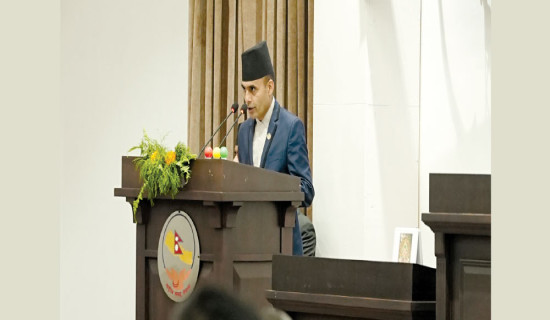
After withdrawing the pending Citizenship Bill (First Amendment) -2018, the five-party coalition government the other day tabled the Citizenship Amendment Bill in the federal parliament to address many 'controversial' and sensitive issues. The government, aided by its ruling coalition partners, withdrew the pending bill amid protests from lawmakers from the main opposition party, the CPN-UML. The new amendment bill that replaced the pending one reportedly will amend what the ruling dispensation considers controversial clauses. Stating that the government would grant citizenship to all genuine Nepalis, Home Minister Bal Krishna Khand withdrew the Citizenship Bill (First Amendment) - 2018 tabled by the State Affairs and Good Governance Committee of the House of Representatives, which deliberated on the bill in its 34 meetings.
However, the committee failed to build a consensus on the legislation concerning the granting of citizenship to foreigners marrying Nepali citizens. The bill, tabled during the tenure of the UML-led Nepal Communist Party government, remained in limbo for four years. The House committee had tabled the bill without having a consensus among major political parties, which was evident from the fact that the then government had pushed through the bill despite the dissension from the then opposition party, Nepali Congress and a few other parties. According to some reports, a few clauses in the pending bill regarding the granting of citizenship rights to foreigners marrying Nepali citizens or children whose father's identity is not known raised the hackles of the ruling parties, compelling them to replace the bill. In the withdrawn bill, there was a provision to grant citizenship to foreign women tying the nuptial knot with Nepali men. While the UML parliamentarians had a single voice on the provision that foreign women marrying Nepali men had to wait for seven years to get naturalised citizenship, the Nepali Congress had expressed its reservation over the clause and had written a note of dissent.
Likewise, the withdrawn bill had other clauses on which major parties failed to build a consensus. The provision of whether to grant citizenship to a child in the name of his/her mother or father remains contentious. There was a provision to grant citizenship to children if both the father and mother, who obtained citizenship based on their birth, were Nepali citizens. Children born to Nepali women but whose father's identity is not known cannot get citizenship. The committee had earlier submitted its report mentioning that a person born in Nepal to a Nepali mother living in Nepal would get citizenship based on descent. Likewise, if a father is a foreign citizen, his offspring would get naturalised citizenship.
The government's move to withdraw the pending Citizenship Bill has been done for amending several controversial clauses that would 'bar a bona fide Nepali from getting his/her citizenship rights.' Failing to get citizenship would bar citizens from enjoying their fundamental human rights and prohibit them from accessing government-run facilities. It is a common idea that a bona fide citizen must get citizenship without any hassles. However, our authorities must not distribute citizenship haphazardly in the name of providing citizenship certificates to all. The idea behind preparing a citizenship bill and then implementing it in the form of law should aim at encompassing all genuine citizens but must spare those who are not. Since granting citizenship may change the demography in the nation, which may later invite many troubles in the country's system of governance, society and social welfare sectors, our authorities must remain wary of all present and future troubles.