- Thursday, 28 May 2026

Bamboo transporters in Koshi risk their life
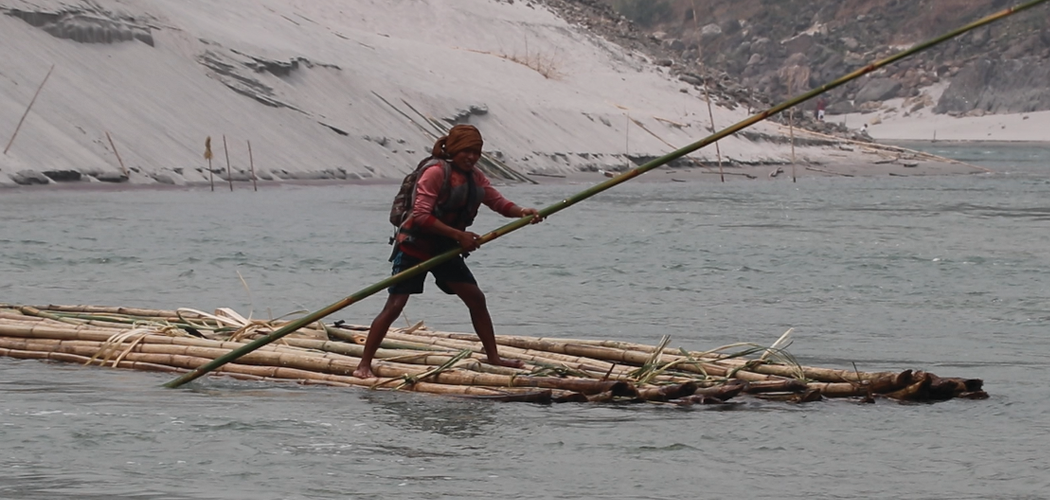

By Kabiraj Ghimire Hile, July 9: The locals have been transporting bamboo via the Saptakoshi River and its tributaries for a long time every year without feeling any risk. The bamboo traders travel through the mighty river standing on the bundle of bamboos.
The locals nearby the Saptakoshi River have been making a living by carrying bamboos through the river at their own risk. The bamboos carried in this way are called ‘Chefako Bas’. These bamboos are transported to the Terai through the Saptakoshi and its tributaries like the Sunkoshi, Arun and Tamor.
Thousands of bundles of bamboos are transported to Chatara of Sunsari via the river every year. From Chatara, they are transported to Dharan, Itahari, Biratnagar and other cities and sold there. The bamboo carriers do not care about risk to their life while transporting these bamboos.
Raj Kumar Rai of Triveni, Shahid Bhumi Rural Municipality-1, Dhankuta, said that he had been carrying the Chefa Bas since he was 10-years-old. He shared that he was scared carrying Chefa for the first time, but when he received his payment all his fear disappeared and he developed his confidence to carry more bamboos via the water.
The river is full of rocks and debris. According to the locals, one can die by falling on the same stones while carrying the bamboos. Locals said that more than five people had lost their lives so far in the Triveni area bordering Dhankuta, Bhojpur and Udayapur districts. However, the police said that they have not received a single complaint about disappearance while transporting the bamboo.
Depending on the quantities of the carried bamboo, one can earn up to Rs. 15,000 at one go. The locals have risked their life for this amount as this has been a source of income for many families living near the river banks.
Rajkumar Rai, a local, said that a single family from Dhankuta, Bhojpur and Udaypur could earn up to Rs. 150,000 yearly by selling bamboos. Though transportation service has reached many places, the traditional way of transporting bamboo in the water is still in practice.