- Thursday, 28 May 2026


The Rising Nepal

Tame Runaway Inflation
Today the world has witnessed unprecedented level of inflation. The value of money has declined, with the shortage of commodities. This global phenomenon has also hit Nepali consumers to the hilt as the inflation rate has already reached 7.87 per cent in the first 10 months of the current fiscal year compared to 3.65 per cent a year ago. Being an import-based economy, Nepal has limited measures to tame runaway inflation. Economists basically cite two factors-- demand-pull and cost-push – behind the rising inflation. The demand-pull causes the price hike when the consumers enjoy higher disposable income and want to buy more goods and services. Post-COVID recovery phase saw the rising demands of the goods as there was low production and supply disruption owing to lockdowns and other restrictive measures enforced to control the pandemic.But now the cost-pull inflation has affected the people beyond the expectation. It caused a widespread shortage of goods because supply decreases when the factories can’t produce goods, as demanded by the consumers. This creates a good pretext for the companies to raise prices to meet the demand, which is also apparently motivated by profit-making urge. Experts argue that demand-driven inflation was to diminish but the sudden Russia-Ukraine war turned the thing upside down again. Russia is not a big economy but it is significant supplier of commodities such as fuels and food (wheat). However, crippling sanction on its economy has discouraged many companies from buying oil from Russia. Similarly, the war has also hampered Ukraine to supply wheat in other nations. Both Russia and Ukraine supply the world’s 30 per cent wheat. So the inflation has increased because of constrain in the supply chain.The Ukraine war has dramatically increased the price of petroleum products and natural gas, which has in turn increased the production and transportation costs, leading to the rise in prices of every commodity. Economists, whom this daily talked with, have warned that the inflation could go up because of both internal and external factors in the future, leaving negative and multiplier effects on its economy. It can hinder the country’s sustainable economic growth. The people with fixed incomes and daily wage earners are bearing the brunt as they have to spend a big chunk of their income on foods. For example, the price of edible oil has gone up by 10-15 per cent in last four months. Nepal imports edible oil from Ukraine. The import of crude oil, along with soybean, palm, sunflower and mustard seeds, has been halted owing to the rising uncertainty.Inflation has knock-on effect on people's savings and investment, giving rise to negative growth, poverty and inequality. The urban poor are likely to be hit hard more than the village poor because the former have to purchase many items for consumption. Those households struggling to escape from poverty could be driven into it due to inflation, which can delay in achieving the target of Sustainable Development Gaols. Soaring inflation increases the costs of development projects and reduces the competitiveness of exported goods as well as the foreign currency reserves. In order to provide respite to inflation-hit people, the government can lower tax on oil and sales taxes on other goods. Investment in renewable energy can cut dependency on fossil fuels, thereby lessening the production and transportation costs.

Cliché Calling For A Change
Old is gold but we are told all that glitters is not necessarily gold. Clichés don’t tire provided they are contextually appropriate and especially when not invoked for long spells. Hence, they are shying away from it is not called for. Welcome to the use of clichés in the hurly burly world of different genres and aspects of literature, including scribing for journalism.
Time To Tighten The Belt
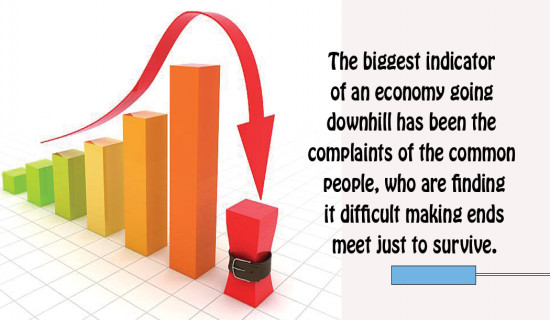
There is no doubt that the nation is going through a difficult economic situation as ‘experts’, many politicians and also the Stock Exchange reminds us every day. But the biggest indicator of an economy going downhill has been the complaints of the common people, who are finding it difficult making ends meet just to survive. In fact, there was an interesting report in TRN, where the reporter has said that the low income groups have been the worst hit by the alarming inflation rate. The survival of this segment of citizens, again depend on the demands of the people who seek the daily wage earners’ services.
Fertiliser Fiasco
Nepal’s agriculture sector gets top priority in government’s policy documents and budget statements every year. As a mainstay of the national economy, this sector’s contribution to the gross domestic product (GDP) stands at around 24 per cent. But farmers across the nation are bound to scramble for having chemical fertilisers each year. Farmers cannot gain a good farm output without using this agro input. So, the perennial unavailability of fertilisers on time is one of the main reasons behind a lower level of production of staple crops like paddy and maize.
Land registered by creating fake owner
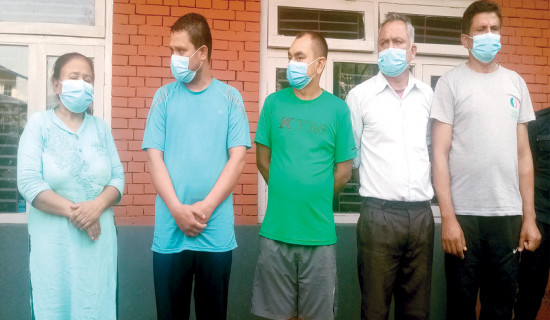
Central Investigation Bureau (CIB) of Nepal Police has detained five persons allegedly involved in registering a land plot worth Rs. 70 million by creating a fake land owner. Making the arrested persons public at a press conference organised at the CIB on Sunday, police said that their preliminary investigation showed that a land plot of 361.95 square metres in Kirtipur Municipality Ward No. 2 of Kathmandu was found sold to a third party by producing a fake death certificate of its real owner Shanta Lohani and a fake citizenship certificate of her husband Tara Nidhi Lohani.
Rachana Dahal’s Daagbatti expresses feeling of losing a loved one
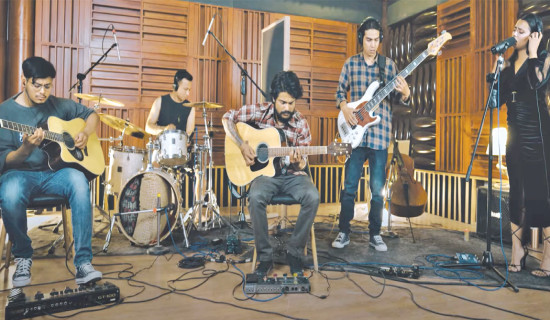
Born on June 8, 1997, Rachana Dahal is a singer, songwriter and entrepreneur based in Kathmandu. She initiated her musical career as a cover artist from the Thamel music scene. Discovering an aptitude for music from her childhood days, Dahal fancied guitar and enrolled herself in for guitar lessons at a local music institute. There, the mentors acknowledged her singing abilities and facilitated her with the opportunity to perform for an event; it was an affirmation to commence music as her career.
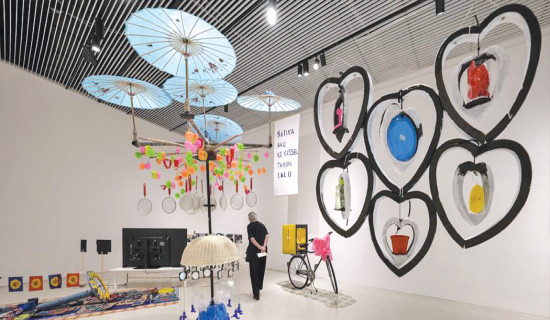
Major German art show opens amid antisemitism controversy
Germany’s president has appealed to the organizers of this year’s documenta fifteen art show to do more to tackle the antisemitism allegations surrounding the event. The show, which takes place every five years in the German city of Kassel and is considered a major event in the international art calendar, is curated this year by the Indonesian group Ruangrupa. The group was accused of inviting organizations from developing countries who support a boycott of Israel because of the country’s treatment of Palestinians.
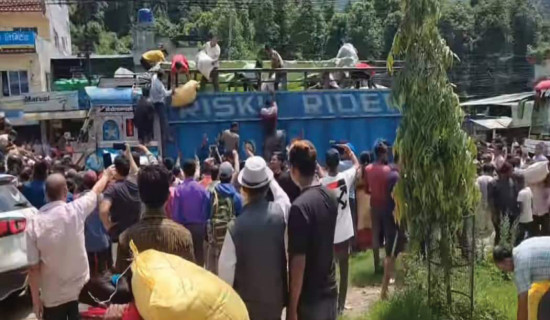
Farmers seize fertiliser in Dhading
At a time when farmers all over the country are struggling to get fertiliser for paddy plantation season, farmers have seized around 500 sacks of chemical fertiliser brought in two trucks at Dharke, Dhunibeshi Municipality–6.
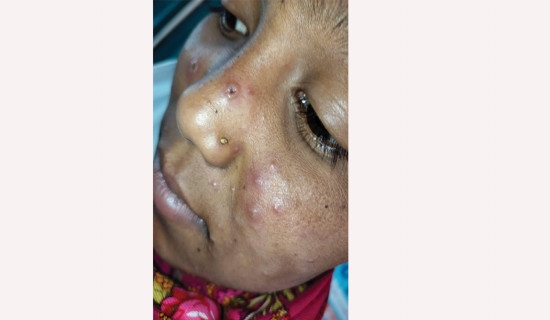
Humla students suspected of having chickenpox
Students living in a school hostel in Humla district are suspected of having chickenpox disease. The students of Mahabaudhha Secondary School of Namkha Rural Municipality-4 have shown symptoms of chikenpox.
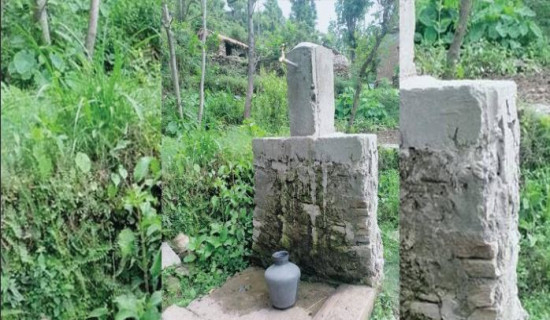
Drinking water project stalled in Bajura
The drinking water project for 400 household initiated by province government in the Fiscal Year 2020/2021 has been stalled in Sigada, in Budhiganga Municipality-10, Bajura.
Saptari sees rise in violence against women
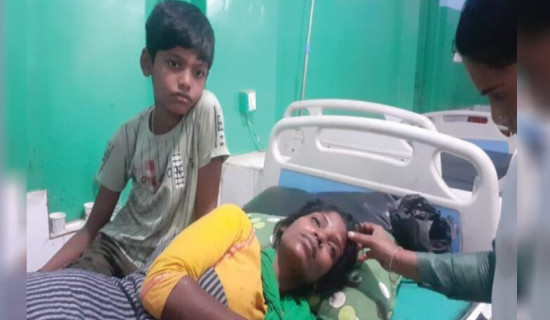
Incidents of domestic violence have increased lately in Saptari district. Victims and rights activists have complained that the police and the concerned bodies have not carried out a proper investigation even as the incidents of violence against women are on the rise. The reported cases of domestic violence and eviction have increased in the district of late.
Production of gas from wastes tested successfully in Damak, Jhapa
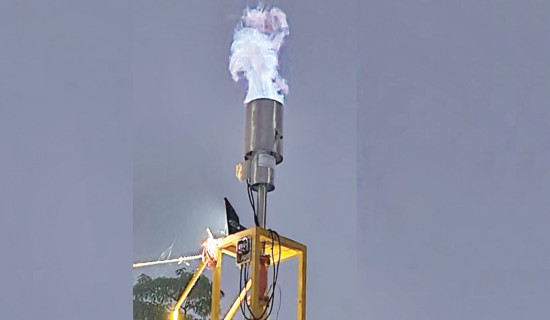
Next Era Energy Pvt. Ltd. conducted a successful test and produced gas from the wastes collected in Damak, Jhapa, on Friday. In Damak, the process to produce gas and manure from collected wastes had begun four years ago under an investment of more than Rs. 200 million. Next Era Energy had already started producing manure from the wastes.
Butwal-Narayangadh road building stagnates
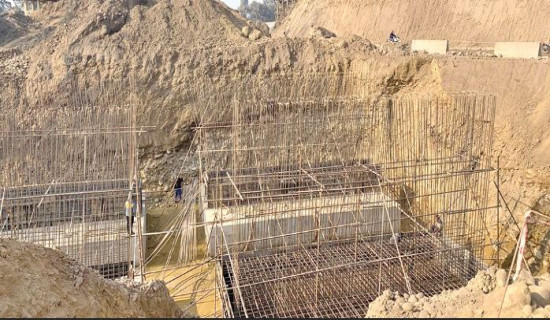
The construction of Butwal-Narayangadh road, a project of national pride, has reached a stalemate as it has not been able to accelerate. The Butwal-Narayangadh road section, which was started 34 months ago after the agreement was signed three years ago, could not pick up the pace of construction, according to the project.
A Sagacious Decision
The issue of the State Partnership Programme (SPP) recently captured the nation's attention after Nepali media reported that the government would sign an agreement with the United States of Amercia (USA) on SPP during Prime Minister Sher Bahadur Deuba's upcoming visit to that country. After a letter written during the tenure of former Prime Minister KP Sharma Oli and dispatched to the USA by the Nepali Army in 2017 was leaked, the matter snowballed into a political debate spurring many opposition members to raise the matter in parliament and on different other platforms.
Understanding Democratic Socialism
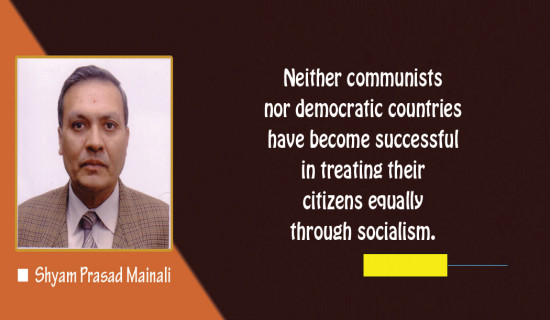
Socialism in communism is a command economic system. In this system, individuals get equal shares and opportunities as the government adopts centralised planning. Resources are distributed or allocated based on individual and societal needs. The government fully controls national resources and economic production which means individuals depend entirely on the state for food, employment, health services, and more.