- Thursday, 28 May 2026

Time To Tighten The Belt

Yug Bahadur
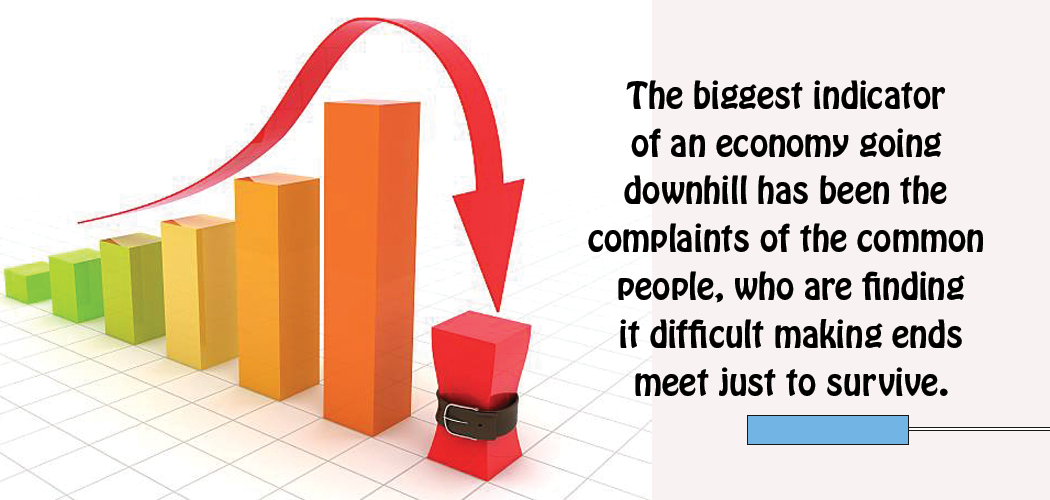
There is no doubt that the nation is going through a difficult economic situation as ‘experts’, many politicians and also the Stock Exchange reminds us every day. But the biggest indicator of an economy going downhill has been the complaints of the common people, who are finding it difficult making ends meet just to survive. In fact, there was an interesting report in TRN, where the reporter has said that the low income groups have been the worst hit by the alarming inflation rate. The survival of this segment of citizens, again depend on the demands of the people who seek the daily wage earners’ services.
Like we already said, the sellers of basic edible products, have not been that difficult, as they keep a comfortable margin for themselves from the stuff they sell. No matter how expensive such items become in the market, they still make some profit. For example, rice, dal, vegetables, cooking oil and even sugar, the prices of these items needed in a Nepali kitchen on a daily basis, have remained ‘untouchable'. Also the inability of the authorities to monitor their prices has hit hardest the consumers and it is no surprise they are protesting about this situation.
Lack of planning
There was a time when Nepal exported many of the products they are importing now, like rice, vegetables and oil for example. But such realities have become a myth now. Politicians are asking why farmers in this agriculture based country are not getting fertilisers in time. This is indeed a serious lack of planning of the authorities. Meanwhile, most of our youths want to go abroad and earn instant cash, no matter under what circumstances they have to work, as they want their families to also have all the ‘luxuries’ that others are enjoying right now. But even professionals are searching for greener pastures abroad, not caring how much the government spent for their studies.
Nepal is known as an agricultural based country, where a little above 62 per cent of the population is dependent on agriculture to live a mediocre life style. But at least they don’t have to die due to hunger, like in many impoverished countries. Yes, there was a time when certain people were called landlords, and rightly so, because they enjoyed the fruits of whatever grew in their land, whereas, the real tillers of the land were considered as mere slaves. Luckily, with the re-ushering in of democracy, the leaders of different political parties made a stance taking the side of the tillers and made sure that these downtrodden people would be able to make their own living independently.
But sadly, while the so-called landlords made a comfortable living, the land tillers in different names, the tillers were still left in the lurch with nothing to boast about. It is an irony that this also made the landlords bitter about the changes in the social strategy of the country. In the past, the tillers at least had a roof over their heads and enough food to feed their families, but the politicians simply did not understand this situation and till now, the poor people have been made poorer and the rich richer. This situation is exactly like more developed nations telling Nepal about the rights of its people, but not doing anything to really help them.
For example, the United States did not allow their women and people of other colour to vote for more than 100 years after the introduction of democracy there. But we must admire the way democracy was slowly nurtured till voting rights were given to all. But such developments were telescoped in Nepal. This was not right, not then and not now.
But the fault for this is also on the willingness of the so-called rights activists who have tried to telescope such developments under the guidance of some foreign powers. Is Nepal really in a state where it could be worse off now than the embattled Sri Lanka? The answer seems a big ‘Yes’. But, Sri Lanka has a well-built infrastructure backdrop, and it also has the access for receiving help as it is an island state and thus open. With the World Bank providing it vitally important funds, it could well bounce back, especially if it is able to buy cheap petroleum products like from embattled Russia for example.
Such far-reaching decisions have never taken in Nepal, including when the present government introduced a five-day a week working schedule in government offices to save fuel. This was not practical, and finally the government had to cancel this decision, exactly like it did in some of its hastily made moves on controversial issues.
Pragmatic stance
But being a coalition government, none less than Prime Minister Sher Bahadur Deuba said that his party, the Nepali Congress, would not be able to do many things its sister organisations want it to do. This is a very pragmatic stance of the government. The hopefuls from the ruling parties who are partners in the government and also the common people have to understand this. In fact, coalition governments could become a trend for a long time. The people will have to tighten their belts for the difficult situation ahead. Going back to the inflation, we must understand that some factors are beyond the government’s grasps like the situation in Ukraine and Russia war, the coronavirus pandemic and the rise in fuel prices, for example.
So a time has come for the government to act sensibly and not go for populist programmes, and for the people to bear with the government’s decisions, and for the business people to forget their sole target of making profits, so that the country can bounce back to the right economic track and the prophets of an economic ‘Dooms Day’ will be proved wrong.
(Yug is a freelance writer.)