- Thursday, 28 May 2026


The Rising Nepal
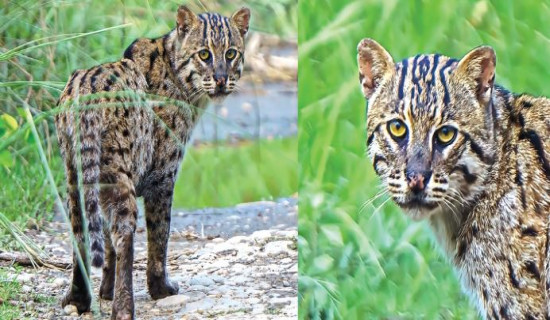
Fishing Cats In Nepal
Taking pictures of wild animals is a fascinating nob for any photographers. But when it comes to taking photographs of the Royal Bengal Tigers, the excitement doubles up even for a professional wildlife photographer. With the idea of taking pictures of these species of tiger(s), we went to the Chitwan National Park (CNP), the most famous in Nepal and abroad for sheltering various species of animals and birds.
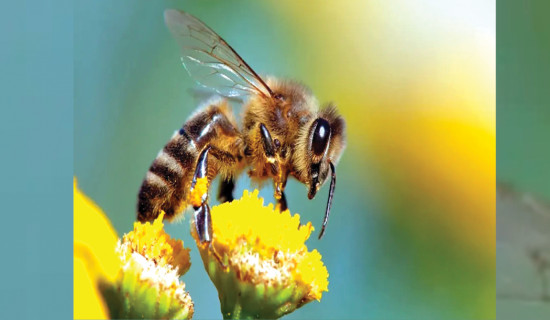
Benefits Of Bee Honey
There are about 25,000 bee species and more than 4,000 bee families in the world. Their origin is Eurasia. They later spread and are found across all continents of the world. Over time, man has learned to tame them and obtain honey, which later became the profession of a beekeeper.
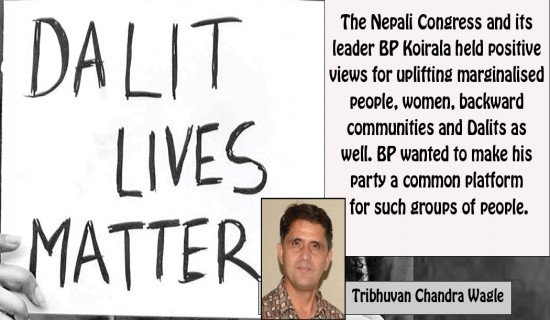
A Versatile Dalit Leader
Dhan Man Singh Pariyar is a pioneer freedom fighter who was involved in struggles for establishing democracy in the nation. He participated in the Janakrinti of 2007 BS (the People's Revolution of 1950) that took place under the leadership of legendary Nepali Congress leader, the late BP Koirala.
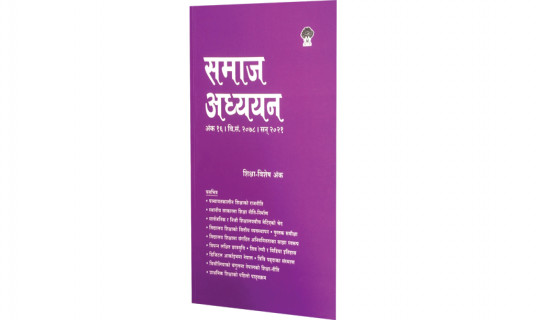
Power And Politics Plague Policy
The book under review, 'Samaj Adhyayan' (Series 16, 2021) is an education-special issue. The book include research articles, commentaries, memoirs and book reviews. The first article, penned by Lokranjan Parajuli, delves into the politics plaguing education policy during the Panchayat system, which lasted in the country from 1960 to 1990.
Time For Juicy Mangoes
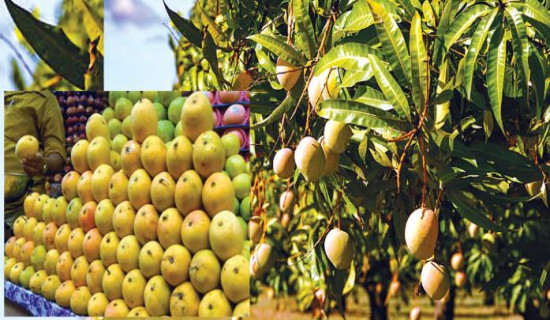
Ram Dayal RakeshIt is a well-known fact that Maithili culture is mango oriented. The very culture of the whole Mithilanchal (the region of the whole Mithila) is filled with the essence, fragrance and taste of the Mangos. Mango, butter, fish and Makhan(a dry fruit which is produced in water) betel nuts and paan are symbols of Maithili Culture. Tropical FruitIt is said in the Maithili language that these valuable enchanting eateries are not available in heaven. Nobel Laureate poet Rabindra Nath Tagore's love affair with mangoes is known all over the world. According to him, provided he failed to receive many auspicious occasions to taste any mango in that year he thought that year to be fruitless. Mango is one of the most popular tropical fruits in the world and has been cultivated in Terai-Madhesh of Nepal and also in neighbouring countries India, Bangladesh, Pakistan, Sri Lanka, Cambodia, Burma(Myanmar) and Taiwan. Even one can get mango in Honolulu (U.S.A). Credit goes to the Buddhist monks who introduced it to Malaysia and eastern Asia around the 5th century. According to one recent study, almost half of the world's mangoes are grown in India itself. It produces about 15 million tonnes of mangoes, with 15.3% exported to foreign countries and the rest consumed domestically.In the cultural domain of Mithilanchal, the importance of mango has been recognised since time immemorial. There are mango orchards in every village of the Mithila region. Janakpur, the capital of ancient Mithila has been famous for mango orchards since the creation of the universe. There is still historically culturally and religiously myth- logically famous mango orchard in Janakpur called Tirhutia Gachhi(the Mango tree of Tirhut). Every year Mithila Mahotsav (Mega festival of Mithila) is observed in this orchard. It is also believed that Lord Buddha, the Light of Asia stayed in this orchard when he visited Janakpur.The exchange of mangoes during the mango season is considered to be the best gift. For a newly married couple, it is considered a heavenly gift. Even if gold, silver and diamonds were gifted, they would be deemed worthless if mangoes were not presented. Even before or after the wedding ceremony, if mangoes are not exchanged as gifts during the mango season it would mark the merriment and mirth of the marital life of the couple. These incomparable gifts play a pivotal role in bridging a cordial relationship between two families.Summertime and rainy season are suitable for mangoes. They are beautiful, succulent and sumptuous. There are many delicious delicacies of mangoes such as mango flame, mango tart, mango scone, mango and celery muffin, mango crumble and fresh-cut mango in a chocolate cone with mango mousse. Mangoes are very sweet, fragrant and tasteful. They are luscious, succulent, juicy and tasty. They are called kings of fruits. This is deeply rooted in the cultural heritage of Mithila.Varieties The climate of the Madhesh region is tropical. So, it is a very suitable climate for mango growing. Several varieties of mangoes are grown in the fertile soil of Madhesh. Most of them are big, but some of them are small also. Big ones are called Bombaiya, Maldah, Calcutiya, Supriya and Amrapalika, and small ones are called Bizzu. They all are sweet and beautiful to look at. There is a different type of it which is called Bhadaiya which becomes ready to eat in the month of Bhadra (august-Sept). There is still another variety which is called Langada which cannot be translated into any language in the world. Some of the Bijju mangoes are very juicy. They are called senuria (its colour is like vermilion) and keraba (its size is like a banana). Mangoes such as the Tengaria, Sukul, Sipia, Kodaiya, Nakuwa, Laduwa, Lichiawa (like lichhi), Chauriya, Bairiya and Rodi are seasonal. But one variety of mangoes available throughout the year is called the Barmasiya. Mangoes are generally available from Jestha(June) to Bhadra(August). Fresh mangoes used to be available for three months only, but nowadays they are in the market for more than six months, because they are preserved in cold storage. They come in round, oval, oblong or somewhat kidney-shaped forms. I would like to quote a different variety of mango:"The variety of mangoes including Sindhuri, Dusseri, Chausa, Fazli, Lucknowa, Jauhari, Gulab Khaas and Langra are cultivated in the northern Indian state of Uttar Pradesh, South India for a mind-boggling choice too. Raspuri, Safeda (Bainganpalli, Neelam, Himayat, Thamboor Priyoor, Malgova and Malika, each with distinct colour and taste, Kesar, known for its unique sweetness and long shelf life, is grown in Gujarat and Maharastra." (Jahnavi Sarma: An Indian affair for life. India Perspective. Vol.28, Sept- October 2014)Then there are regional specialities like Maharastra's amrakhand (mango shrikhand) which combines whipped mango pulp with sweet yoghurt. In north India, mangoes are thinly sliced and sun-dried to make a preserve called Muraba.Mango-flavoured Sambhar(lentil-based gravy dish with tamarind) in south India and a tangy mango-flavoured Dal(lentils curry) in north India are delicacies made during summer. Amras, juice made of mango pulp with sugar or milk, goes with bread, rice or pooris( fried bread) in Gujarat, Maharashtra and Rajasthan. Rice mango pulp is used to make a Jam called mangada by the Konkanis in west India. Mango is used in Andhra Pradesh to make Dal while Gujaratis use it to make Chunda(grated mango delicacy).Mango lassi( mango blended in yoghurt) is a drink of choice for most Indians as well as South Asians.That's why they are served on occasions such as marriage ceremonies, various rites and rituals and folk festivals. They are considered sacred too. For this reason, they are offered to different gods and goddesses. They also solve the food problem to some extent in the Madhesh region during the growing season. Being highly digestible and nutritious, they are often prescribed for good health because they contain vitamins A, B and C.The unripe mangoes are also useful and tasteful. Different types of chutneys and pickles are also made from them. Ripe mangoes are used in making Amot(a homemade foodstuff) and it is used the whole year. Mangoes are of different colours. They are yellow, pink, green and red and in a variety of hues in-between the size of the smallest mango is 15 inches(3.75 centimetres) long, while the largest is 8 inches. Ideal ClimateMithila feels pride in having 200 varieties of mango. The mango tree can be small as well as big. It is known as the Mangifera Indica. It grows better in hot, humid and dry weather. The Mithila region has an ideal climate for its good cultivation. The fruit becomes tasty and juicy when the air is dry. The pleasure of sucking mangoes is more enjoyable than eating them. Maithil people love to suck its fresh juice from the freshly plucked fruit.(The author writes about Terai issues)

Application for 6th edition of NIFF open
The film submission application for the sixth edition of Nepal International Film Festival (NIFF) has been open since June 15. Informing all the filmmakers from all over the world through a press statement issued on Wednesday, organiser Nepal Film and Cultural Foundation has urged filmmakers to apply their films for the festival.
Workshop held for journalists
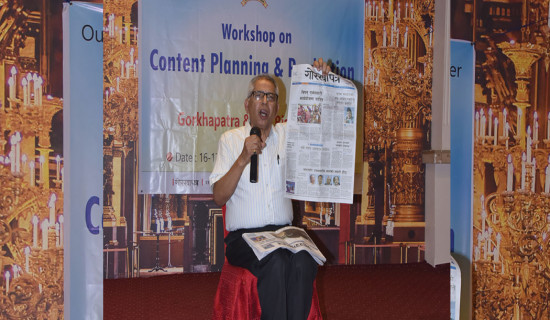
Gorkhapatra Corporation (GC) has organised a two-day workshop on ‘Content Planning and Production’ for journalists of The Rising Nepal and Gorkhapatra dailies from Thursday. On the first day, senior journalist Dhrubahari Adhikary and Geja Sharma Wagle, a defence and international affairs expert, spoke on the contents of the dailies and the issues of foreign affairs and security. “Gorkhapatra Corporation’s publications are credible news sources for the public. They work like eyes and ears of the public. Its contents should reflect more of public concern,” said Adhikari.
Bridge construction completes in six years
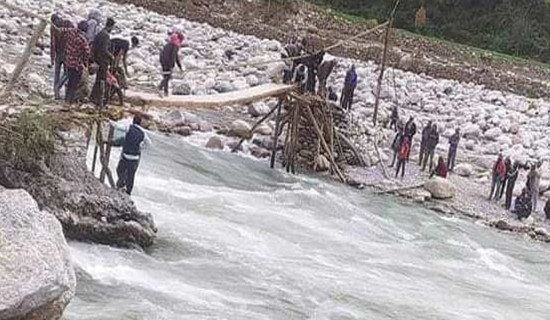
Construction of a bridge over Jadanga River, which lies between Badimalika Municipality Ward No. 6 and 4, has been finally completed in six years. The contract was signed on July 14, 2016, by Naresh Panta, contractor of the Kasthmandu Masina JB which had a total capital of Rs. 50,516,900 at the time with the aim of completing it by July 14, 2018. According to the locals, the construction could not be completed in time due to negligence. After failing to complete the project in agreed upon time, they resumed works last year. The locals were facing problems as the Bailey bridge over the river was swept away last year.
Eye camp organised in Simkot, Humla
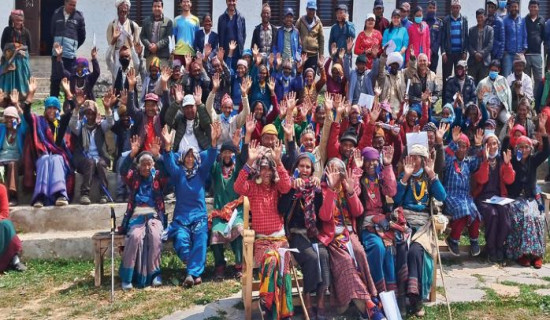
A health camp meant for eye examination has been organised at Simkot in Humla district. A technical team led by Prof. Dr. Govinda Poudyal, Ophthalmologist of Tilganga Institute of Opthalmology (TIA), has examined 852 people having eye problems in the two-day health camp. Among them, 111 surgeries were conducted including 107 cataract surgery.

Re-election in Budhiganga on July 7
Re-election in Budhiganga Municipality of Bajura district is scheduled for July 7. An all party meeting held on Thursday decided to hold the re-election on Thursday, July 7. According to the Election Office of Budhiganga Municipality, the re-election has been scheduled for July 7 after the ruling Nepali Congress and main opposition CPN-UML reached an agreement in the all-party meeting held on Thursday. Local level election was earlier held in Budhiganga Municipality on May 13, when the Election Commission held the poll in all local levels across the country. However, the process of vote counting could not begin because of disputes among the two major parties.
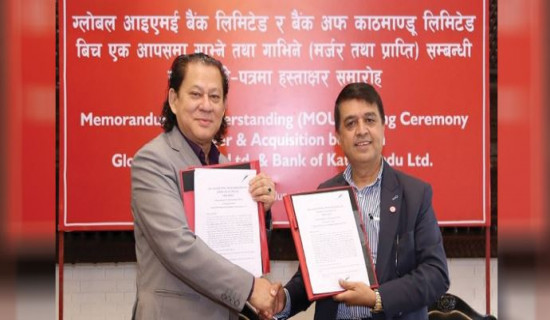
Global IME, Bank of Kathmandu to merge
A preliminary memorandum of understanding (MoU) was signed between Global IME Bank Limited and Bank of Kathmandu Limited for merger on Thursday. Chandra Prasad Dhakal, Chairman of Global IME Bank, and Prakash Shrestha, Chairman of Bank of Kathmandu Limited, signed the MoU amidst a function. It has been agreed that the name of the new bank to be formed after the merger will be Global IME BOK Limited.
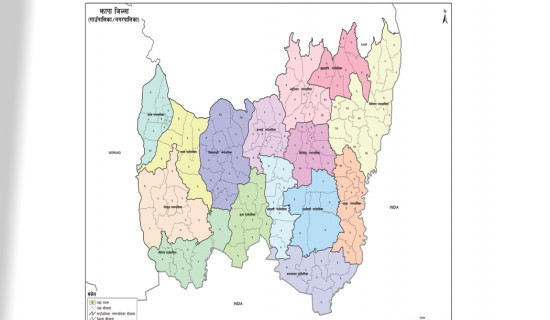
Jhapa local bodies busy making plans for coming fiscal year
The local bodies in Jhapa district have initiated the procedure of selecting plans to be implemented during the coming fiscal year 2022/23. The ward-level governance has already started selecting the programmes for the coming fiscal year to pass them from the municipal council. The ward level authorities are now busy selecting their plans within their budget limits. The plans and programmes will be implemented after being selected from citizen’s level and included it in the plan bank of the municipality.
Increase export, cut trade deficit: PM Deuba
Prime Minister Sher Bahadur Deuba has said that reducing the country’s trade deficit the main challenge for the country. Inaugurating the fifth edition of Nepal Chamber Expo 2022 in Kathmandu on Thursday, Prime Minister Deuba urged all to reduce the trade deficit through export promotion by making the domestic products competitive in quality.
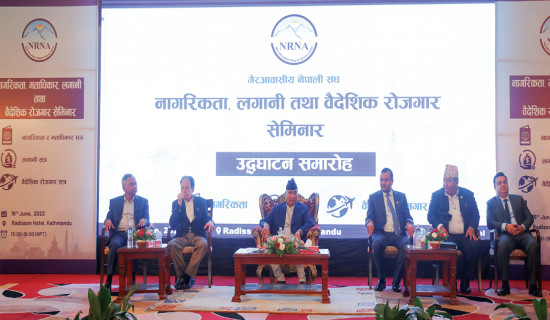
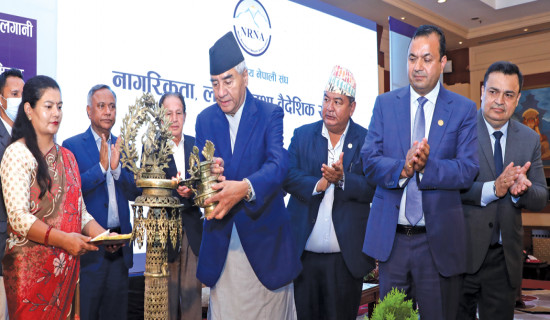
Fulfil responsibility for motherland, NRNs told
Prime Minister Sher Bahadur Deuba on Thursday urged the non-residential Nepalis to fulfil their responsibility for the motherland. Speaking at a function organised by Non-Residential Nepali Association (NRNA) in the capital, PM Deuba urged the NRNAs to use capital, knowledge and skills gained abroad for the development of the country.

On Provincial Budgets
Nepal’s three-tier administrative system is unique because each layer of government exercises exclusive rights and powers. The division of country’s administrative structure into seven provinces marks a drastic shift from the unitary system. The provinces have been guided by the principle of self-rule and shared rule. It is true that implementation of fiscal federalism poses a big challenge but federal and provincial governments have enhanced their institutional capacity to generate and spend the money for the overall development of the nation. On Wednesday, seven provinces unveiled their annual budget for the fiscal year 2022/23, giving priority to infrastructure, agriculture, industry, education, heath, tourism and social welfare. Learning from the past, they aim to make budget more result-oriented and productive so that the people can feel the change in their daily life.