- Saturday, 25 April 2026

Madhes region trails in development

BY LAXMI CHAUDHARY,Janakpurdham, Apr. 25: A new provincial report from the National Statistics Office has revealed that Madhes Province continues to struggle with weak social development indicators, despite some progress in basic services. The findings, published under the Nepal Multiple Indicator Cluster Survey 2024/25, point out urgent gaps in health, nutrition, education, and social protection across the province, underscoring the need for targeted policy interventions.
According to the report, child and neonatal mortality rates in Madhes remain higher than the national average. The under-five mortality rate stands at 33 per 1,000 live births, while neonatal mortality is 20 per 1,000. Infant mortality also exceeds the national rate, signalling the need for stronger maternal and child health services.
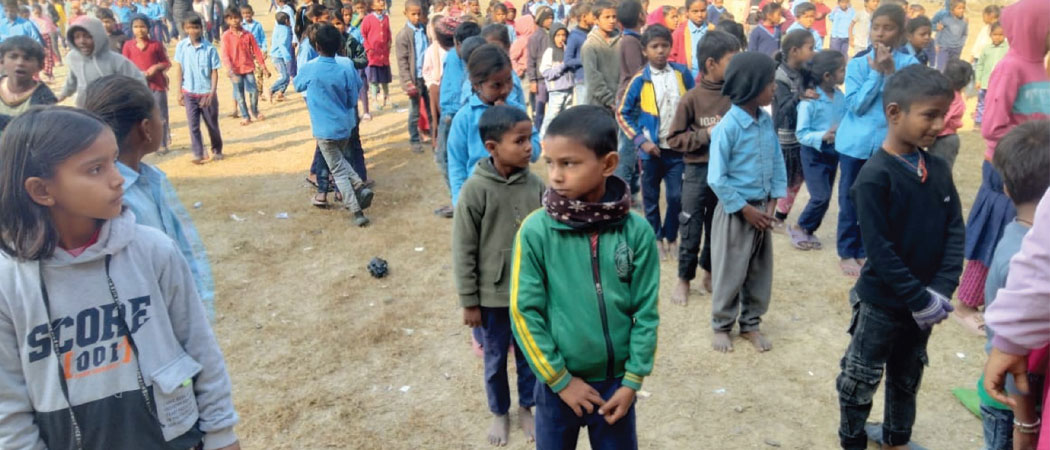
Malnutrition remains a major concern. The survey shows that 23.2 per cent of children are underweight, while 31.1 per cent suffer from stunting. In education, 22.6 per cent of children are out of school at the secondary level, and participation in early childhood education programmes is just 26.3 per cent. Utilisation of healthcare services is also below expectations. Only 70.4 per cent of women complete at least four antenatal care visits. Health insurance coverage remains extremely low, with just 3.9 per cent of women and 6.6 per cent of men enrolled.
Although access to drinking water is reported at 99 per cent, nearly 65 per cent of households are found to have harmful bacterial contamination in their water supply. The adolescent birth rate stands at 71 per 1,000, indicating that child marriage and early motherhood remain persistent challenges in the province.
Dr. Shila Mishra, a member of the Provincial Policy and Planning Commission, said data-driven planning will be key to improving these indicators. She stated that upcoming policies for the fiscal year 2026/27 will prioritise gender equality, inclusion, and climate change.
“These indicators show that we still need to improve service delivery, access, and public awareness in Madhes,” she said. “Future policies must be firmly grounded in evidence.”
Ram Kumar Mahato, Secretary at the Ministry of Economic Affairs in Madhes Province, stated that despite limited resources, the government would focus on effective policy-making based on the survey findings. Sandhya Dahal KC, director at the National Statistics Office, emphasised that the survey provided a crucial foundation for evidence-based policymaking and would guide targeted provincial programmes.
The report was officially released on Wednesday at an event in Janakpurdham, organised by the National Statistics Office with technical and financial support from UNICEF.
The survey covered 12,960 households across 76 districts nationwide, providing comprehensive data on the status of women, children, and families. The event, chaired by Director Dahal KC, was also attended by senior officials, including Yamendra Upadhyay from the Office of the Chief Minister and Council of Ministers, and UNICEF representative Harsha Raj Dahal.