- Friday, 22 May 2026

Pokhara tourism soars with record visitors
By Santosh Subedi
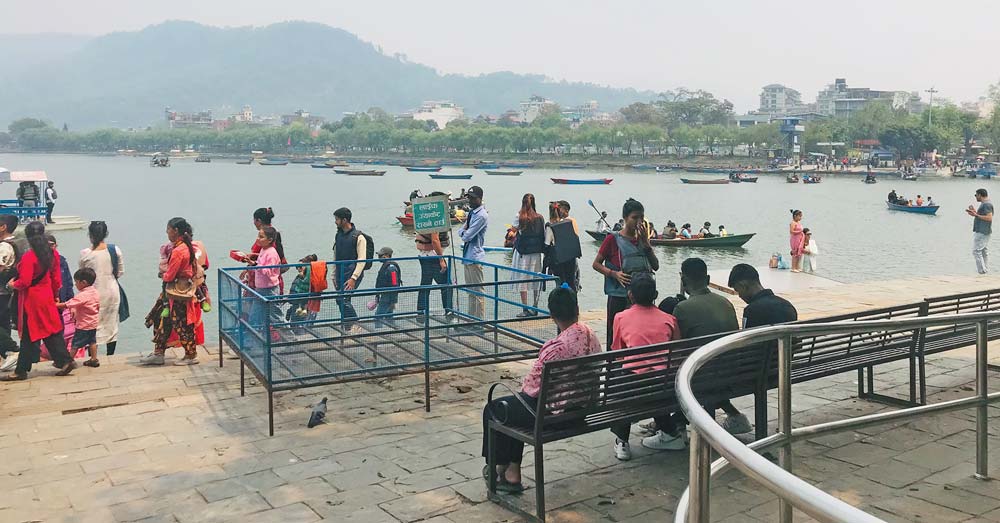
Kaski, Apr. 24: The New Year has brought renewed enthusiasm for tourism entrepreneurs in Pokhara, as the city witnessed a significant influx of visitors during the holiday period.
According to data released by the Hotel Association, hotel occupancy rates reached an impressive 90 per cent during the New Year celebrations.
The high turnout of domestic and international tourists has been a welcome boost for the local tourism industry, which has been striving to recover and grow. President of Hotel Association, Pokhara Laxman Subedi, said that although it is usually a tourist season, this time it was historic.
"The influx of tourists has been such that hotels in Pokhara, which used to be packed the day before and on New Year's Eve, are now packed a week before and a week after," he said.
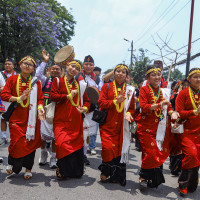
Every time the Nepali New Year is celebrated, the Hotel Association, Pokhara has been organising the Fewa New Year. He said that the festival has also helped a lot in attracting more tourists.
With an increase in both domestic and international tourists visiting Pokhara to celebrate the Nepali New Year, business owners have become more optimistic.
Currently, about 50 per cent of visitors are domestic tourists, 30 per cent are Indian, and the remaining 20 per cent are from other countries. The number of tourists has increased due to school holidays and the trekking season, he added.
At present, hotel occupancy stands at around 65 per cent, said Subedi. He said that the government’s decision to grant two days of weekly holidays has led to a rise in travel. With two days off, more domestic tourists are coming to Pokhara for at least one night. He believes this decision will help energise tourism activities and stimulate the economy.
He said that domestic tourists are expected to benefit significantly from this policy. According to him, around Rs. 800 billion has been invested in Pokhara’s tourism sector, of which about Rs. 600 billion is in the hotel industry alone. Approximately 15,000 people are directly employed in this sector.
There are about 1,200 tourist-standard hotels operating in Pokhara, with around 700 concentrated in the Lakeside and Damside areas. These hotels have the capacity to accommodate about 40,000 guests per night.
Krishna Acharya, President of the Trekking Agencies’ Association of Nepal (TAAN), said that despite it being trekking season, the number of international tourists has declined.
He attributed this partly to the Iran conflict, which has led some tourists to cancel bookings due to safety concerns.
“Some have postponed their trips to the next season, while others have canceled altogether. Although domestic tourism is somewhat active, international arrivals are down,” he said.
He said that domestic tourists tend to prefer shorter trips to places like Ghorepani and Ghandruk rather than long journeys.
Unlike during festivals like Dashain and Tihar, people are now opting for one- or two-day trips. However, he noted that the two-day weekend policy has brought renewed energy to the tourism sector.