- Sunday, 31 May 2026

Asset Investigation
Nepal’s quest for peace, prosperity and justice has always remained elusive, even though people waged several political struggles and orchestrated successful revolutions. The mesmerising movements ended in compromise, with emerging leaders failing to meet their promises. Elections are held and governments are formed under a constitutional framework. This unfailingly gives the impression that democracy is functioning at full capacity. But beneath it lies an uncomfortable truth: the economy has always underperformed, and the army of unemployed youth has been left in the lurch without gainful employment. Of many factors causing the economic sclerosis, plundering of scarce resources and rampant corruption are the chief. The public and media have often accused politicians of feathering their own nests, giving short shrift to the welfare of the nation and its people.
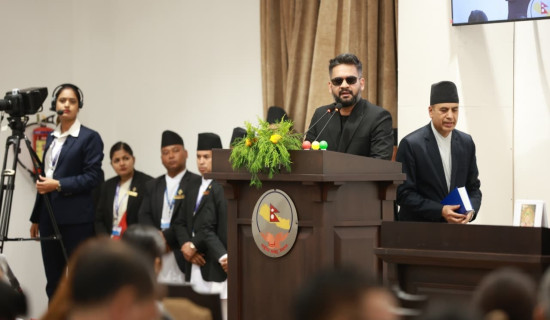
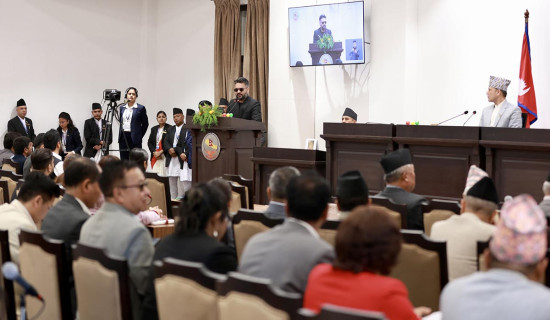
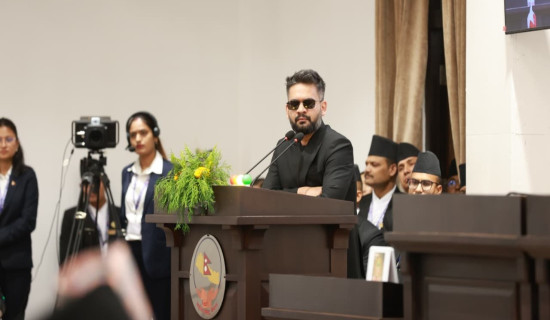
There has been a tendency among the political leaders that they have the right to enjoy the state’s facilities for their role in establishing multiparty democracy and the republican system. This mindset is a reason for the rise of policy-level corruption at the highest level. Today, the country has a new government that is firm on cleaning the dirt of the past, ensuring good governance, transparency and accountability in its actions. As part of its promise to deliver a clean government, the Rastriya Swatantra Party (RSP)-led government has begun investigating the assets of former prime ministers, who have been in the corridors of power for decades. Similarly, political leaders, high-ranking government officers, and former ministers are under scrutiny for their opaque economic conduct. Upon forming the government under Balendra Shah, a Cabinet meeting endorsed a 100-point governance reform agenda based on the RSP's poll manifesto entitled 'pledge with citizens'.
As per this, the government will form a powerful asset investigation commission under the Office of the Prime Minister and Council of Ministers. It will be assigned to look into corruption, the concealment of wealth, and the prevailing culture of impunity and recommend that the government take action against the guilty. It will oversee the collection, verification and examination of asset declarations in a phase-wise manner of key political figures and high-ranking civil servants who have held public office since 1991, according to a new report of this daily. Now the Money Laundering Investigation Department has started investigating the money laundering charges against the three former prime ministers, Sher Bahadur Deuba, KP Sharma Oli and Pushpa Kamal Dahal Prachanda. Former energy minister Deepak Khadka was arrested in this connection. The Central Investigation Bureau (CIB) of the Nepal Police, which started investigating them six months ago, forwarded a letter to the Police Headquarters to assist in this regard.
One of the major demands of the Gen Z revolt that rocked the nation last September was the action against the corrupt politicians and public office holders. However, it will be a complex challenge to probe financial activities spanning 34 years, as they were paper-based and may not be easily available in a credible form. The investigation of the illegally amassed wealth in the last two decades is comparatively easy owing to its digital records but it will be almost impossible to trace unregistered wealth, including cash reserves, precious metals or assets held abroad. The second phase of asset investigation, from 1990 to the early 2000s, will also be quite difficult because of limited financial transparency during that period. The authorities should employ sophisticated investigation methods to make the process legally valid. Moreover, strong political will and widespread public support are critical in punishing the public figures for disproportionately hoarding wealth.

-original-thumb.jpg)
-original-thumb.jpg)