- Sunday, 24 May 2026

Jhulaghat border sees influx of migrant workers ahead of Bisu Festival
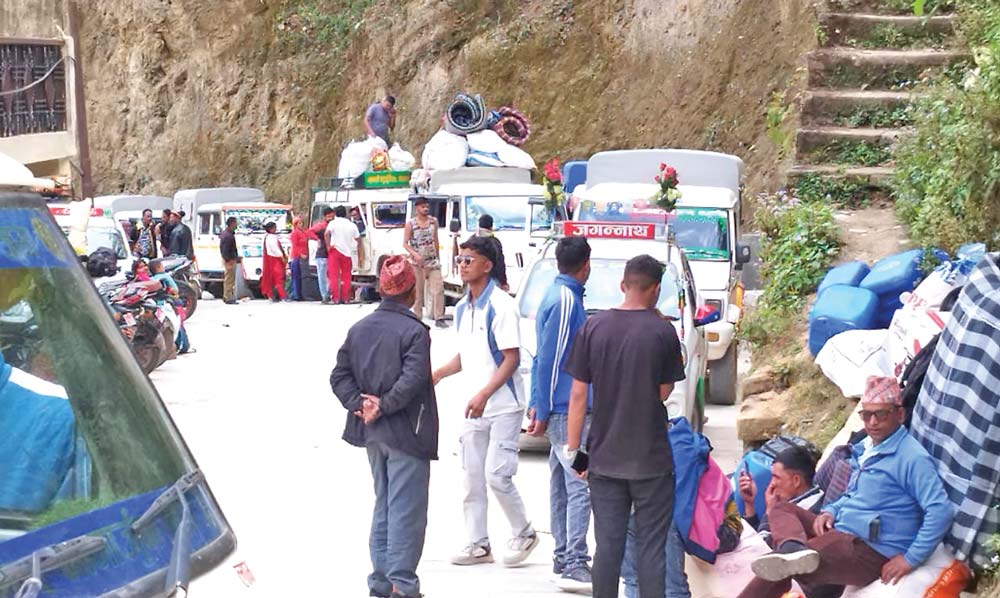
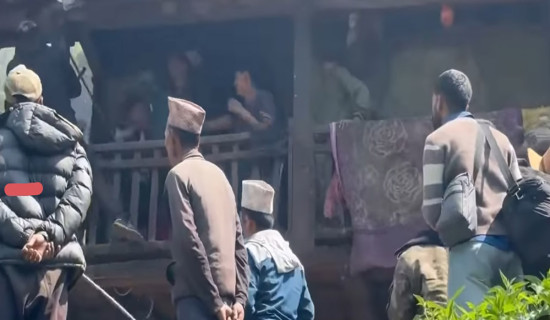
A busy scene at the border as people return home for Bisu celebrations in Baitadi. Photo: Keshav Raj Bhatta

By Keshav Raj Bhatta
Baitadi, Apr. 13: With the arrival of the Nepali New Year, a familiar scene has once again unfolded at the border points of Sudurpaschim Province. Jhulaghat boder point is the witness of migrant workers hurriedly journeying home, their excitement of the ‘Bisu festival,’ and the enduring story of lives shaped by necessity. Hands that have spent the year labouring abroad are now crossing borders with a longing to return to their own courtyards.
In the Sudurpaschim region, the New Year is celebrated with particular enthusiasm as the “Bisu Festival”. As the festival approaches, activity has surged at border points including Jhula Ghat in Baitadi, Dattu in Darchula, Gaddachauki in Kanchanpur, and Rubaidiya Customs Area.
Nepali migrant workers employed in various Indian cities have begun returning home in large numbers, turning border areas lively once again. For trader Nabin Joshi of Jhula Ghat, this period is the most significant commercial season of the year.
“Those returning from India buy essential goods for their homes from here. This is when business thrives,” he said, adding that trade picks up again after the Gaura festival in Bhadra. He also noted that across the border in Uttarakhand, the festival is observed as Bisu on April 14 (Baisakh 1), strengthening cultural ties between communities on both sides.
At present, residents from Baitadi, Bajhang, Doti, Dadeldhura, and Darchula are returning home via Jhula Ghat.
However, the journey is not without hardship. Manohar Dhami of Bithadchir in Bajhang described difficulties faced during travel.
“It feels good to reach home, but jeep drivers cause problems. Fares have doubled, and whatever little we earn is spent on the journey,” he said, adding that despite the difficulties, returning home for Bisu is refreshing.
Pramod Bhatta, a local from Jhula Ghat, said the festival carries shared cultural significance across the border.
“People in Uttarakhand also celebrate Bisu. It brings a shared cultural rhythm between communities on both sides,” he said.
For many migrant workers, Bisu remains deeply meaningful. Prem Bahadur Bohara of Sunarya-8 in Baitadi, who works in Himachal Pradesh, described it as the most important festival of his life.
“Bisu and Gaura are more important to us than Dashain and Tihar,” he said, explaining that families gather, wear new clothes, eat special food, and perform Deuda that bring villages to life.
However, after a few days of celebration, many are forced to return to India in search of work once again. Local resident Jaisingh Dhami recalled older traditions linked to the festival.
“In the past, due to lack of communication, those who did not return for the New Year were even considered dead, and rituals were sometimes performed in their absence,” he said. He added that the belief of celebrating Bisu together with family, even if one had not earned much, remained strong.
Today, however, the reality has not changed significantly. Employment opportunities in villages remain limited. According to local resident Prate Bohara, increased mechanisation in construction work has reduced job opportunities for manual labourers.
Agricultural production from hillside farms is also insufficient to sustain families for more than three months, forcing many to migrate to India for work.
Thousands of youths from Baitadi, Darchula, Dadeldhura, Achham, Bajhang, and Bajura travel to Indian states including Uttarakhand, Himachal Pradesh, Delhi, and Mumbai in search of work. Despite harsh working conditions, they continue to support their families back home.
Border traders say the number of returnees has been rising since mid-March. Temples, fairs, and local festivals held during the New Year and Bisu period have once again brought colour and vibrancy to rural life.
According to the Jhula Ghat Mahakali Customs Office, around 300 people have been returning from India daily over the past week. Transport services have also increased in response to the surge in passengers.
Additional jeep services have been introduced from Jhula Ghat to villages across Baitadi, Bajhang, Dadeldhura, and Darchula. Transport operators say the border area has become active once again due to the heavy flow of passengers.
This wave of homecoming is not only a celebration of a festival but also a reflection of the social reality of Sudurpaschim, where joy of Bisu is intertwined with the pain of migration. After a few days at home, many of these migrant workers say they will return once again to their places of work abroad.


-original-thumb.jpg)