- Wednesday, 3 June 2026

Initiatives to preserve Sangini, Balan dance

By Hari Prasad Koirala
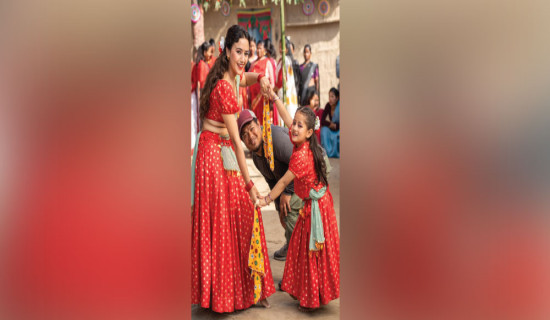
Urlabari, Apr. 13: Before information technology, the Arya community performed the Sangini dance as entertainment during major ceremonies, royal events, Puranic recitations, weddings and other rituals.
For women engaged in agricultural work, the Sangini dance served as a medium through which they expressed their pain and feelings through songs within the community.
At that time, communication relied only on the postal service. Even the postal service was not easily accessible to everyone. Daughters who had not been able to visit their maternal homes for a long time would sing in tune and perform Sangini.
Not only sorrow, suffering, and love, through Sangini songs, women would also spit the fire of revolution. They would challenge the rulers and present their concerns in an assertive manner.
However, in recent times, the Sangini dance has been gradually disappearing.
The young generation does not know much about the Sangani dance, as the generational transmission has been lacking.
At a time when modern means of entertainment had not reached the villages, Balan and Sangini were hugely popular. But now, when speaking of those very Balan and Sangini, many people wrinkle their noses not only in the cities but also in the villages. The older generation has a deep urge to preserve the Sangini and Balan dance.
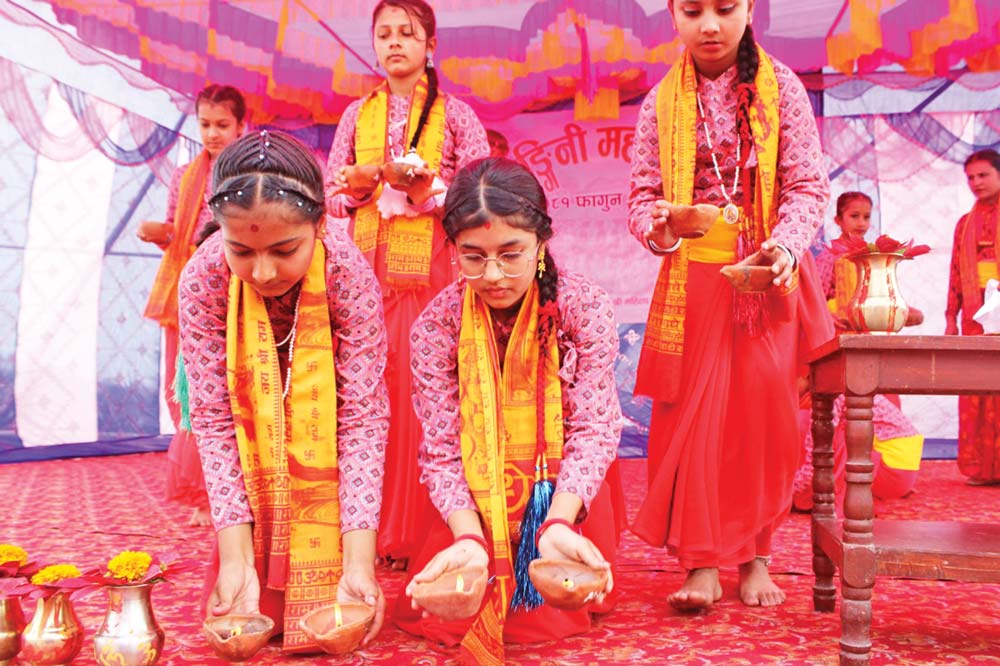
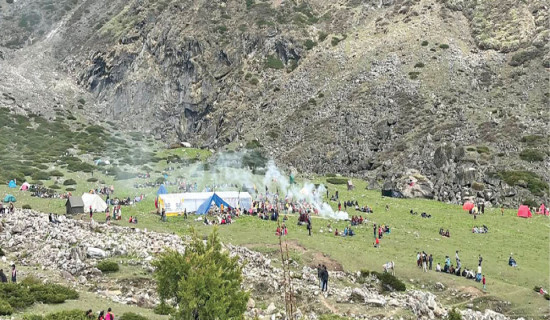
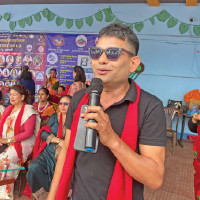
The second Sangini Festival was held on Saturday at Pathari Shanishchare-3 in Morang, in a bid to preserve the dance.
Organised by the Women’s Awareness Harikirtan and Sangini Group, the festival conveyed a profound message that the eastern Nepali tune and Sangini dance must be preserved and that its importance will always remain indispensable in society.
In the past, Sangini dance was performed by singing songs about household chores and fairs. Now, it is performed with a profound message that the fight against violence against women in society and the establishment of rights must begin from one’s own village.
In particular, Balan, which is danced in the Khas Arya community, has been gradually disappearing with the growing influence of Western culture.
Balan used to be performed on every auspicious occasion.
Recalling that Balan was performed in villages until nearly two decades ago, local Bhuwaneshwor Pokhrel said, “Balan dance is on the verge of extinction, so we have organised this programme for its preservation.” There was a tradition of conducting worship rituals throughout the day during auspicious functions at home and dancing Balan at night. However, he said that due to the neglect of the younger generation, this dance has fallen into obscurity.
Inaugurating the festival, Koshi Province’s Minister of State for Internal Affairs and Law, Umakant Gautam, stressed the inevitability of preserving customs and culture.
He said, “If culture is lost, the community and the nation itself are lost.” Stressing that with the development of technology, old values, customs, and culture should not be overshadowed, he emphasised that such festivals must be held regularly to preserve our cultural values and traditions in their original form.
Ward Chair of Pathari Shanishchare-4, Lok Kiran Neupane, expressed his commitment to always support the preservation of Sangini dance.
At the festival, dishes prepared from local produce such as buttermilk, roasted maize, boiled potatoes, and gundruk pickle were served to all the guests.
Arjun Kafle, a member of the Sangini Dance Preservation Campaign, said that traditional snacks were used with the aim of replacing the recent trend of using packaged snacks from sweet shops as soon as the word festival is mentioned. Kafle said that such food items would support local farmers.

-original-thumb.jpg)