- Monday, 25 May 2026

Tech Changing Food Culture
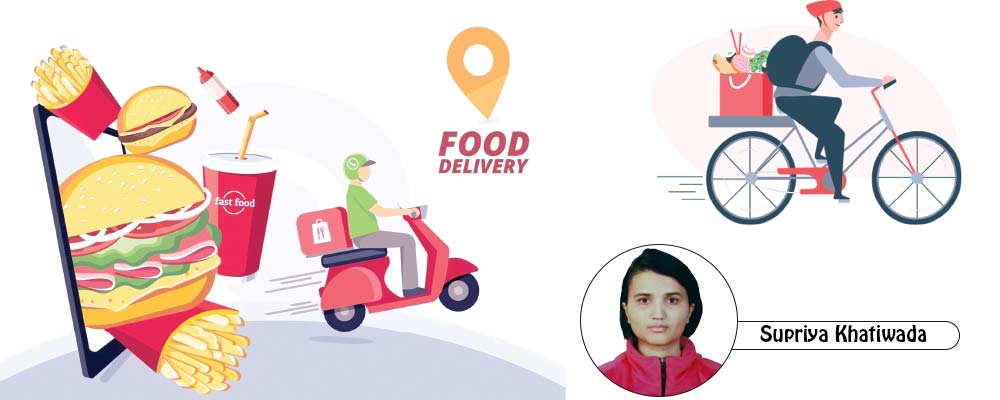

Last Saturday afternoon, after a long lazy nap, I was too lazy to cook. With just a few taps on my phone, I ordered my favourite chowmein from a food app. Within minutes, a delivery rider arrived at my gate. You can order and enjoy a variety of foods from any restaurant if you're hungry or craving something. Such convenience has been possible because of the fast-growing technology.
Nepal did not have a structured method for ordering restaurant food for home or office delivery until 2010. People had to visit restaurants themselves or make phone calls; many restaurants did not offer food delivery services. For example, heavy traffic, limited transport, the absence of digital infrastructure, and the lack of a trustworthy delivery network made proper food access challenging for people with jobs or professions. Due to this gap, customers faced difficulties getting restaurant food efficiently, and restaurants had restricted ways to reach many customers. This situation created the need for a platform that could link restaurant customers and delivery facilities, which eventually led to the origin of Foodmandu in 2010, pioneering online food delivery in Nepal.
Foodmandu remains Nepal’s leading food-delivery app, functioning in cities like Kathmandu, Pokhara, and Chitwan, with over 1,000 partner restaurants and hundreds of delivery riders. Foodmandu, which started as a small startup in 2010, has evolved into a technology-driven service that delivers food, groceries, and basic needs through its mobile app. In the present context, Foodmandu processes thousands of orders daily and continues developing services such as Foodmandu Fresh and One Mart, which deliver groceries and basic needs within minutes or hours. The company is also improving its digital payment systems and mobile app to make ordering faster and easier. At the same time, Foodmandu functions in an increasingly competitive environment, facing competitors such as Pathao Food and Bhoj Deals.
Bhoj Deals is an online food delivery app that creates a platform linking customers with restaurants—something that feels quite essential in today’s context. The platform can encourage restaurants to maintain proper hygiene and food quality standards so that consumers can take safe and reliable food. As orders are placed via the app, Bhoj Deals maintains online records of restaurants, orders, and customer feedback. This allows customers to review food quality and report concerns, which encourages restaurants to continue better food safety and hygiene practices.
Bhoj Deals focuses on nearby delivery areas to ensure faster food delivery. Faster delivery ensures that customers receive fresh food and, importantly, reduces the likelihood of food spoilage or contamination. Bhoj aims to create a complete food experience through rewards and promotions. To maintain customer trust and satisfaction, restaurants on the platform must ensure safe food preparation and consistent quality. By helping restaurants manage their businesses online, Bhoj enables them to adopt organised ordering, packaging, and delivery practices that improve food handling and safety.
As eating late at night can create digestive issues, it is paramount to concentrate on preparing fresh and healthy food for the sake of customers.
Bhoklagyo prepares food using natural vegetables and fresh ingredients. They avoid using artificial flavour enhancers, such as MSG, which help maintain a healthier and safer food quality. The company uses very little oil in cooking, so meals are light and easier to digest at night. The Bhoklagyo team avoids using aluminium cookware to ensure food quality. They focus on preparing healthy and fresh food rather than stored or reheated food. It helps in maintaining food quality and, importantly, prevents contamination during delivery. They also prefer high-quality burger buns from professional bakers, ensuring the right ingredients meet high standards.
FoodMario allows individuals, mostly homemakers, to earn income by selling their food while maintaining traditional cooking styles. It ensures food safety through kitchen inspection, hygiene rules, monitoring cooks, and proper delivery methods. Only cooks whose kitchens meet the required criteria are accepted. Workers must follow hygiene and food quality standards while cooking food at FooMario. They regularly monitor home cooks to ensure hygiene and quality standards. It takes 1 to 1.25 hours to deliver food so that it reaches customers fresh and safe to eat. The company uses special containers to maintain temperature during the delivery.
The online food delivery had begun growing in other countries since the early 2000s.
Platforms like Grubhub in the United States and Swiggy and Zomato in India used websites and mobile apps to allow customers to order food easily from multiple restaurants. Observing these global developments, Nepali entrepreneur Manohar Adhikari also started Foodmandu. While working in the capital city, Adhikari experienced a daily problem, including limited food options and lack of decent food during busy workdays. He learned from the foreign online platforms and used digital technology to solve problems. Foodmandu's success inspires many other Nepalis, leading to the emergence of startups in the market and the creation of a competitive food-tech ecosystem.
Boj Deals combines food delivery and loyalty rewards. It focuses on customer promotions, discounts, and dining experiences. In view of people working night shifts, including health workers and students, Bhoklagyo introduced a late-night food delivery idea. The company focuses on supplying food during nighttime hours. All these food delivery platforms show how Nepali entrepreneurs have adapted global food technology ideas to local needs and changing lifestyles.
Food-order applications have, over time, revolutionised the way we consume and purchase food. This transformation is due to the fact that one no longer has to travel long distances just to buy food since they are able to order from different restaurants without leaving their homes or offices. The food delivery companies have been promoting the usage of mobile phones, online transactions, and online services, thus boosting the e-commerce sector of Nepal. These companies have created hundreds of employment opportunities.
(Khatiwada is pursuing bachelor's in media studies from Kathmandu University School of Arts.)


-square-thumb.jpg)



-original-thumb.jpg)