- Saturday, 6 June 2026

Civic Consciousness: Heart Of Electoral Democracy

The aim of education in Nepal, as described by great sages, is to cultivate awakened persons enthused with core national ideals and universal values who can perform duties to the state of which they are members. Public investment in education is deemed to be the promotion of public goods. It defines human existence as a part of the cosmic web of life and, therefore, their liberty is rule-based, not system-disruptive. The notion of the divinity of people, Janata Janardan, has built an edifice of eternal consciousness of Nepalis, which enabled them to pass judgment of a higher order of dharma-based justice beyond the canons of law and morality. Civic awareness operates in a cycle of karma and a moral balance with the universe.
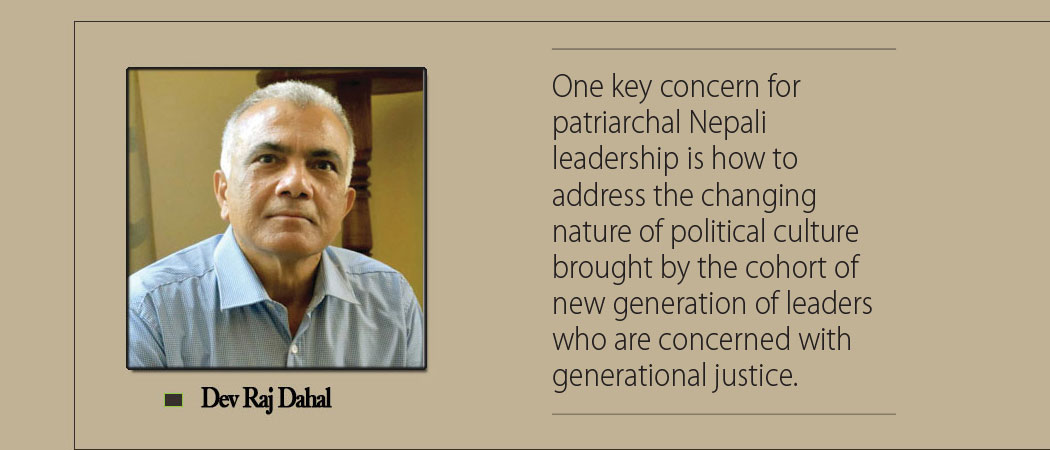
Civic maturity enables one to act beyond self-interest and self-aggrandisement. This consciousness still resonates among many Nepalis who combine the fusion of classical ideals with the habits of modern democratic practices. One key concern for patriarchal Nepali leadership is how to address the changing nature of political culture brought by the cohort of new generation of leaders who are concerned with generational justice or the concept of togetherness in shaping the nation’s future. The cohort of this new generation has defined electoral politics with a new view and has engaged in anti-corruption and anti-cronyism campaigns seeking to set up good governance. Their sheer appeal to the voters' support for a stunning electoral victory emotionally thronged Nepali voters.
Motives
This brought a shift in the organisational and leadership structures of established political parties governed by patriarchal mentality and frequent forging of coalition partners in governance, irrespective of ideological antinomies. Their long reign in power disconnected them from the people’s psychology and their cadres, thus remaining far from the constitutional vision of an inclusive and egalitarian society. The dazzling electoral success of this cohort can be attributed to the deep contradiction in the leadership of old parties, their past misdeeds and not taking their promises seriously, while its mobilisation of diaspora, digital platform and electoral campaigns for a vision of good governance. The motives and voting behaviour of Nepalis showed a startling turn.
The modern idea of popular sovereignty entrenched in the Nepali constitution requires people to prudently exercise their democratic rights and duties, commit to constitutionalism, the common good and build social solidarity to improve the ecological, economic, ethical and political standards. Nepali institutions of enlightenment have not done sufficient groundwork to transform Nepali people into active and informed citizens bound together by cultural tradition, constitution, democratic ideals and institutions of the state, not only suborning the market and civil society and treating people paternalistically as infants. The voting turnout on March 5, 2026 parliamentary elections showed a remarkable decline from an average 65 per cent in the past to about 60 per cent.
This demands a longer duration of voters’ education and a disaggregated approach among various social strata of the population. The scale of education, skill, intelligence and exposure among them is uneven. This is not only the problem of the Election Commission but also of political parties, media, civil society and educated persons. Non-voting in five polling booths, alienation of certain forces, a culture of sabotage in the establishment parties and poor outreach of voters' education might be attributed for this sordid state of affairs. The other element is the mass migration of Nepali youths to the international labor market and their inability to come to cast their ballots to claim equal opportunity and equal welfare. Still they have played key roles in digital electoral campaigns.
Decline in voting turnout is not a problem so long as people have faith in the social contract, the constitution, political parties and polity and they retain a stake in the election system. What is worrisome is the penchant of all political parties to reform constitution, party and electoral laws and sordid tack of ownership in them thus turning Nepali politics an open-ended. Civic engagement demands institutional participation to make political life orderly. Anomic and extra-constitutional activism can easily erode the legitimacy of the overlapping nature of different modes of Nepali life. Leaders have to evolve a rationality of altering the constitution as per internal needs, not external regime change strategy.
Voting is a civic duty of people based on public-spiritedness and a voluntary act to select the best leaders capable of keeping their hope and trust alive and fostering national identity. It helps to control entropy occurring in the political system, either by law-breaking tradition or unsocialised conduct that no longer commits to democratic values and relishes a passion for power, patronage and privileges. Nepal’s invalid voting patterns followed incremental growth of 5.45 per cent despite the growth of the nation's literacy to 76 per cent. Out of 188,03,698 total voters of the nation’s 30 million population, the votes of 600,901,5 people have been simply wasted. In the previous two elections, the pattern of invalid votes stood at 5.18 per cent and 5.06 per cent respectively.
This pattern varies across geography and human development indicators. It means educating ordinary Nepalis about the act of voting, proper use of stamping the ballots without crossing the boxes, knowledge about civic and electoral processes, and the code of conduct is vital to increase valid voting turnout and improve their commitment to democracy. The Election Commission, political parties’ schools, media, civil society, community organisations and the mass of educated people can reflect, audit and reappraise as to how to reduce the scale of invalid voting, follow proper educational strategies and play creative roles. Non-partisan methods of civic education can have multiplier effects on the cognition, attitude and conduct of people in electoral games.
Voters’ education is a lifelong process. Each election witnesses the addition of about 1 million new voters. But to increase the stake of Nepalis in democracy and preparation for role occupancy in the public and state institutions requires continuous training in civic education, an education about enlightenment. It links theories and ideals of democracy to actual practice and contributes to the creation of civic culture. Civic culture is vital in Nepal. It resolves a tension between democratic aspiration for change and constitutionalism, the balance between rights and duties and modernity and continuity of sane tradition. Civic education equally helps make voters rational and tempers the overflow of irrational forces — instinct, emotion and psychological drives that produce biased and uninformed voters.
Crowd behaviour is impulsive, which can be controlled by moral education, law, institutions of the state and the ability of leadership to socialise voters and cadres. An election is not just a one-day event of casting ballot papers in a ballot box. It is a series of events that involves all pre-election security, political, administrative, financial and campaign environment, election day safety, accessibility and security of voters, authorities, leaders, election posts and materials and post-election milieu linked with the effects of leadership selection, its acceptability by the losers and legitimacy to form the government. It is a reflective phase where leaders of political parties can assess the causes and consequences of their electoral outcome.
The democratic duty of people’s engagement lasts till the next election takes place in articulating their demands, mobilisation of opinion, organising deliberation on local and national problems, exerting pressure on leadership for their accountability and transparency in functioning and acting as a bridge between the political world of elites and the social world of the masses. The tendency of Nepali leaders to promote only party-minded socialisation of cadres has indoctrinated them for instrumental politics of vote-catching and vote-maximising, not developing critical civic virtues to differentiate facts from propaganda and misinformation that only generate stirring words, misinformation, false awareness and manipulation of public opinion.
Nepal's every election has shown voters’ shifting partisan attachments. This is the reason public policies are often divorced from public opinion. It does not promote consciousness of voters and the ability to rationally judge about leadership, issues, ideologies, organizations and programs beneficial to them. The instrumental nature of politics negates the other, turns militant and in the process undermines lawful opposition that is essential to keep democratic alternatives and democratic equilibrium, whereby leaders do not resort to authoritarian, populist and radical action. This is the reason stability of democracy requires shaping a strong middle path that avoids the extremism of all extremes. Political institutionalization of the Rastriya Swatantra Party is vital.
Electoral trend
Nepal’s election has also followed another continuity of the electoral trend of defeating the dominant parties. Nepali psychology to lend support to the victims of power politics is moving. When their aspiration for a better life, liberty and progress was sidelined, they silently expressed their opinion through ballot papers beyond the imagination and expectation of the incumbent political classes. In a nation of minorities, the dominant political parties must have the ability to balance the aspirations of minorities expressed through opposition parties, social movements and other peaceful protests, thus involving a politics of compromise for the optimisation of interests of all sides. This optimisation process harnesses the source of governmental and political stability in the nation.
As Nepali politics shifts from personality of leaders to achievement orientation, from empirical division of society for constituency expansion to building overlapping values across the political spectrum, from order and fixed rule to flexibility and autonomy, voters are also switching from excessive party-mindedness to free-floating, exercising conscience. In this sense, the growing distrust of old established parties marked their political decline. This has changed the style of political communication and, therefore, voters' education too needs strategising outreach strategies so that the consciousness generated thus remains un-deconstructed.
(Former Reader at the Department of Political Science, TU, Dahal writes on political and social issues.)