- Monday, 8 June 2026

Trump, Iran make conflicting claims on talks
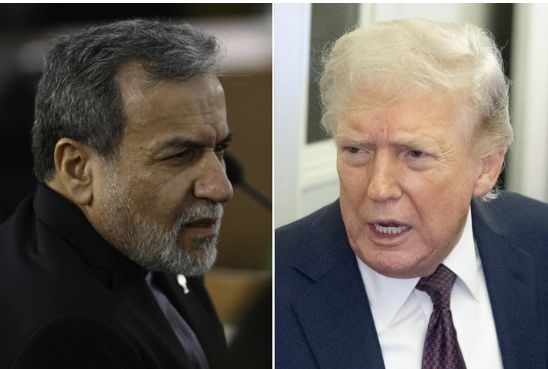
US President Donald Trump (r.) and Iran's foreign minister, Abbas Araghchi, made competing claims about negotiations to end the war. © Collage: Mauro PIMENTEL & Saul LOEB / AFP

TEHRAN, March 24 (Xinhua): U.S. President Donald Trump said Monday that he has postponed strikes against Iranian power plants for five days after holding "productive conversations" with Tehran, though Iran denied any talks had taken place.
"I have instructed the Department of War to postpone any and all military strikes against Iranian power plants and energy infrastructure for a five-day period, subject to the success of the ongoing meetings and discussions," he said.
This follows Trump's threat on Saturday to "hit and obliterate" Iranian power plants if the country fails to fully open the Strait of Hormuz within 48 hours.
IRAN'S REJECTION
Iran has rejected the claims of peace talks and maintained a firm stance. Iranian Parliament Speaker Mohammad Bagher Ghalibaf suggested Monday that Tehran wasn't yet ready for negotiations with Washington.
"Iranian people demand complete and remorseful punishment of the aggressors," Ghalibaf wrote in response to Trump's comments. Asserting that there had been no negotiations with the United States, he said that Trump's latest rhetoric "is used to manipulate the financial and oil markets and escape the quagmire in which the U.S. and Israel are trapped."
Iran's semi-official Fars news agency reported that there had been no direct or indirect contact with Trump, while the foreign ministry said Trump's remarks were "part of efforts to reduce energy prices and buy time" for military plans.
Days earlier, Trump claimed there was "nobody to talk to" after weeks of U.S.-Israeli strikes that he said had decimated Iran's leadership.
MILITARY BUILDUP
Trump extended the deadline by five days, saying further talks would continue through the week. He told reporters the pause was "subject to the success of the ongoing meetings and discussions."
Markets reacted sharply, with oil prices dropping and stocks surging on hopes of de-escalation.
At the same time, the United States is rushing additional forces to the Gulf region. Three Marine expeditionary units, including a 2,500-strong force already en route aboard the USS Tripoli, are expected to arrive within days. Pentagon officials have not confirmed specific missions, but reports indicate planning for possible operations to secure shipping lanes.
A Reuters report on Thursday said Washington was considering deploying thousands of U.S. troops to secure the Strait of Hormuz and potentially target Iran's Kharg Island, which lies just 15 miles off Iran's coast and handles about 90 percent of the country's oil exports.
On March 12, U.S. forces carried out heavy strikes on the island but spared its oil facilities. Analysts said a Marine landing there could choke Tehran's revenue and pressure compliance on the strait. Any such move would mark a major shift from airstrikes to ground operations.
POST-CONFLICT PLANS
Trump administration advisers, including envoys Steve Witkoff and Jared Kushner, have begun preliminary internal discussions on potential post-conflict frameworks, Axios reported Monday, citing U.S. officials.
When asked about who would control the Strait of Hormuz after the war, Trump told reporters: "Maybe me -- me and the ayatollah," he said, "whoever the next ayatollah is."
Countries in the region reacted cautiously to the apparent diplomatic opening. Israeli Prime Minister Benjamin Netanyahu vowed Monday to protect Israel's interests while continuing strikes on Iran and Lebanon.
While condemning the Iranian retaliatory missile and drone strikes on their territory, Saudi Arabia, Qatar and others urged reopening the strait and welcomed any pause in strikes.
Oman, Türkiye, Egypt and Pakistan have all been involved in efforts to broker an end to hostilities in recent days, but no breakthrough has been reported.
U.S. military reinforcements to the Middle East will be largely in place by the end of the five-day window. Whether talks produce results or the pause simply allows both sides to reposition remains unclear as the U.S.-Israel strikes against Iran drags into its fourth week.







-original-thumb.jpg)
-original-thumb.jpg)