- Saturday, 6 June 2026

Muslims celebrate Eid across country
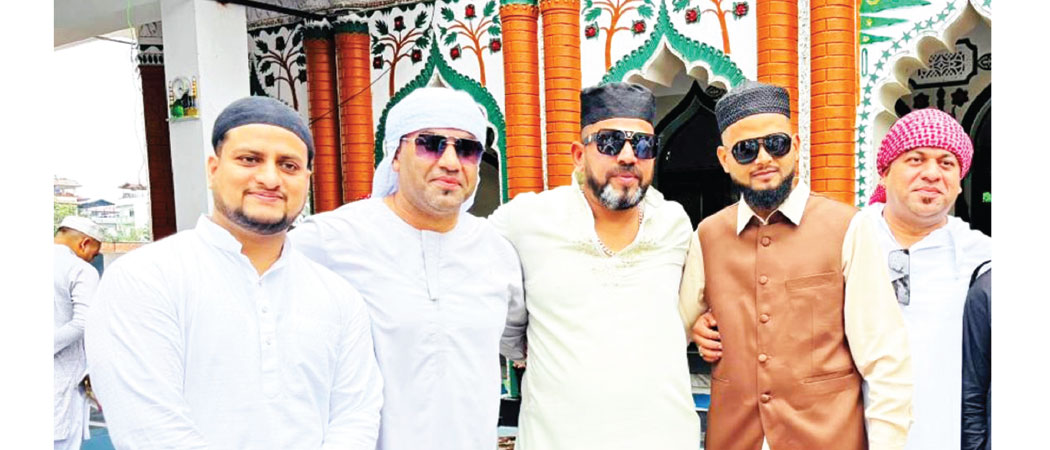

By A Staff Reporter,Kathmandu, Mar. 22: Muslim communities across the country have celebrated their one of the major festivals, Eid-ul-Fitr, on Saturday.
Muslim communities in various cities and districts, celebrated Eid-ul-Fitr, organising various functions, such as mass prayers in mosque, eating sweets, gathering with family members and relatives.
On the occasion of Eid-ul-Fitr, high-ranking government officials, including President Ram Chandra Paudel, Prime Minister Sushila Karki, expressed their greetings to the Muslim Community.
On the occasion of this festival, a large number of devotees gathered at Jame Masjid, in Ratna Park to celebrate Eid on Saturday. Eating sweets, praying in group, and hugging each other, people from Muslim community celebrated Eid.
Similarly, in Nepalgunj, where there is a large Muslim population, the devotees celebrated Eid-ul-Fitr by organising various programmes.
According to our correspondent Siraj Khan, the Muslim community celebrated Eid-ul-Fitr, with pomp on Saturday by organising various programmes across the district Banke.
Since it has been raining since Saturday morning, people from far away could not reach the Eidgah to offer prayers in the morning, so only a limited number of people offered prayers at the Eidgah. For this reason, religious guru Maulana Abdul Jabbar Manjari said that collective Eid prayers were offered in all mosques in the district.
He said that Muslim religious leaders, leaders and the general public who reached the Eidgah and various mosques for collective prayers prayed collectively for the progress and progress of the country.
Addressing the Muslim community at various places on the occasion, Muslim leader Mohammad Harun Halwai of Nepalgunj 4 said that religious leaders wished for peace, prosperity and development in the country.
Similarly, on the occasion of Eid, Banke 2 MP and former Urban Development Minister Mohammad Ishtiaq Rai, Mayor of Nepalgunj Sub-metropolitan City Prashant Bista, Central Member of the Federation of Nepalese Chambers of Commerce and Industry Abdul Wahid Mansuri, Senior Auditors and Social Workers Zubair Rai and Karim Khan, and Social Leader Shakeel Ahmed Jasgadh, among others, sent messages of greetings and requested everyone to celebrate the festival of peace, brotherhood, harmony and unity together.
On the occasion, local political party leaders of other religious sects, police administration chiefs, businessmen and industrialists also reached the Eidgah and mosque to extend their greetings to the Muslim community, said Muslim youth Irfan Siddiqui.
According to him, Eid Milan programmes were organised at various places in Nepalgunj immediately after the collective Eid prayers and the exchange of greetings will continue for three days. During the festival, which is celebrated for three days with various programmes, the community has a tradition of cooking dishes such as sevai, zarda, biryani, kebab and others and feeding them to relatives and friends.
Earlier, the Muslim community had completed various religious activities by observing the fast of Ramadan for thirty days. During this, they donated to the poor and needy and also fed them food throughout the month. After the Eid moon was sighted on Friday evening, the Faizunnabi Jama Masjid and Eidgah Management Committee announced that Eid would be celebrated on Saturday.
Likewise, Muslim community in Hetauda have celebrated their one of the major festival Eid-ul-Fitra, on Saturday.According to our correspondent in Hetauda, Anil Parajuli, Muslims celebrated the festival with joy and happiness after offering Eid prayers at the Jame Masjid in Hetauda. The festival was celebrated after a month of fasting.
After fasting for a month, Eid is a day of sharing happiness, inviting relatives for meals, giving donations, and sharing brotherhood, said Maulana Zahir Mian Ansari of Jama Masjid.
He said that it is customary to gather at a mosque or Idgah and offer Eid prayers. After offering Eid prayers, people hug each other and exchange greetings saying Eid Mubarak.
After taking a bath in the morning, wearing clean and new clothes, and eating sweets, fruits of other dishes, they go to the mosque or Idgah for prayers.
During the month of Ramadan, people forget about hunger and thirst throughout the day for a month, give up anger and selfishness, keep all their senses away from evil, complete rigorous exercises, and celebrate Eid by exchanging happiness.
Nepal Muslim Ittehad Organisation Bagmati Province President Mahmud Samim (Samim Khan) informed that it has been a religious tradition for the Muslim community to donate two and a half percent of their earned wealth to the poor every year.
Jame Masjid was established in Hetauda-4 in 2016. There is Abubakar Mosque in Thanabharyang, Hetauda-11 and Bilal Mosque in Kamaldaha, Hetauda-4. Currently, 40 poor and orphaned children are receiving education at Madarasa Darul Quran in Jaruwatol, Hetauda-1. Muslim communities from Makawanpur, Bara, Parsa, Rautahat and other areas are receiving education here. Khan claimed that currently there are around five thousand Muslim communities in Makawanpur.
Meanwhile, the Muslim community in Saptari celebrated Eid on Saturday. According to Sudha Dev, Muslim community celebrated Eid with joy and happiness in various places in Saptari.
On the occasion of Eid, Muslim communities from various places of the district, including Rajbiraj, met each other on Saturday and celebrated Eid. This festival, which is celebrated after the end of Ramadan, the month of self-restraint, discipline and spiritual purification, has given a message of religious tolerance, charity and mutual brotherhood.
After fasting from sunrise to sunset for a month, the Eid festival began with the sighting of the moon of Shawwal. According to religious beliefs, worship performed during the month of Ramadan is believed to be 70 times more fruitful than fasting at other times, said Advocate Samim Akhtar.
Devotees from the Muslim community gathered at around 8:30 am to offer collective prayers at the Eidgah near the Rajdevi Temple in Rajbiraj 2.
After the prayers, they hugged each other and exchanged greetings, saying “Eid Mubarak”.
On the day of Eid, it is a tradition to take a bath early in the morning, wear clean clothes, use perfume, and offer collective prayers at the Eidgah or mosque. Local Savana Prabin said that it is also a special custom to welcome relatives, friends, and guests by preparing sevai, sweets, and various dishes at each house after the prayers. Another important aspect of this festival is donation.
The tradition of helping the economically disadvantaged, helpless, orphans, and those in need is the main function of Eid. In the Muslim community, there is a provision that every person must pay ‘Fitra’ before Eid prayers, according to which each person must donate about 1 kg 750 grams of wheat or its equivalent.
Additionally, there is a ritual procedure to help the poor and needy by deducting about 2.5 per cent of annual income and assets as 'zakat', said youth leader Irsad Ansari.
He said that it is believed that Fitra and Zakat should be distributed before the Eid prayers, which is believed to enhance the spirit of equality, cooperation and sympathy in the society.
The Eid festival has been playing an important role in maintaining harmony, tolerance and mutual unity in the entire Nepali society.