- Monday, 25 May 2026

Delay in disclosing Karki Commission report irks Gen-Zers

Kathmandu, Mar. 21: It has already been 12 days since the Commission, led by former chairperson of the Special Court Gauri Bahadur Karki, submitted its report on the investigation into the Gen-Z incident to the government.
While receiving the report, Prime Minister Sushila Karki, in the presence of the commission members, had said that the government would study it and make its summary public within a few days.
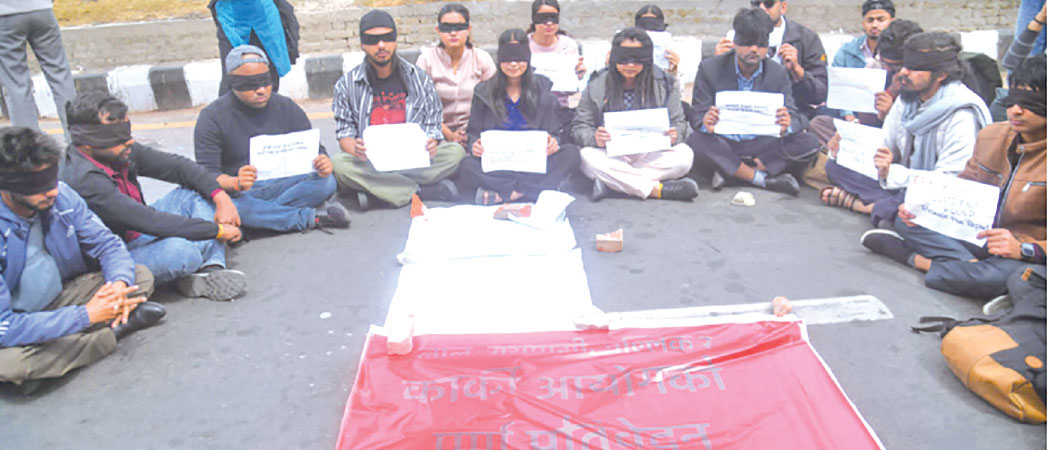
However, even 12 days after the submission of the report, the main recommendations made by the Commission have not been formally disclosed. The delay in making the report public has prompted young Gen-Z campaigners to stage demonstrations almost daily in the capital, particularly at Maitighar Mandala in Kathmandu, demanding its release.
Meanwhile, public frustration continues to grow as the government delays disclosing the Karki Inquiry Commission’s findings. Over the days, the Gen-Zers have intensified their agitation.
Months on, the full truth behind the turbulent days of September 8 and 9, 2025, remains elusive.
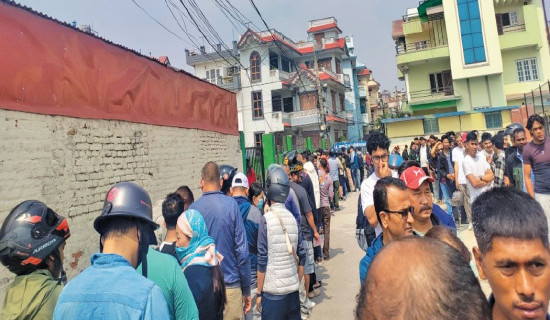
From social media campaigns to street demonstrations, young activists have renewed their movement, demanding that the report be made public. Hashtags calling for its release have gained traction online, while on Sunday, protesters gathered at Maitighar Mandala in Kathmandu, a symbolic hub for civic dissent, to voice their frustration.
Holding banners and chanting slogans, they posed a simple but pressing question: “Where is the full Karki Commission report?”
For many, the issue is no longer just about one document. It has become a broader struggle over transparency and the public’s right to information in a democratic society.
The Commission, led by former justice Karki, was formed on September 21 with a three-month mandate. However, repeated extensions delayed its work, and the report was submitted on March 8, 2026. Activists believe the document has identified key figures responsible for both the state’s crackdown on September 8 and the violence that followed on September 9.
The government’s decision to keep the report confidential has only deepened suspicion.
“Young people are not merely asking for a report,” said one campaigner. “We are asking for accountability and our right to know.”
Prominent Gen Z activist Rijon Rana has accused the Prime Minister of failing to match promises of transparency with action. He warned that the commission must not become “another tool to weave conspiracy theories while keeping the truth hidden”, urging the government to honour its commitments.
Rana also addressed newly elected representatives, many of whom rose to prominence through the same wave of public discontent. He reminded them of their responsibility to uphold transparency commitments made with the interim government and to ensure the report’s recommendations are implemented.
Echoing similar sentiments, Rakshya Bam, coordinator of the Nepal Gen-Z Front, stressed that the sensitive nature of the events cannot justify secrecy. “These incidents are indeed sensitive,” she said, “but that must not become an excuse to keep the truth away from the public.”
For others, the delay evokes troubling memories. Activist Majid Ansari drew parallels with past commissions whose findings were never fully disclosed. “Will this report also be shelved like previous ones?” he asked, questioning whether justice for victims would once again be denied.
The human cost of the unrest remains a painful reality. Activist Tanuja Pandey spoke of losing friends during the protests and the lingering uncertainty surrounding their deaths. “Who is responsible?” she asked. “We are waiting, not just for days to pass, but for truth and justice.”
On social media, youth like Sanken Rai have framed the issue not as a plea for justice, but as a demand for a fundamental right. Others, including Jasmin Ojha, have underscored a core democratic principle: that truth is not the state’s private property, but the people’s entitlement.
Even lighter remarks carry a serious undertone. Activist Amit Khanal quipped that citizens should at least be allowed to “prepare for an open-book test” if the report is eventually revealed, a reflection of both frustration and scepticism.
As pressure mounts, more young voices continue to join the call, insisting that the report must clarify both the state’s actions and the political manoeuvring that followed the unrest.
Despite the Commission completing its work, the government has yet to show any urgency in making its findings public. “Our message is clear: no more secrecy, no more delay, the truth must come out,” said activist Pandey.