- Monday, 25 May 2026

Health services likely to be hit with reduced budget ceiling

Kathmandu, Mar. 20: Ahead of the March 5 election to the House of Representatives, the Rastriya Swatantra Party (RSP) put forward 10 major health commitments through its manifesto, including a special focus on mental health.
The RSP has promised to improve the overall health sector across the country, including plans to expand access to healthcare in rural and remote areas, provide free treatment for burn victims, and immediately initiate the construction of a world-class specialized burn hospital.
Similarly, the party has committed to addressing mental health services by establishing a separate division with the authority to make mental health services more accessible to citizens.
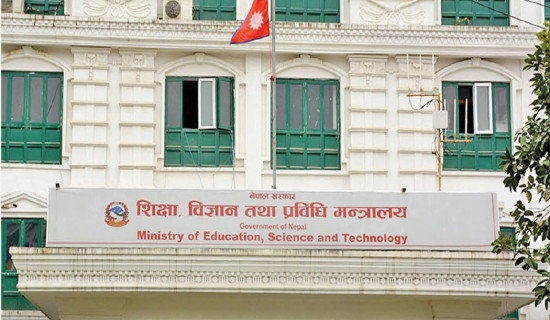
However, ahead of the formation of the new government, the National Planning Commission has set a budget ceiling of only 43.26 billion rupees for the Ministry of Health and Population.
Out of this amount, the Health Ministry must allocate 12 billion rupees to the Health Insurance Programme. After this allocation, only 31 billion rupees will remain for actual expenditure under the ministry.
Lately, Ministry of Health and Population has received a ceiling of 31.93 billion for recurrent expenditure and 11.32 billion rupees for capital expenditure, which is 12.73 billion rupees (less than 23 per cent) lower than the budget for the previous fiscal year.
In the current fiscal year 2082/83, the Health Ministry had received a ceiling of 56 billion rupees, including health insurance. Initially, the ministry received 52.52 billion rupees, which was later increased to 56 billion.
Some health officials have expressed concern over the revised budget ceiling, especially at a time when the new government is expected to undertake structural reforms in the health sector.
Dr. Bikash Devkota, Secretary at the Health Ministry, stated that the budget ceiling recommended by the Planning Commission is insufficient. Speaking with The Rising Nepal, he said that the ceiling should be revised. “The budget ceiling recommended by the Planning Commission is clearly insufficient.
I believe it should be reviewed and increased for the upcoming fiscal year,” he said. Experts have also expressed concern that with the health sector budget decreasing each year, it will not be possible to meet the government’s goals in health services.
The RSP, which is preparing to form a new government soon, has included several ambitious health sector plans in its election manifesto. However, experts argue that it will be impossible to implement those plans with such a limited budget.
Dr. Shri Krishna Giri, former Chief of the Policy and Planning Department at the Ministry of Health and Vice Chairman of the Medical Education Commission, emphasized that the government must prioritize the health sector if reforms are to be materialised. Speaking with The Rising Nepal, he suggested increasing the health budget. “If political parties are to fulfill their commitments in the health sector, the budget ceiling must be increased. At least 10 per cent of the national budget should be allocated to the Ministry of Health and Population. For this, a clear framework for resource management is also necessary,” he said.
He further said that the government and major political parties should also discuss potential resource mobilization strategies while formulating financial plans for the health sector. The budget ceiling allocated to the Ministry of Health does not include provincial and local health spending.
In the current fiscal year, a total of 95.81 billion rupees was allocated to the health sector across federal, provincial, and local levels. For the upcoming year, the ceiling has been set at 6 billion rupees for provinces (the same as the current year) and 29 billion rupees for local levels.
However, overall, the health sector is expected to receive less funding than in the previous fiscal year.
The World Health Organization recommends that countries allocate at least 10 per cent of their total budget to the health sector. However, no government in Nepal has been able to meet this standard so far. Experts and health officials warn that continued budget cuts will directly impact service delivery, especially at a time when there has been no expansion of health sector positions, disease patterns are changing, and both population size and service demand are increasing. They also caution that reducing the health budget annually will create challenges in effectively implementing even the basic health services guaranteed by the constitution.
Failure to increase investment in the health sector could hinder the expansion of quality services, human resource management, and infrastructure development. Experts have also expressed concern about whether the new government will be able to give adequate priority to the health sector.