- Saturday, 2 May 2026

Historic Elections

On Thursday, Nepalis will head to the polls in a defining moment for the nation’s democratic journey. The elections are taking place to restore the country to its constitutional path following the Gen Z movement in September last year. Elections have become essential for renewing the popular mandate, as widespread youth anger over the ban on social media sites culminated in violent street demonstrations that toppled the KP Sharma Oli-led coalition government.
In fact, the social media ban was just a trigger. Nepali society was boiling with discontent owing to endemic corruption, misrule, unemployment and instability. The political syndicate of a handful of parties and their leaders, who had managed to remain at the helm of the government time and again, impelled the youths to wage an unprecedented uprising on the plank of anti-corruption. The spontaneous yet unprecedented movement will be remembered as a turning point in the nation’s modern political history.
The Gen Z revolt has defined the political discourse in ways that many did not expect. The coalition government of Nepali Congress and CPN-UML collapsed within 30 hours of the movement. The House of Representatives (HoR) was dissolved, and a caretaker government under Sushila Karki was formed. Amidst the deepening chaos, the name of Karki as the head of the interim government was widely accepted with the monumental task of holding the elections to the HoR in six months in line with the constitutional provisions.
In the beginning, a sense of uncertainty and confusion prevailed over the fate of polls as the main parties were sidelined in the wake of the Gen Z movement. But the Karki-led government demonstrated firm commitment to conducting the polls despite all challenges. It reached out to all stakeholders to engage them in the electoral process.
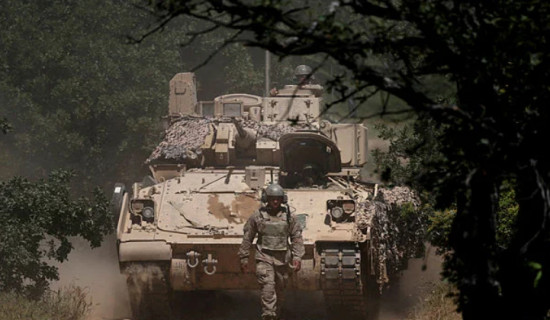
The political parties, which were on the defensive, came to terms and agreed to participate in the elections. The government allayed their concerns regarding the poll security and atmosphere. Some had raised the issues of looted arms and the escapees. The government has already taken many escapees under control and seized looted weapons. It has mobilised all security agencies - the Nepali Army, Armed Police Force (APF), Nepal Police, and the National Intelligence Department (NID) – to ensure foolproof security arrangements so that the people cast their votes without fear.
Similarly, the Election Commission has put its best foot forward to conduct polls in a free, fair and fearless atmosphere. From printing ballot papers and choosing poll centres to launching the voter education campaign, the EC has accomplished the preparation works. The voter education campaign has proven effective, and this will help reduce the number of invalid votes and bring more voters to the polling booths. Around 837,000 new voters have been registered in the voters’ list. This will further increase the voter turnout. An increase in youth participation boosts the electoral system and the system's legitimacy, for they prefer innovation and change in political, social and economic spheres.
This election is set to usher in a new political phase in the country. The election of new faces adds vigour to the federal democratic republic. It is crucial for the citizens to elect persons with integrity as they play a role in shaping the country's policy and development until the next elections. The government, political parties, civil society, media and other stakeholders should cooperate with each other to make the democratic exercise a grand success and bring the derailed constitution to the right track.
-square-thumb.jpg)