- Friday, 22 May 2026

Let's make this election a cornerstone of stable Nepal
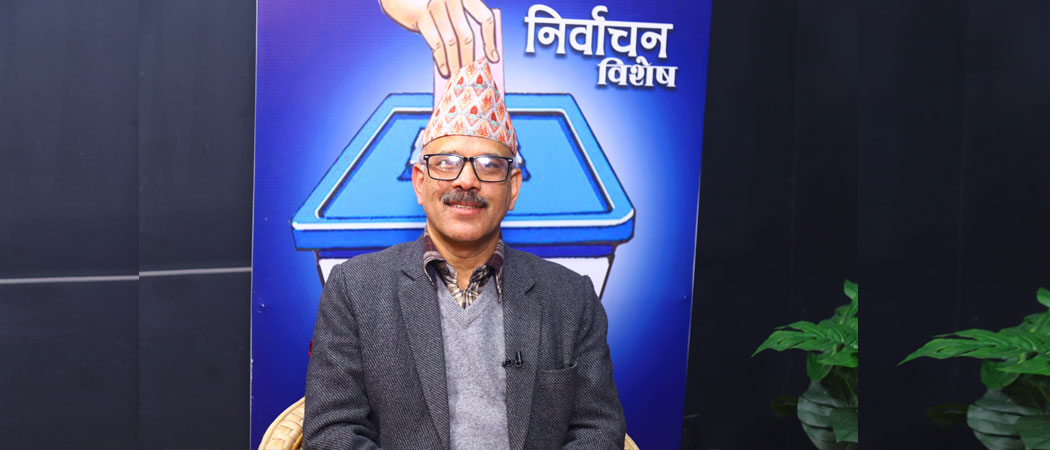
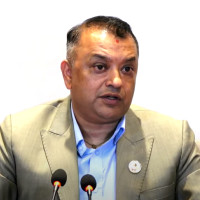
Photo: Manoj Ratna Shahi/Keshab Gurung

With the House of Representatives elections set for 5 March 2026, Nepal finds itself in a markedly different political atmosphere. Gone are the familiar scenes of blaring loudspeakers, crowded rallies, streets lined with banners, and the dust and noise that once defined election season. In their place is a quieter but no less significant energy, as parties, candidates and voters increasingly turn to online platforms. The country is, in many ways, experiencing its first genuinely digital-first election, where debates unfold on screens as much as in public squares.
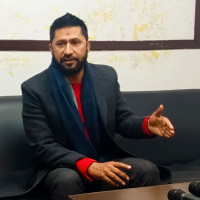
Against this backdrop, senior journalist and former chairman of Federation of Nepali Journalists , Tara Nath Dahal, widely respected for his longstanding work on the right to information and freedom of expression spoke with Pallav Bhusal of The Rising Nepal and Gorkhapatra team, in an extended conversation about the changing nature of political campaigning. Dahal reflects on how social media, data-driven messaging and online engagement are reshaping the way politicians connect with voters, while also raising new questions about transparency and accountability.
The discussion also examines the enduring challenge of Nepal’s digital divide, with concerns that unequal access to technology could leave some communities unheard in an increasingly online campaign environment. At the same time, Dahal points to the growing influence of younger voters, particularly Gen Z, whose expectations around governance, inclusion and civic participation are beginning to reshape political priorities. As election day approaches, their voices, amplified through digital spaces, may prove decisive in redefining Nepal’s evolving social contract. Excerpts:
Nepal is currently in the thick of the election campaign. For decades, a Nepali election was defined by its physical presence: the posters, the rallies and the processions. How has the rise of new media fundamentally altered this style of electioneering?
We are witnessing a rapid transformation. If you look at the surface of our cities today, an older citizen might be forgiven for thinking an election isn’t even happening because the glitz and glamour of traditional campaigns have faded. The towering posters and massive rallies have been replaced by digital debates.
This is an era of independent communication. Candidates and political parties no longer rely solely on the gatekeepers of traditional radio and television, they are using social media to broadcast their activities in real-time. This shift has decentralised the political discourse, moving it from public squares directly into the individual’s hand. While this has significantly reduced the physical costs of campaigning, it has shifted the battleground into the digital ecosystem, where the challenges are more abstract but no less daunting.
While digital media offers unprecedented access, there is a concern regarding inclusivity. What happens to the voters in the remote Himalayan and hilly regions who remain offline?
You’ve touched upon a critical failure in our development. We suffer from a profound digital divide. Despite claims that 90 per cent of the population has access to smartphones, the reality is starkly different in impoverished and remote areas. Quality, high-speed, and secure internet reaches only about 30 per cent of the population. In many villages, we are still struggling with basic 2G or 3G signals that cannot support the heavy data requirements of modern social media.
This divide risks creating a hierarchy of citizenship, where those with connectivity are better informed than those without. However, Nepal has a unique saving grace, which is the radio. Radio signals are near-universal in our country. Where the fibre-optic cable ends, the radio wave begins. We must recognise that radio remains the most vital alternative for the unconnected voter. Furthermore, the traditional door-to-door campaign, a staple of Nepali political culture, is still essential for bridging the gap between the digital haves and have-nots.
Social media is a double-edged sword. It democratises debate, but it also accelerates the spread of misinformation and hate speech. How do we balance this?
This is not just a Nepali problem, it is a global crisis of democracy. We need a well-informed voter to make a wise democratic decision. When voters are fed mis-information, their ability to exercise their sovereign will is compromised. To counter this, we must look at three pillars of responsibility. We must demand greater accountability from social media giants such as Meta, TikTok, and others, ensuring they take responsibility for the content they monetise. At the same time, our state institutions and mainstream media houses must act with greater speed and urgency, if a rumour begins circulating at 9:00 am, a factual rebuttal should be issued by 9:15 am. Equally important is strengthening digital literacy among the public, encouraging people to develop the habit of verifying information before accepting or sharing it as truth.
There is also the rising threat of deepfakes and AI-generated content. How should the Election Commission and the voters respond to this?
We cannot stop the production of this technology, it is already out in the world. But we can control its flow. This requires a multi-stakeholder approach. The Election Commission must collaborate with platforms and fact-checking organisations to flag artificial content. Voters must be taught that the video they see or the audio they hear may be entirely fabricated. It is a war of awareness.
The government often speaks of the Digital Nepal Framework. Why hasn't this policy translated into better infrastructure for these elections?
The Digital Nepal Framework remains, unfortunately, a policy document rather than a reality. We have the slogans, but we lack the physical infrastructure, high-quality cables in every village and robust data centres to support a digital state.
Beyond hardware, we lack policy competence and skilled human resources. We have not yet built the regulatory institutions capable of managing the digital sector with the sophistication required for a modern democracy. Until we bridge this gap, the digital sphere will continue to be a source of instability rather than a tool for governance and transparency.
We recently saw the Gen Z movement, where young people took to the streets to demand an end to corruption and better governance. How does that energy translate to the ballot box?
The Gen Z movement was a profound rebellion against arbitrary state control and systemic corruption. They used social media not just for entertainment, but as a tool for mass assembly and accountability. This election is the opportunity to institutionalise that spirit.
If we spend billions on this election but fail to elect leaders who can deliver stability and integrity, the movement’s goals remain unfulfilled. This isn't just a routine renewal of a mandate, it is about ensuring the parliament has the legislative competence to solve national problems. If the new parliament is as ineffective as the last, we may face another, even more significant wave of rebellion.
What is the specific duty of a journalist during this high-stakes period?
A journalist is a facilitator of dialogue. Our job is to bridge the gap between the candidate’s promises and the citizen’s needs. But we are also watchdogs. We must be critical observers of the Election Commission and the political parties.
Journalists today face immense pressure, from political influence and physical threats to digital trolling. To survive this, we must return to our professional roots, relying on primary sources. If a journalist starts producing content based on unconfirmed social media posts, they lose their credibility and, eventually, their safety. Neutrality is not just an ethical choice, it is a protective shield.
Should the media take a stand? In some democracies, media houses declare their support for specific policies or candidates?
In a pluralistic democracy, it is the media's duty to inform the public about which policies are sound and which leaders are capable. This isn't about bias, it's about analysis. If a party’s economic policy is flawed, it is our job to say so. However, the intention must always be clear that we are here to make the election meaningful, not to rig the narrative.
You are a prominent advocate for the Right to Information (RTI). Are voters getting the information they need from the parties?
There has been a serious failure here. Political parties are late in releasing their manifestos. How can a voter make an informed choice without a written commitment to policy?
I have long argued for three specific transparency requirements. Every candidate must provide a clear declaration of any conflicts of interest, including their business ties, so that the public can be confident they are not seeking office merely to safeguard private interests. In addition, there should be full public disclosure of each candidate’s income and assets before they enter office, allowing voters to make informed decisions based on transparency and accountability. Above all, we must regard the election as a social contract, a five-year agreement between the citizen and the state, grounded in trust, responsibility, and the shared expectation that those elected will serve the public good.
Without transparency, there is no accountability, and without accountability, the social contract is broken.
Finally, what is your message to the voters, the parties, and the state as we approach March 5?
This election is historically significant for the continuation of our 2015 Constitution. We are at a crossroads where we must choose between political instability and a parliament that can actually function.
To the voters, your vote is your power. Demand transparency, look past the digital noise, and choose leaders who can provide legislative solutions to our national crises. To the state and the Election Commission, you must facilitate a fear-free environment where every citizen, regardless of their location or digital access, feels they are part of this democratic festival.
We must not waste this moment. If we fail to build a competent parliament now, we are simply setting the stage for future unrest. Let us make this election a cornerstone of a stable, prosperous, and truly
digital Nepal.
1662885410-original-thumb.jpg)