- Sunday, 3 May 2026

For Stronger CIAA

Nepal ranks 109th out of 180 countries in Transparency International's Corruption Perception Index, 2025. Rampant corruption from policy levels to the grassroots is the reason Nepal is among the least developed countries. Commission for the Investigation of Abuse of Authority (CIAA), the constitutional anti-graft body established to promote integrity, accountability, and good governance in public administration, is often criticised for not having fulfilled its purpose.
Although CIAA marked its 35th Anniversary yesterday, people have grievances that CIAA is largely occupied with smaller cases while the larger cases are often stalled under political influence. People maintain that the CIAA commissioners retain loyalty to the government or political parties that appointed them. In Nepal, the Chief Commissioner and other commissioners of CIAA are recommended by the Constitutional Council, consisting of the Prime Minister as Chairperson, the Chief Justice, Speaker of the House of Representatives (HoR), the National Assembly Chair, the leader of the Opposition in the HoR, and the Deputy Speaker as members.
The diversity in the council members is an endeavour to ensure political neutrality in the appointment of the commissioners. However, unhealthy give and take among political parties for mutual benefits has hampered the CIAA from functioning effectively, investigating corruption and abuse of authority without fear and favour. In other words, although the mechanism is designed to ensure independence, political interference has weakened its authority.
In Nepal, generally, former bureaucrats, who have a strong connection with the political parties and leaders, get the opportunity to be appointed as the CIAA commissioners. During the appointment process, the general public starts guessing who might be appointed the next CIAA commissioner. The appointment in CIAA falls under a certain party after an understanding among the major political parties. No matter how much we refuse to accept it, this has been the scenario in the political appointments lately. Appointing a former bureaucrat is not inherently good or bad, but when the person gets appointed with political influence, it is almost impossible to expect fairness from them.
The latest debacle regarding the cooling-off period in the Civil Service Bill proves how the top-level bureaucrats lobbied to omit the provision to prevent retired government officers from lucrative appointments. The Bill, which was to come with a cooling-off period, came without it, and as a result, it had to be revised. In the meantime, the Gen Z movement resulted in the dissolution of the HoR, and the fate of the Bill is still uncertain. The same top-level bureaucrats who lobbied to omit the cooling-off period are the ones who are the aspirants for constitutional bodies and other top-level political appointments.
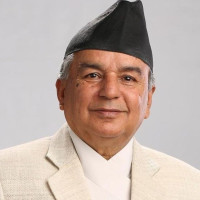
President Ramchandra Paudel, during the 35th Anniversary of CIAA, said that when public power is used for personal interests, it gives rise to frustration toward the system of governance, weakens confidence in the rule of law, and damages the fundamental values of democracy. The Gen Z uprising of September 8 and 9 was the result of the state's inefficiency in curbing corruption and nepotism. Let's hope that the next government to take office after the March 5 election will work with the Gen Z revolt mandate of zero tolerance against corruption. Until we fail to curb corruption, the country will not prosper and the countrymen won't experience notable change in their lives.
-square-thumb.jpg)
-original-thumb.jpg)