- Monday, 8 June 2026

Enduring Nepal-Japan Relations

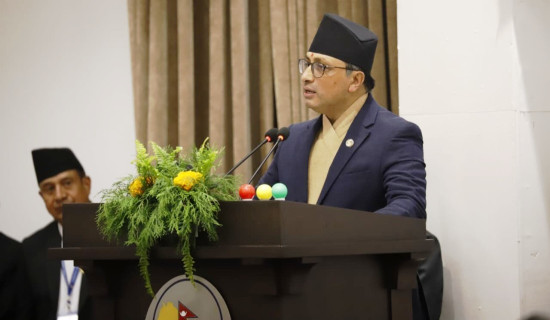
This year marks the 70th anniversary of the establishment of formal diplomatic relations between Nepal and Japan. President Ramchandra Paudel is paying a four-day official visit to Japan to attend the special ceremony being marked on the occasion of the 70th anniversary of the establishment of diplomatic relations between the two countries. The exchanges of high-level visits always contribute to elevating the level of trust, friendship and cooperation between countries. President Paudel’s visit is, thus, expected to further bilateral relations, create better bonhomie and strengthen meaningful cooperation between the two countries. Thus, the visit also signifies the fact that Nepal and Japan accord high priority to their bilateral relations.
Nepal-Japan relations are unique, marked by an enduring partnership based on mutual respect, shared values, and long-term development cooperation rather than short-term power politics. Despite international power shifts and the intensification of geopolitical rivalry and tension in the Indo-Pacific region, the last seven decades are testimony to the fact that Nepal and Japan enjoy perfectly friendly, cooperative and stable relations based on trust and goodwill. The relations between the two nations are free from any disputes, baggage and suspicion.
Key development partner
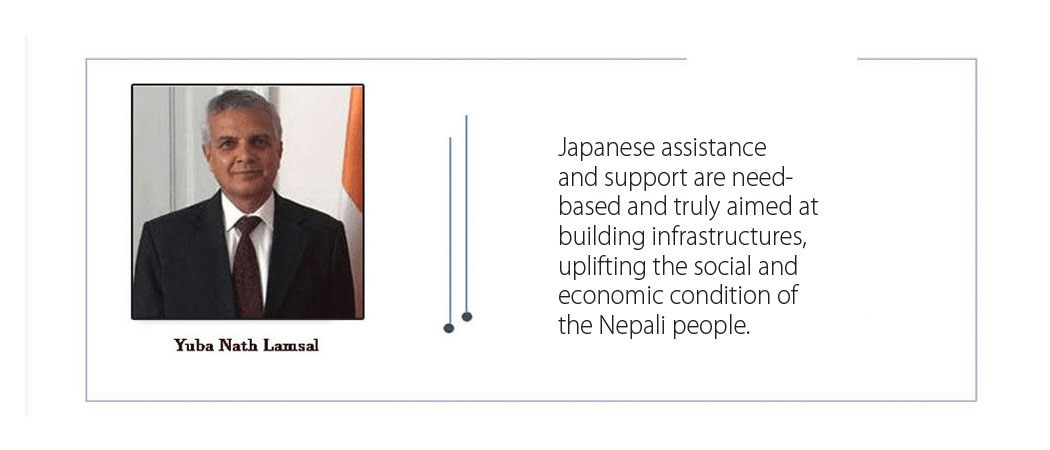
Japan is a key development partner of Nepal. Right from the beginning, Japan has been supporting Nepal’s development in a very significant manner. At one point in time, Japan was the largest donor to Nepal. Even now, Japan’s assistance to Nepal is very significant, which has been contributing to Nepal’s economic, social and human resource development. At a time when several other countries often attach conditions to their assistance, Japan’s support has always been free from any strings attached or any hidden and apparent conditions. Japanese assistance and support are need-based and truly aimed at building infrastructures, uplifting the social and economic condition of the Nepali people, and focusing on sustainable development of Nepal.
Buddhism is an important thread to bring these two countries together. Although Nepal and Japan established their formal diplomatic relations in 1956, the contacts and connections between them at the people’s level date back centuries. However, the first recorded contact began only when the famous Japanese Buddhist monk Ekai Kawaguchi travelled to Lumbini in the 19th century. It is said that Kawaguchi visited Nepal four times and popularised Nepal among the Japanese people through his writings, mostly on birth place of Lord Buddha and Buddhist philosophy. Since then, Japanese people have become interested in Nepal, Nepali people and culture. This has attracted many Japanese pilgrims and tourists to Nepal right from that time. Even now Japanese are considered valued and quality tourists in Nepal.
Japan and Nepal share many commonalities. Nepal and Japan are the oldest countries in the world. They are both mid-sized Asian countries. They also share common values and work closely in the international arena. Both Nepal and Japan have faith in the United Nations’ principles and philosophy as well as international laws. However, there are some strikingly different characters and nature in these two countries. Geographically, Japan is an East Asian country, while Nepal is a South Asian nation. Japan is an island country situated in the Pacific Ocean, consisting of four main islands, namely Honshu, Hokkaido, Kyushu and Shikoku. Nepal is a landlocked country surrounded by Asia’s two giants - India and China.
Similarly, Nepal has markedly different geographic features as it has the great Himalayas, including the world’s highest peak—Mount Everest or Sagarmatha— in the north, the mid-mountainous range and fertile Gangetic plain in the south. Japan is a developed and economically prosperous country with technological prowess, while Nepal is still a least-developed country struggling to reach the status of a developing country. Also, Nepal is a committed non-aligned country that refrains from being a part of any alliances of a security and strategic nature, while Japan is a part of several US-led strategic and security alliances.
Both countries are at the epicentre of the present geopolitical tension in the Indo-Pacific region, which has been a key theatre of international power rivalry. Nepal and Japan have tremendous goodwill for one another. Since Nepal is struggling to uplift its economic status from a least-developed country to a developing one, it needs to reap maximum benefits from the generosity of Japan. There is tremendous potential that Nepal can duly utilise and take benefit. Apart from grants, foreign direct investment, tourism and technology transfer are other key areas through which Japan can support Nepal in an even more meaningful way.
Foreign direct investment
At present, when Nepal prepares to graduate from least developed country status, it needs to come out of the old grant-dependent model and instead it should focus on foreign direct investment, increased trade and technology transfer. But Japanese foreign investment in Nepal is still far from satisfactory. Similarly, the areas concerning technological transfer have not fully realised, thus requiring both countries to focus more on these areas, which are so far untapped. The two countries are also expected to work together and share their experiences on climate change issues. As an island country, Japan’s challenge is the rising sea level due to global warming, while Nepal’s concern is the rising rate of ice in the Himalayas, which may pose a serious threat to the Himalayan environment in the long-run if not checked in time.
The last seven decades of bilateral relations reflect that Japan is Nepal’s most trusted friend and reliable development partner. With the new global geopolitical contestation shifting to Asia, more particularly in the Indo-Pacific region, countries’ relations, too, have been accordingly reshaped and re-oriented. However, Nepal-Japan relations are so stable and strong that change of events in the world and new geopolitical pressures have not made any significant difference in the bilateral relations and cooperation between them. Against this backdrop, President Paudel’s visit is expected to elevate the status of Nepal-Japan relations to a new high.
(The author is a former chief editor of this daily and a former ambassador. lamsalyubanath@gmail.com)