- Thursday, 4 June 2026

The Future of Data-Driven Vigilance in Customs

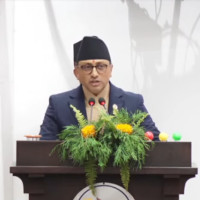
Mohan Kumar Pudasaini
As Nepal prepares to graduate from Least Developed Country (LDC) status and strengthen its position regarding the Financial Action Task Force (FATF) grey list, the country's reputation depends on the proper management of both financial and institutional risks. Among the institutions responsible, Customs is the one that is most prominent. It is usually seen only as a revenue agency, but it has evolved into the frontline of governance, where data, integrity, and vigilance converge to protect society and sustain economic confidence.
Each year on January 26, the international community celebrates International Customs Day as a recognition of the contribution Customs administrations have made to society and trade. The World Customs Organization (WCO) chose the theme “Customs protecting society through vigilance and commitment” for this year.
Today, customs vigilance is more important than ever because the nature of trade has changed. Global supply chains are becoming more complex, and methods of concealment are also becoming more sophisticated, while technology is enabling illicit actors to move goods and value faster than ever before.
In Nepal, reports from the Financial Intelligence Unit show a rise in suspicious transaction reports related to trade-based money laundering, from 22 in FY 2023/24 to 43 in FY 2024/25. At the global level, the World Customs Organization’s Illicit Trade Report 2024 states that the trend of seizures of various types of illicit goods such as gold and drugs to cash and cultural objects are also increasing every year. These trends show why customs administrations must remain vigilant, adaptive, and intelligence-led.
Customs stands at the intersection of trade facilitation, national security, and revenue mobilization. A robust enforcement framework is the primary cornerstone against smuggling, misdeclaration, under/over invoicing, wrong classification, and trade-based money laundering. At the same time, an efficient Customs administration shields the public from harmful products, ensures fair revenue collection, reduces commercial fraud, and nurtures a competitive market that supports domestic industries. In recent years, Nepal has taken multiple steps to strengthen its Customs administration. Its 6th Customs Reform and Modernization Plan (2021–2026) is currently being implemented, and the 7th Plan is in the development phase. These initiatives introduce various digital systems such as ASYCUDA World, the Nepal National Single Window, risk-based targeting systems, and an online valuation database. These tools create the foundation for advanced analytics and the use of artificial intelligence to identify unusual trade patterns, suspicious routing, or potential classification and valuation issues.
Every shipment information carries signals that can indicate either compliance or risk. Through data analytics, Customs can identify high-risk consignments while facilitating legitimate trade. This balance between control and facilitation is the foundation of successful risk management and will determine the future of customs vigilance in Nepal.
Technology, however, is only part of the solution. The skills and professionalism of customs officers form the basis of any efficient system. Training in analytical skills, ethics, and continuous learning helps ensure that digital tools are used for the benefit of the society. Customs should also closely collaborate with other agencies such as tax, police, central bank, and relevant authorities to address complex challenges such as trade-based money laundering and cross-border smuggling. Partnership and intelligence sharing are as essential as data systems and scanning equipment. As Nepal moves closer to LDC graduation, it is increasingly necessary to carry out further customs reform activities. Effective customs vigilance helps build confidence. It reassures international markets that Nepal’s trade processes are predictable, data-driven, and intelligence-led. It also protects domestic industries by curbing unfair competition from undervalued or illegal imports.
Enhanced customs vigilance is not about hinder trade facilitation but about making it safer and more competitive. A modern risk management framework ensures that compliance traders get faster clearance, while non-compliant traders face highly targeted enforcement. This combination of facilitation and enforcement not only strengthens Nepal’s logistics competitiveness but also contributes to economic transformation.
Yet the theme of “vigilance and commitment” reminds us that technology alone cannot sustain reform. The sustainability of these reforms rests on the continued professionalism and commitment of customs officers. Transparent systems are built by professionals who view data not as a bureaucratic burden but as a public trust. Embedding accountability and promoting a culture of integrity will determine how effectively customs protects society in the years ahead.
As the world marks International Customs Day 2026, Nepal has both the opportunity and the responsibility to show that its customs modernization is more than procedural change. By combining technology with integrity, and data with vigilance, Nepal can build a customs system that protects society while enabling prosperity.
(Writer Pudasaini is WCO Accredited Expert, Data Analyst, Nepal Customs. The views expressed here are personal and should not be interpreted as reflecting the views of Nepal Customs)
How did you feel after reading this news?
-original-thumb.jpg)







-original-thumb.jpg)
-original-thumb.jpg)