- Sunday, 3 May 2026

Price decline worries broom grass farmers
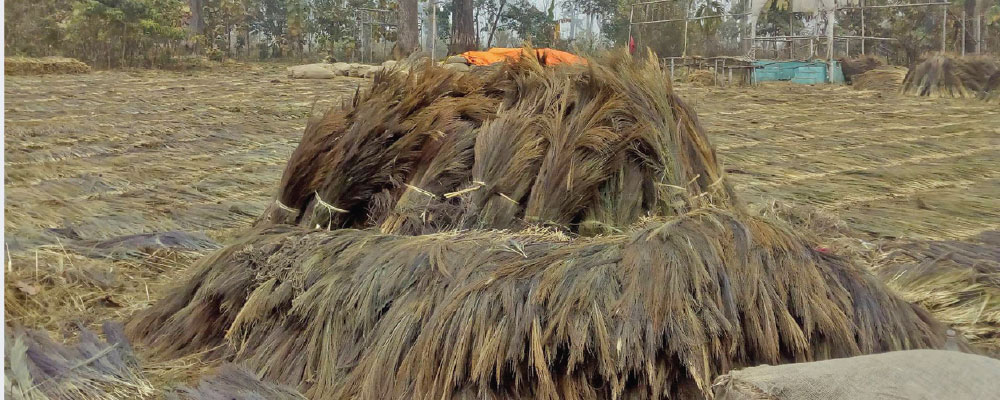
Photo: TRN Heap of raw brooms in northern Morang.

By Our Correspondent,Urlabari, Jan. 14: Farmers cultivating amliso (commonly known as broom grass) in northern Morang have grown increasingly worried as prices continue to decline year after year.
Just four years ago, broom grass sold for as much as Rs. 130 per kg. This year, however, farmers are forced to sell it at Rs. 45–48 per kg directly from their fields. When transported to Letang market, it fetches Rs. 55 to 60 per kg.
Adiman Limbu of Letang Municipality–7, Warangi, said amliso that sold at Rs. 70 per kg last year is struggling to reach even Rs. 50 this year.
“When taken to the Letang market, traders offer up to Rs. 60, but the transportation and other costs are not covered by that price,” he said.
Limbu, who cultivates amliso on 50 ropanis of land, said farmers have been hit hard by the continuous price decline. According to him, he sold broom grass worth Rs. 230,000 at Rs. 60 per kg last year but expects heavy losses this year due to the price reduction.
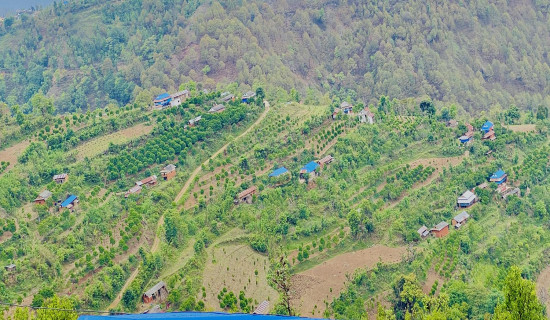
The main sources of income for farmers in Letang Municipality–7, Warangi, are the cultivation of broom grass, cardamom and bay leaves.
Another farmer, Dhan Kumar Limbu, said they are compelled to sell their produce at whatever price traders set. “I do all the work myself, so my costs are low. If labourers are hired, amliso farming does not even recover the expenses,” he said.
Although he has increased production this year compared to last year—when he sold 1,600 kg of amliso—his income is expected to decline due to lower prices.
Amliso remains the most reliable cash crop for farmers in northern Morang, who usually sell it from Poush to Falgun.
Gauri Tamang of Warangi started the broom grass business 27 years ago. Earlier, she used to bring broom grass from villages to Letang market by hiring porters. Stating that she earned a good income as both a farmer and a trader, Tamang said, “In the past, broom grass was exchanged for rice in equal amounts.”
“Selling one kilo of amliso would buy one kilo of rice. That is no longer the case,” she said, adding that road access has now reached most villages, changing the trading system.
Gopal Barkoti, owner of SV Stores, who has been purchasing amliso from farmers in Letang Bazaar, said India remains the main market. “Like last year, demand is low this year too. After selling half of the amliso purchased last year, prices came down,” he said.
Barkoti said he had to store about 500 quintals of broom grass in a warehouse for six months and eventually sell it at a loss. Last year, big traders suffered heavy losses due to the price drop, he added.
According to Devraj Neupane, information officer at the Trade and Export Promotion Centre in Biratnagar, around 15,193 tonnes of amliso worth Rs. 1.15 billion were exported to India in the fiscal year 2024/25.
In the previous fiscal year 2023/24, about 1,362 tonnes of amliso worth Rs. 1.32 billion was exported.
During the first five months of the current fiscal year, around 5,720 tonnes of amliso has been exported.
As exports to Bangladesh have also started in the current fiscal year, dependence on the Indian market alone has been reduced.
Information Officer Neupane said that 112 tonnes of amliso worth Rs. 3.34 million was exported to Bangladesh this year.