- Saturday, 6 June 2026

16th Assembly of IRENA
Nepal seeks international climate finance for its renewable ambitions
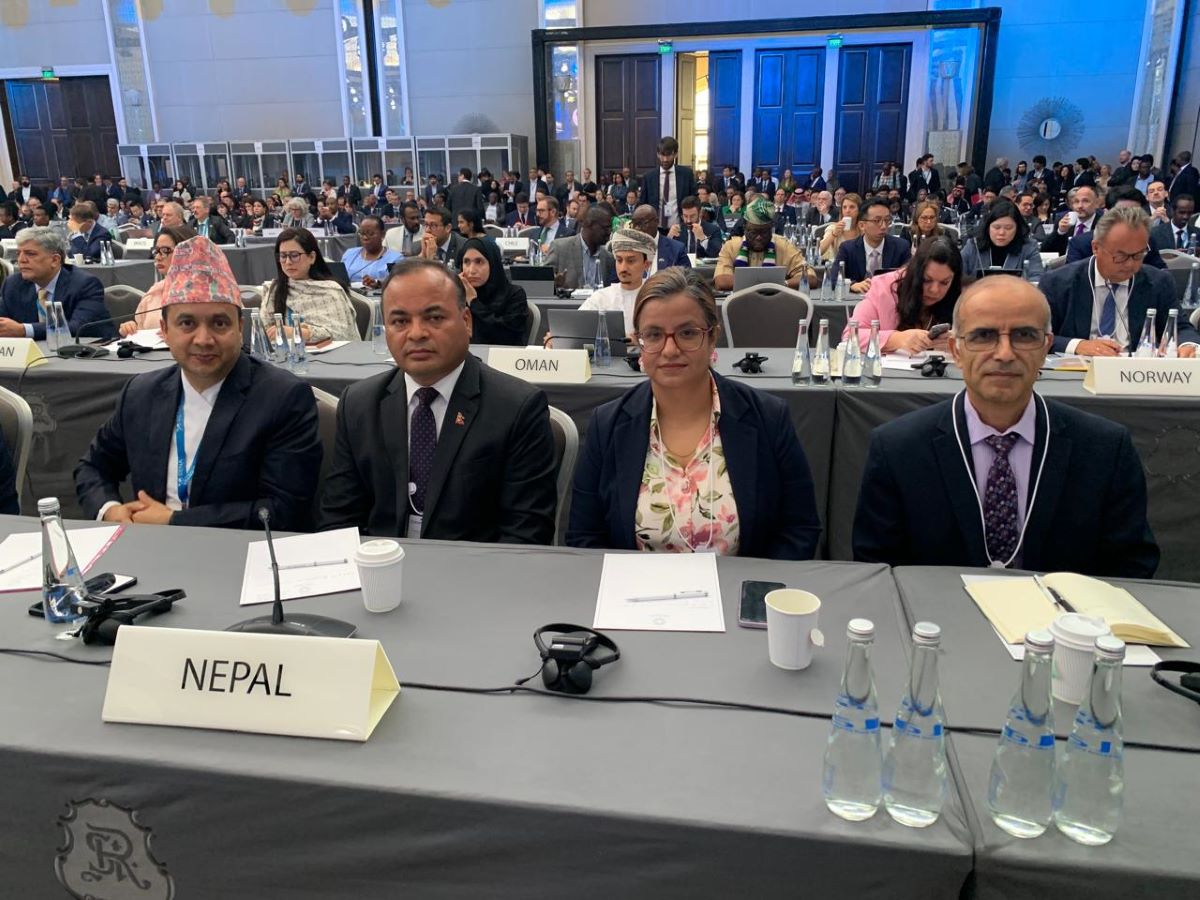
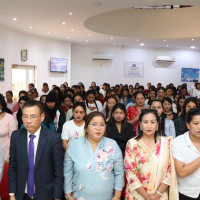
By A Staff Reporter, Kathmandu, Jan. 12: Nepal has underscored its long-term renewable energy ambitions and the need for international climate finance at the 16th Assembly of the International Renewable Energy Agency (IRENA), held in Abu Dhabi of the United Arab Emirates (UAE).
The event formally began in Abu Dhabi on Sunday.
Addressing the Assembly, Executive Director of the Alternative Energy Promotion Centre (AEPC) Nawa Raj Dhakal informed that Nepal's energy development roadmap aims to expand installed electricity generation capacity to 28,500 megawatts by 2035.
He noted that Nepal also targets raising per capita electricity consumption to 1,500 kilowatt-hours per year and exporting 15,000 megawatts of electricity by the same year, the Embassy of Nepal in Abu Dhabi informed in a statement.
Dhakal emphasised that mobilising international financial resources would be critical to achieving Nepal’s ambitious renewable energy targets.
According to the Embassy, he informed the Assembly that the estimated cost of meeting Nepal’s Nationally Determined Contribution (NDC) targets by 2035 stands at USD 73.74 billion, of which around 85 per cent is expected to be met through international climate finance and external support.
Earlier, on Saturday, during pre-Assembly meetings, Dhakal also spoke at sessions on Call to Action on Skilling for Energy Transition and Mobilising Finance for Clean Cooking. He highlighted Nepal’s efforts to prioritise education, skills development and the production of a skilled workforce to support energy transition goals.
"He noted that energy-related subjects have been incorporated from school to university levels, while technical training in solar, biogas, hydropower and electrical technologies is being provided under the Council for Technical Education and Vocational Training (CTEVT) system," read the statement issued by the Embassy of Nepal.
Presenting Nepal’s clean cooking initiatives, Dhakal sought technical and financial support from IRENA and development partners in four key areas: education and awareness, quality assurance, creating a conducive environment for the private sector, and providing low-interest loans for consumers.
On the sidelines of the Assembly, Dhakal also held a separate meeting with IRENA Deputy Director-General Gauri Singh, requesting expedited implementation of IRENA-supported projects approved for Nepal.
The Embassy of Nepal in Abu Dhabi said the Assembly is expected to play a significant role in advancing the global energy transition and promoting inclusive and sustainable prosperity through renewable energy.
Nepali delegation to the Assembly was led by Nepal’s Ambassador to the United Arab Emirates and Permanent Representative to IRENA, Tej Bahadur Chhetri, and included Dhakal and officials from the Embassy.
The Assembly, that concluded on Monday, was held under the theme 'Powering humanity: Renewable energy for shared prosperity” and has brought together more than 1,500 delegates from around 171 countries. United Nations Secretary-General António Guterres, Dominican Republic’s Minister for Energy Joel Santos, and President of the UN General Assembly Annalena Baerbock address the Assembly virtually.
The Embassy informed that the discussions at the Assembly were focused on regional energy transition, strengthening electricity grids, long-term energy planning, digital innovation and the use of artificial intelligence, sustainable aviation fuels and financing mechanisms, the role of renewable energy in agriculture and food systems, and green industrialisation.
-original-thumb.jpg)