- Thursday, 4 June 2026

Senior Citizens Deserve Respect

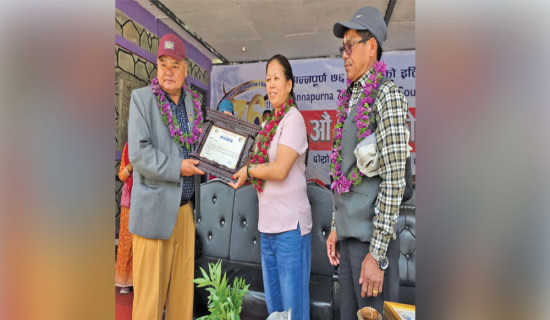
Senior Citizens Day was marked on Poush 11 in Nepal. The country began to observe the Day four years ago. Senior citizens are above the 60 years age. Our culture has always taught us to respect our elders. This equally applies in a household, in a community, in a society and in a country. It has been argued that serving them is our duty, a proof of our civilisation and a means for our own eternal advancement. The government of Nepal protects and shows its respect now to the senior citizens with 4000 rupees per month. The qualifying age for this allowance has now been reset at 70 years. This started some 30 years ago with Rs. 100- per month on 11th Poush.
Our population growth rate is continuously decreasing over the years, with only 0.93 per cent in the 2078 population census. In the previous 2068 and 2058 census this rate was 1.35 and 2.25 per cent, respectively. Although there are noticeable variations across different ethnic groups and geographic areas, the reduction in population growth rate us remarkable. Experts have forecasted that this downward trend will continue. Various economic and social factors, such as increasing costs of living, reduced socio-economic security from one's own children, learning from globalisation and desire to have a small family, have led to the reduction in population growth rate. Research has also demonstrated the success of family planning services in Nepal.
Senior citizens growing
On the other hand, the population of senior citizens is increasing. The share of 60 plus age population in Nepal is more than 10 per cent. This was just 3.19 per cent in 2068 and about 2.25 per cent in 2058. It is estimated that this old-age population is increasing at the rate of 4 per cent and the 65 and above population alone will reach 15 per cent in the next 25 years. The 60 and above population will be nearly a quarter of our population.
Such an estimated increase in the old-age population has several policy implications. First, social policy or social protection must be expanded. Many more elderly people must be paid the elderly allowances by the government. The care responsibility of families will go up, along with the number of older people in the working-age population. It is imperative to design a contributory pension scheme now for all Nepalese, whether they work in the formal sector or not, to manage this fiscal burden.
An increase in the elderly population also has profound implications for our labour market. More and more people will be out of the labour market as the formal retirement age is 58 or around 60 years for most of the paid workers. As the birth rate is decreasing, in the distant future, we may also have to face labour shortages. This is what is happening in most of the advanced economies, such as Japan and South Korea, in Asia. Workers will retire at the age of around 60 years, but many of them will not be tired due to better health. This demands increasing the retirement age.
Additional and special health care services are also required for the elderly population. It has been observed that common conditions in older age include hearing loss, cataracts and refractive errors, back and neck pain and osteoarthritis, chronic obstructive pulmonary disease, diabetes, depression and dementia. All these demands for geriatric hospitals and care workers will have to be increased to cater to the health care needs of the diseased senior citizens. In this case, public as well as private health care expenses will increase. Considering this, health insurance must be made effective.
In the case of not increasing the retirement age, life-long learning schemes will be required to train the retired workers in a new set of skills so that they are enabled to work in the areas of their interests and make economic contributions. I have seen British old-age and retired people getting skill training from their local councils (municipalities in Nepal) and involved in some home-based gainful work. Such work could be handicraft, painting, writing, hair-cutting, teaching, gardening, etc.
An increased old-age population has crucial fiscal policy implications. As touched upon a little bit above, old-age costs money to old persons, their families and the government. It demands care service, medical expenses, social security allowances and other facilities. The government must be agile to understand and take necessary policy actions to ensure the fiscal sustainability of old-age management. While their care is necessary, it should be managed through their own contributions from an active age.
Progress
Nepal’s progress towards managing the senior citizens is commendable and is based on the principle of social justice. Its old-age allowance, which started in 2051 are globally highly praised. The current constitution and SDGs have recognised this as the right of senior citizens. Old-age homes and Day Care centres are run by the government despite their weak management. Discounts on travel by public transport and treatment are in operation. Special National Action Plan 2062 for senior citizens outlines the strategic areas of interventions and focused activities for their overall advantage. The Senior Citizen Act 2062 and Regulations 2065 ensure their socio-economic and other rights.
The Senior Citizen portfolio has also been added to the existing Women and Children Ministry for overall policy and implementation coordination for easing the lives of our senior citizens. The Ministry is trying its best to ensure that the seniors are protected and respected in our society. Senior citizens are precious assets. They have transferable knowledge, skills and experiences. With the ongoing demographic transition, individuals, families and government must act to ensure that our senior citizens are financially secure, healthy and respected. Proactive long-term fiscal planning is required to manage our elderly population.
(Dr. Bhusal is a development expert.)
-square-thumb.jpg)