- Saturday, 6 June 2026

Rabies infection challenge increasing in Sudurpaschim

Kanchanpur, Dec 26: Rabies infection has emerged as a serious issue in the Sudurpaschim Province.
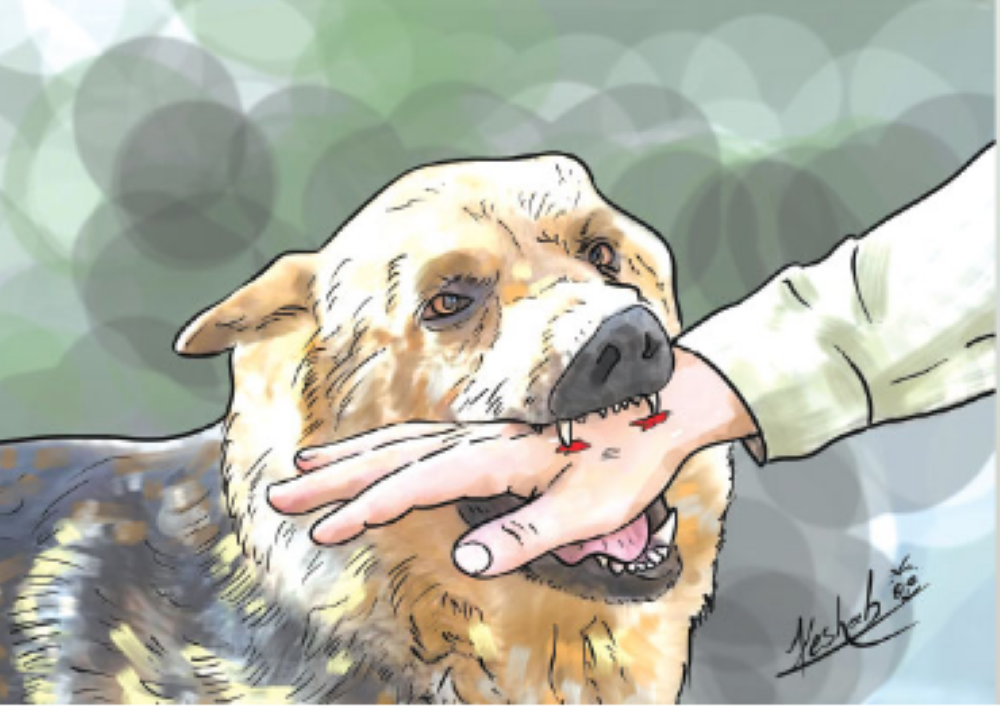
A major challenge has been added to public health across the province after rabies began to spread among animals and humans from fox and stray dog bites.
According to Naresh Prasad Joshi, senior veterinary doctor at the Animal Disease Research Laboratory in Dhangadhi, at least 18 animals have died from rabies in the past 20 days.
"In a span of three years, rabies infection has been confirmed in 371 animals. This is only the number of cases reported to the laboratory. Meanwhile, it is reported that at least five people have died due to rabies infection, and since much of it might not be reported, the number of deaths could be much higher," he said.
Senior veterinarian Joshi stated that a 70-year-old woman from Surma Rural Municipality–2 in Bajhang died this week due to rabies. According to him, earlier this year in the month of Ashar, a child in Baitadi also died due to rabies.
The highest cases of rabies are reported in Kailali and Kanchanpur districts. Out of 170 samples collected in the fiscal year 2081/82, rabies was confirmed in 136. In that fiscal year, the highest number of infections was found in Kailali. Out of 98 samples collected there, 78 tested positive, followed by 43 out of 53 in Kanchanpur, five out of seven in Achham, three in Bajhang, and six out of eight in Doti have tested positive.
A case of rabies was confirmed just two days ago in an animal that was wandering around biting other animals in Godawari Municipality-6, Kailali. Senior veterinarian Joshi shared that the sample collected by the laboratory's Rapid Response Team (RRT) tested positive.
Previously, rabies was confirmed in a dog in Shuklaphanta Municipality-1 of Kanchanpur, and now the fear of rabid dogs is also increasing at Ward No. 12 of the same municipality, said Ram Prasad Bhatta, head of the Municipality's Livestock Development Branch.
According to him, recently foxes and jackals have suddenly started entering human settlements, and the main reason for this is the destruction of their natural habitat which is sugarcane plantations.
"After the sugarcane harvesting season begins, the places where foxes and jackals hide and their feeding areas are destroyed. Due to the lack of shelter, jackals enter settlements in search of food, bite domestic dogs and livestock, and through this, the spread of rabies has accelerated," Bhatta said.
Veterinarian Bhojraj Pandeya said that although rabies is fatal disease, life can be saved through timely treatment and precaution.
According to him, wound from any animal's bite should be washed thoroughly with soap and clean water for 10–15 minutes, and even if the wound is minor, one should not delay and immediately go to a health facility for rabies vaccination. (RSS)
-original-thumb.jpg)


-original-thumb.jpg)