- Sunday, 3 May 2026

Meditation For Peace


Having roots in Buddhism, Hinduism and Taoism, the oriental culture has internalised meditation as a source for emotional balance and inner peace. Modern life is stressful, filled with academic and career pressures and social media overload. The people lack enough time to pause, reflect, and enjoy the bliss of nature that has the power to reduce mental exhaustion, stress and anxiety. From a small age, children are expected to excel in academics, and adults are expected to shine in their careers. We are always in a rush and hardly have any time to nurture our mental health and emotional well-being. In such situations, meditation can play an important role in maintaining a balance between body and mind and bringing mental peace.
Meditation helps slow down our racing thoughts and reconnect with ourselves. Mental health well-being is the need of the hour when almost five per cent of the global adult population suffers from depression and mental health issues. We should take mental health issues as seriously as physical health, as depression and anxiety affect work, social life, studies, and relationships. Stress negatively impacts our immune system and gives rise to many diseases. To raise awareness about the benefits of meditation, the UN General Assembly proclaimed December 21 as World Meditation Day last year. We should take this day as an opportunity to promote meditation, which has proven beneficial in reducing stress and improving the overall well-being of people.
Nepal is the land of the supreme God Shiva, the apostle of peace Buddha and scores of sages and seers. The famous sages meditated and performed intense penance deep in the Himalayas for the attainment of enlightenment and wisdom. Lord Buddha meditated for the attainment of enlightenment and his teachings today guide our lives. We have been practicing the art of meditation for centuries and it is an integral part of our culture and lifestyle. Of late, Western society, too, has adopted the philosophy of yoga and meditation.
With mighty Himalayas, winding rivers, calm lakes, dense forests and a spiritual heritage, Nepal holds an immense potential of being the global centre for meditation and yoga. This requires promoting yoga and meditation as a means of physical and mental happiness. We need national policies prioritising this art of living at various layers of government. Yoga and meditation have been incorporated in the plans and policies for the fiscal year 2024-25, as health promotion strategies, which shows the government is working for their promotion. Meditation and yoga should also be incorporated in the school curriculum from early grades.
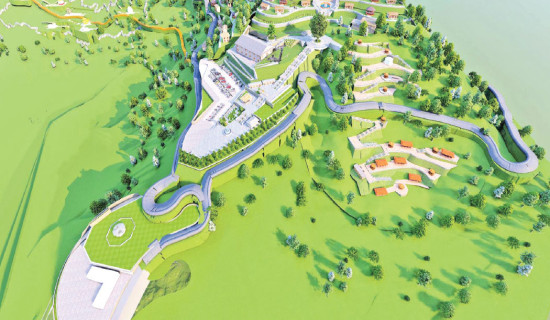
If we can establish more meditation centres and let the world know about them, we can emerge as a leading destination for meditation to promote global well-being. It will lead to cultural and spiritual revival, while giving a distinct identity to the Himalayan nation. The peace seekers from around the world visit the country to breathe in the midst of nature and achieve ultimate knowledge. The wellness tourism would significantly boost our economy, creating more jobs in the tourism and hospitality sector, especially in the Himalayan region. We have instances of many influential people visiting Nepal for meditation. But, we should keep its purity intact. With its over-commercialisation, it may lose its spiritual values and the people will be deprived of its inherent benefits.