- Sunday, 3 May 2026

Antique Dhaka Topis and uneven battle of handwoven heritage
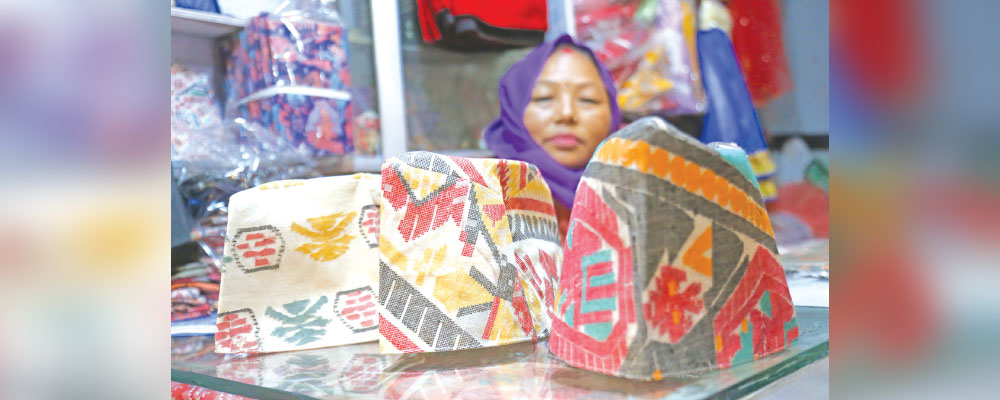

BY SUSHMA MAHARJAN,Kathmandu, Dec. 23: A walk through Keltole, one of Kathmandu’s most prominent hubs for Dhaka products, offers a vivid display of Nepal’s textile heritage. Shops lined along the narrow streets showcase a wide range of Dhaka merchandise such as topis, daura suruwals, saris, shawls, baby outfits and more. Long recognised as a centre for Dhaka topis, Keltole continues to draw customers from Kathmandu and across the Valley.
At a glance, most Dhaka topis in the market appear affordable, generally priced between Rs. 150 and Rs. 2,000. Surprisingly, there are some Dhaka topis that cost as much as Rs. 20,000, equivalent to the monthly salary of an ordinary worker. Such antique topis priced between Rs. 10,000 and Rs. 25,000 still exist in Keltole, treasured more as heritage artefacts than everyday headwear.
One such collection can be found at Grey Laxmi Dhaka Topi Store. The shop’s owner, Rati Tandukar, possesses a rare assortment of antique Dhaka topis believed to be between 50 and 100 years old. These topis, she said, were not ordinary handwoven pieces from Nepal but were made using original Dhaka fabric imported from Dhaka, Bangladesh.
“During the Rana regime and the monarchy, royals and Ranas imported Dhaka fabric from Bangladesh to make topis and other garments,” Tandukar said. “These items symbolised prestige and power and were considered premium goods.”
According to her, the antique topis were often received as gifts by individuals connected to royal palaces. Made from extremely fine threads, the fabrics may appear delicate but are remarkably durable. Some of the topis also feature silver thread work, adding to their exclusivity.
“As these fabrics are no longer produced, their scarcity has increased their value,” Tandukar said. “Only a few customers who truly appreciate Dhaka craftsmanship come looking for such pieces, usually through word-of-mouth.”
While antique Dhaka remains a collector’s item, most customers opt for Palpali and Tehrathum Dhaka topis (also known as Purbeli topis) priced between Rs. 250 and Rs. 2,000 and widely used for daily and ceremonial wear.
Handwoven Dhaka under threat
Once regarded as a luxury fabric that embodied generations of craftsmanship, original handwoven Dhaka today faces an uneven battle against mass-produced, machine-made replicas flooding the market.
Hari Neupane, owner of Shree Ajima Rastriya Daura Suruwal Tailors, said handwoven Dhaka fabric costs Rs. 2,000 or more per metre, while machine-printed Dhaka replicas are available for as little as Rs. 250 per metre.
“A groom’s daura suruwal made from handwoven Dhaka costs around Rs. 15,000 to Rs. 20,000,” Neupane said. “The same set made from factory-produced Dhaka costs about Rs. 7,000 to Rs. 8,000.”
He said only a small number of customers who value authenticity choose handwoven fabric, while most prefer cheaper alternatives. Handwoven Dhaka is mainly produced in districts such as Tehrathum and Palpa, whereas machine-made Dhaka is widely available in markets.
Neupane added that changing consumer preferences have forced traditional Dhaka businesses to adapt. His shop, which once sold only Dhaka, now also offers fabrics such as Banarasi, silk, polyester and wool blends to survive.
Pointing to his shop, Neupane said, “As people show less interest in Dhaka and look for reasonably priced and stylish fabrics, we had to diversify for sustainability.”
He also noted a visible shift in wedding attire trends. “In the past, 80 out of 100 grooms wore Dhaka daura suruwal during marriage ceremonies. Now the trend has reversed. Grooms increasingly prefer suits and other fashionable fabrics.”
According to Neupane, Dhaka topis remain the most consistently purchased Dhaka item, as they are considered auspicious in Nepali culture. During Tihar and other cultural events, topis are gifted and worn as symbols of goodwill and tradition.
“Even during these auspicious occasions, people now choose machine-made Dhaka,” he said. “This threatens the identity and survival of original handwoven Dhaka.”
Echoing this sentiment, three college students purchasing suits in the area said Dhaka daura suruwal feels outdated. One of them, Sushant Prasai, said suits offer greater versatility.
“Suits can be worn at weddings, corporate events or college functions,” he said. “Investing in Dhaka feels costly and often limited to a single occasion.”
Meanwhile, the future of handwoven Dhaka remains uncertain, caught between heritage and modern consumer preference, struggling to survive in a market dominated by speed, replicas and affordability.