- Sunday, 3 May 2026

Air pollution rises as temperature dips in Valley
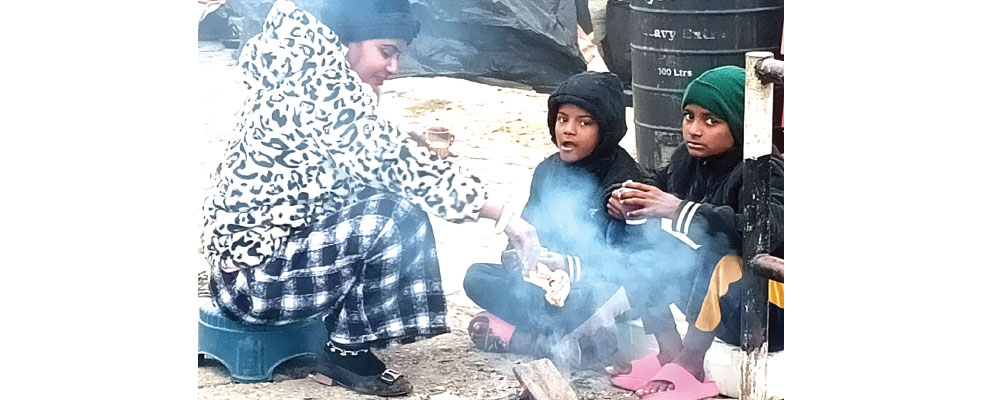

By A Staff Reporter,Kathmandu, Dec. 21: As the cold intensified, air pollution levels rose in the Kathmandu Valley. A blanket of haze hanging over the Valley on Saturday signalled a sharp drop in temperature along with worsening air quality. The Air Quality Index (AQI) at Ratnapark in Kathmandu reached 240 on Saturday afternoon, a level considered very unhealthy. At the same time, Bhaktapur recorded an AQI of 104, which is regarded as unhealthy for sensitive groups.
According to experts, air pollution worsens in Kathmandu during winter due to temperature drop, low wind speed and dense fog, which traps pollutants close to the ground.
Increased use of firewood and fossil fuels for heating, higher vehicle emissions, brick kiln operations and open waste burning further add to the pollution, while the Valley’s bowl-shaped structure prevents polluted air from dispersing, they said.
David Dhakal, a meteorologist at the Meteorological Forecasting Division under the Department of Hydrology and Meteorology (DHM), said the minimum temperature in the Valley as well as in several Tarai districts has dropped sharply over the past few days.
“We cannot say this is a cold wave, but cold conditions are affecting both the aviation sector and people living across the Tarai. Visibility falls below 1,000 metres in the morning but improves to above 1,000 metres in the afternoon,” Dhakal said.
He added that the sky over the Kathmandu Valley is covered with haze -- a mixture of clouds and pollution -- which has made the weather feel colder. The minimum temperature in the Valley has dropped in recent days. In Kathmandu, it fell to 5.5 degrees Celsius on Saturday.
Meanwhile, our Bardibas correspondent Ravindra Upreti reported that the weather in Mahottari, which had been bright and sunny until the previous day, changed abruptly, with temperatures falling sharply. On Saturday, the minimum temperature in the district dropped to 11 degrees Celsius.
Dense fog from early morning, cold westerly winds and the absence of sunshine throughout the day have led to a noticeable fall in temperatures. While the temperature on Thursday stood at 24 degrees Celsius, it dropped suddenly to 20 degrees on Friday.
Locals said light drizzle since morning has made the cold even more severe. Border areas of Mahottari, including Matihani, Jaleshwar and Samsi, have been more affected by the cold. Although cold waves are common in Madhes every year during December/January, this year the symptoms have appeared around 20 days earlier than last year.
Last year, the cold wave began on January 8, but this year there has been no sunshine since Friday. Cold westerly winds and frost have disrupted daily life. In rural areas, people have started lighting fires outside their homes to keep warm.
Dr. Rajiv Jha of the Madhes Province Health Training Centre, Pathlaiya, said the risk of hypothermia increases during cold waves as body temperature can drop sharply. He said respiratory infections, asthma, colds and coughs, high blood pressure and ear problems are common during this period.
He advised people to avoid going outside unless necessary, keep themselves warm and consume warm, nutritious food to prevent hypothermia.
Local governments have said they are on standby in view of the possible impact of the cold wave.
Prahlad Chhetri, Mayor of Bardibas Municipality said that the cold wave has arrived about 20 days earlier this year compared to last year. He said that if the cold intensifies, arrangements will be made to light fires at public places and distribute warm clothes to poor and marginalised communities.
Due to the biting cold, the number of pedestrians on the roads has also declined. Vehicles have been seen travelling with headlights on throughout the day along the East-West Highway and the BP Highway, which are usually busy
from early morning. The number of vehicles on the roads has also decreased. Shops that normally open at 8 am remained mostly closed until 10 am on Saturday.