- Thursday, 11 June 2026

Unplanned spending erodes public trust: Minister Sinha
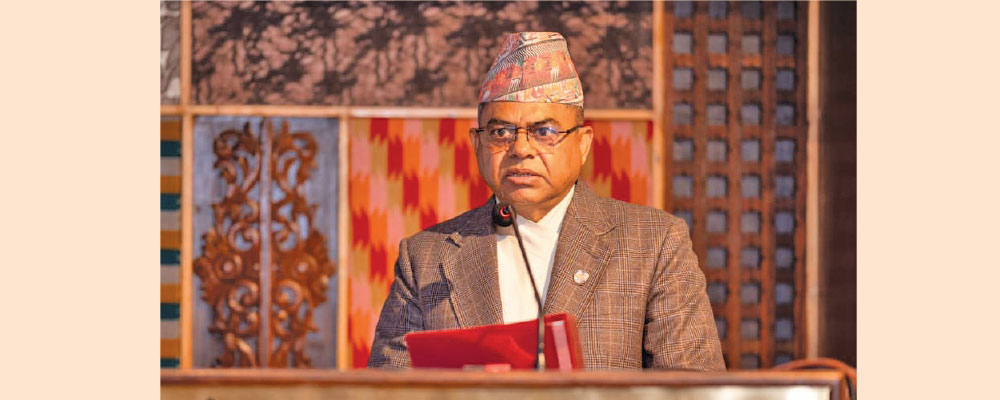

By A Staff Reporter,Kathmandu, Dec. 20: Industry, Commerce and Supplies Minister Anil Kumar Sinha has warned that citizens’ trust in the state is eroding due to careless spending of public money without proper planning or analysis of results.
Speaking at a policy dialogue on "Improving public expenditure and service delivery," organised by the Society of Economic Journalists of Nepal (SEJON), Sinha said dissatisfaction was growing because taxes collected from the people are not being used responsibly.
“If public resources are not utilised properly and good economic governance is not maintained, dissatisfaction among citizens will naturally increase,” he remarked, pointing to the recent Gen-G protests as an example of public frustration.
The minister stressed that the government is committed to ending distortions such as black marketing, monopolies, and artificial scarcity in the market. However, he admitted that structural and implementation challenges have slowed progress despite promises of transparency and discipline.
Sinha explained that budget cuts in certain programmes were necessary because many plans were being designed based on political influence rather than national needs.
He emphasised the importance of digital technology, better human resource management, and result-oriented spending to improve service delivery.
Comptroller General Shobha Kant Poudel highlighted deeper structural issues, noting that spending in unproductive sectors is rising while political instability and unrevised social security structures continue to weaken effectiveness.
He also criticized the private sector for hoarding project licenses, saying resources remain concentrated in the hands of a few.
Public Expenditure Review Commission member Suresh Pradhan argued that the expenditure system itself is flawed. “There are no clear criteria for how the budget is made or allocated. Projects are delayed, responsibilities are unclear, and regulatory bodies have repeatedly raised concerns,” he said.
Young entrepreneur Vedika Murarka added that radical reforms are essential. “Economic transformation is not possible without investments that encourage innovation and new thinking,” she said.
Similarly, Economist Dr. Dilli Raj Khanal shared that effectiveness of public expenditure was weak and there was not expected improvement in service deliver. He pointed out the need for dissolving the boards, committees and institutions that had failed to produce any outcome. Though social security obligation is rapidly increasing in recent periods, the results have not been consistent, opined economist Khanal.
Dr Khanal said that though the government had provided concession and incentive in manufacturing sector, no expected results had been achieved.
"Nepal is one the weakest countries in South Asia in terms of poverty, per capita consumption and living standard. Efforts for public expenditure administration improvement are not enough. Problems have been surfacing for lack of remarkable improvements in service delivery," Khanal added.