- Sunday, 3 May 2026

Shifting Shades Of Marriage

 Sugam Gautam
Sugam Gautam
Sugam Gautam
The month of Mangsir is over. Now, priests, cameramen, and those related to hospitality businesses can take a deep breath and rest, at least until the next auspicious month for marriage: Magh. Marriage marks significant importance in every religion, as it officially and ritually permits the partners to start their conjugal lives. Therefore, regardless of religion and other aspects, people celebrate the marriage function in a grand fashion, often elongating it into days and even weeks.
In Nepal, especially in the Hindu religion, matrimonial functions have evolved over the years. Every year, something new is introduced into Nepali marriages, often imitated from the West and the rich Indian culture. This is interesting and calls for some attention. Being so close to India and having an identical culture, it’s no wonder that Nepali people have started imitating Indian weddings.
If we listen to our forefathers, they will say that the marriage ceremony used to take place late at night. It might have been so due to the belief that the night was an auspicious time to tie the bonds. Or it can be that the groom’s side used to reach the bride’s home late, having been compelled to walk long distances owing to the lack of roads and transportation facilities. In the present context, late-night marriages are a rarity.
There is a tale shared by elderly people that the groom’s side would eat from Tapari (traditional plates made up of leaves) at a feast offered by the bride’s side. This generation and the forthcoming generation will hardly believe this and pass it off as one of those nonsensical grandfather talks.
The modern marriage comprises three major events: engagement, marriage, and reception. In the past, the engagement ceremony and marriage ceremony were conducted on the same day in an orderly manner. Now, the marriage ceremony can take place months later after the couple exchanges rings in the engagement ceremony.
Another noticeable change is how people have started celebrating the post-wedding feast, traditionally referred to as Bhoj. The modern name for this Bhoj is a ‘reception party’, where well-wishers bestow their blessings on the couple and again feast on a wide range of delicacies, often accompanied by expensive liquors. This extravagant addition to the marriage ceremony is regarded as unnecessary by many, yet there is a growing trend of conducting lavish parties in opulent event centers.
The confidence with which people have been conducting lavish weddings has arisen from money earned on foreign soil. Those who conduct lavish weddings mostly come from working abroad. Comparatively, those doing jobs within the country itself can’t afford a grand wedding mainly due to financial constraints. The trend of lavish weddings has started putting pressure on people who come from modest backgrounds.
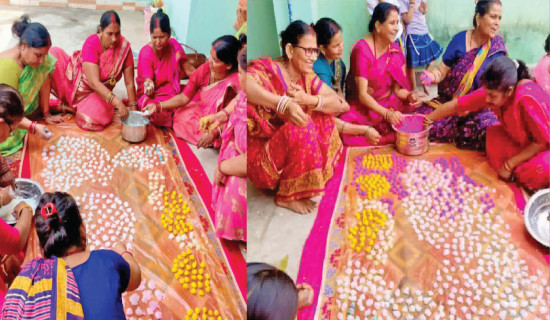
Mehendi, Haldi, and photo sessions are new additions to the Nepali marriage ceremony. Throughout the wedding week, you’ll see photographers pacing around to capture the perfect shot, who are handsomely paid afterward. Also, gold—whose price is hiking every day—is the most necessary jewellery offered as a gift in such weddings.
This generation has learned to do everything in a flashy way with added dimensions. It’s not wrong to carry out new practices, but well-to-do families must not give the impression that weddings should be lavish at any cost. This new generation should uphold native culture, keeping in mind that the bond between partners matters regardless of how the marriage is performed..