- Thursday, 4 June 2026

CFRD Launches Agricultural Skill Development Training
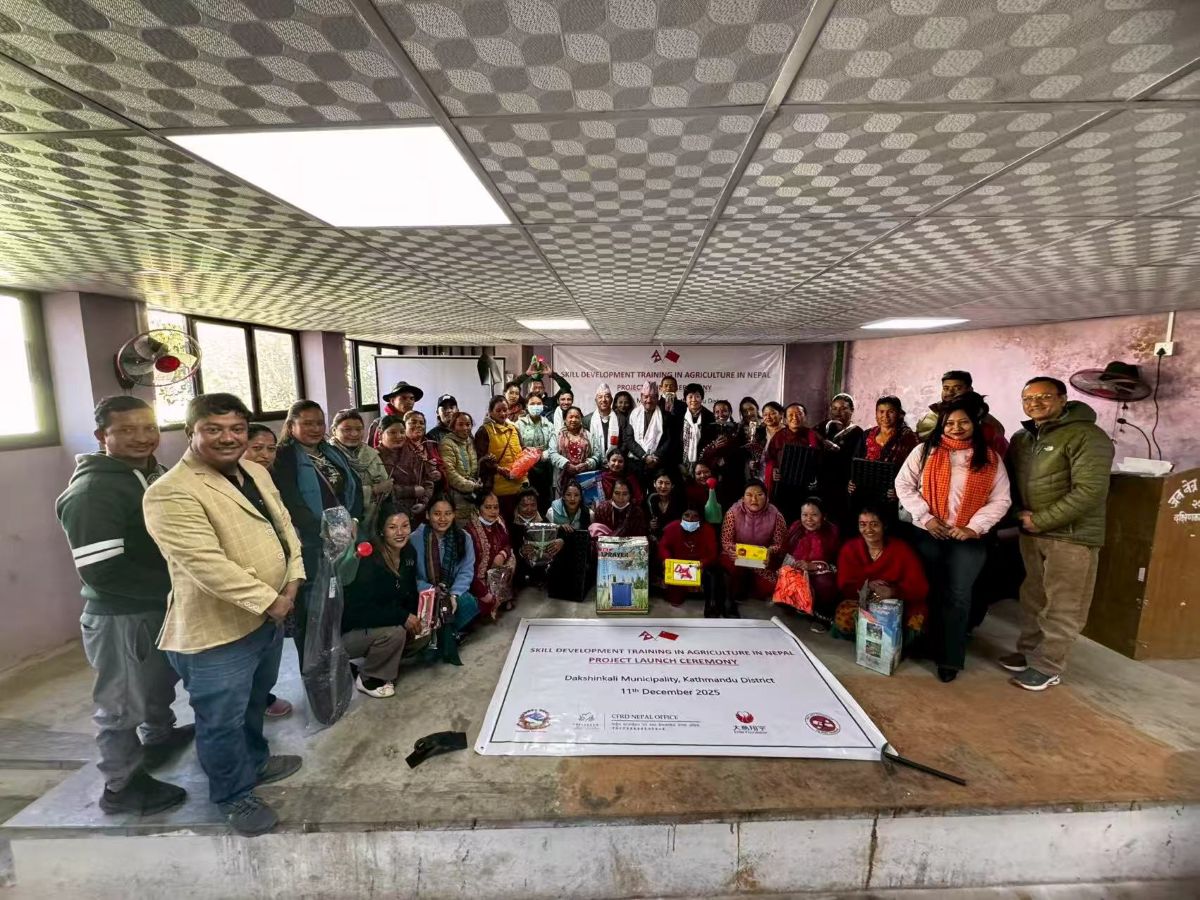
By TRN Online, Kathmandu, Dec 12: The China Foundation for Rural Development (CFRD) has launched the Skill Development Training in Off-Season Agriculture Production in partnership with New Light Foundation (NLF) and in close collaboration with Dakshinkali Municipality.
The initiative aims to expand youth employment opportunities and strengthen local capacity in commercial agriculture and agri-business.
The program provides both theoretical instruction and field-based practical sessions on off-season vegetable production, equipping young people with market-oriented farming skills that support decent work, entrepreneurship, and sustainable livelihoods.
CFRD Nepal has been active since 2015, beginning with post-earthquake relief and disaster response. Since 2019, the organization has implemented its Skill Development Project, providing plumbing and electrical training to 318 youth.
In previous years, CFRD supported farmers in Dakshinkali and Tarkeshwor with technical and financial assistance from China, enabling 90 percent of participating farmers to adopt new agricultural practices, start agribusiness and export vegetables to Qatar.
The organization has also advanced the tea value chain in Nuwakot and Lalitpur by introducing high-quality machinery and providing training in plucking, harvesting, processing, and marketing—benefiting 600 households engaged in organic tea production and helping them access national and international markets.
As agriculture remains Nepal’s largest employment sector—yet continues to face challenges such as low productivity, increasing imports, and limited specialized training—CFRD is expanding its support to youth aged 17–45 to promote commercial farming and off-season crop production.
The current training is delivered through CTEVT-affiliated institutions following an authorized curriculum. Its objectives include enhancing technical capacity, increasing productivity, and strengthening the livelihoods of local farmers through agri-business development. The initiative aligns with SDG 8: Decent Work and Economic Growth, advancing skill development and local agricultural production. Participants were selected from the local community, prioritizing young farmers with at least 1.5 ropani of land, a strong interest in agriculture, and commitment to continue farming after completing the course.
The opening ceremony held on Thursday was inaugurated by Chairperson of the event and Mayor of Dakshinkali Municipality, Mohan Basnet, and CFRD Country Director Zou Zhiqiang, through the traditional lighting of the Panas. An introductory welcome speech was delivered by ward chair of 6 Sailendra Man Mananadhar of Dakshinkali Municipality. This was followed by a comprehensive presentation from CFRD program manager covering program objectives, participant selection criteria, training activities, roles and responsibilities of partner organizations, timelines, expected outcomes, and future plans. The session also included an interactive discussion with participants.
CFRD Country Director Zou highlighted the organization’s ongoing contributions in Nepal, including Panda Pack and sports kits under the education program, nutrition support for ECD to Grade 5 students under the Smiling Children Program, water supply initiatives, and collaborative agricultural projects with Chongqing Municipality and the Agriculture and Forestry University, Chitwan. She emphasized the importance of youth engagement in agriculture and the potential of off-season production to enhance local economies.
The Mayor of Dakshinkali Municipality also stressed the significance of the training in improving agricultural productivity and strengthening household economic well-being. Similarly, the Agricultural Unit Head of Dakshinkali Municipality delivered remarks on the municipality’s priorities in agriculture. A total of 50 participants attended the inaugural event.
It was also announced that participants who successfully complete the training will undergo a nationally recognized skill test conducted by NVQS under CTEVT coordinated by training institute, and upon passing, will receive formal certification—further enhancing their employability and agri-business in the agriculture sector.
-square-thumb.jpg)



-original-thumb.jpg)
-original-thumb.jpg)